
与不完美的细胞壁共存:金黄色葡萄球菌中femAB失活的补偿作用
Living with an imperfect cell wall: compensation of femAB inactivation in Staphylococcus aureus.
作者信息
Hübscher Judith, Jansen Andrea, Kotte Oliver, Schäfer Juliane, Majcherczyk Paul A, Harris Llinos G, Bierbaum Gabriele, Heinemann Matthias, Berger-Bächi Brigitte
机构信息
Institute of Medical Microbiology, University of Zürich, Zürich, Switzerland.
出版信息
BMC Genomics. 2007 Sep 4;8:307. doi: 10.1186/1471-2164-8-307.
BACKGROUND
Synthesis of the Staphylococcus aureus peptidoglycan pentaglycine interpeptide bridge is catalyzed by the nonribosomal peptidyl transferases FemX, FemA and FemB. Inactivation of the femAB operon reduces the interpeptide to a monoglycine, leading to a poorly crosslinked peptidoglycan. femAB mutants show a reduced growth rate and are hypersusceptible to virtually all antibiotics, including methicillin, making FemAB a potential target to restore beta-lactam susceptibility in methicillin-resistant S. aureus (MRSA). Cis-complementation with wild type femAB only restores synthesis of the pentaglycine interpeptide and methicillin resistance, but the growth rate remains low. This study characterizes the adaptations that ensured survival of the cells after femAB inactivation.
RESULTS
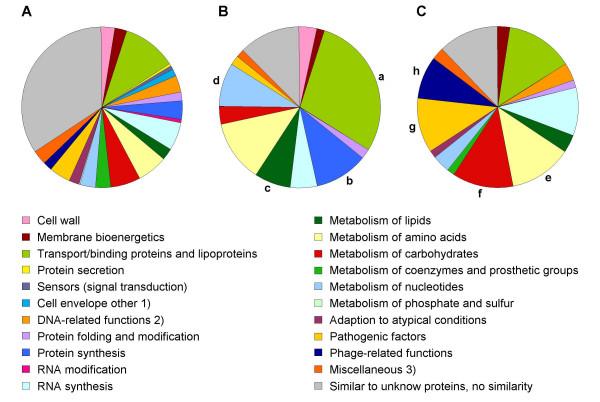
In addition to slow growth, the cis-complemented femAB mutant showed temperature sensitivity and a higher methicillin resistance than the wild type. Transcriptional profiling paired with reporter metabolite analysis revealed multiple changes in the global transcriptome. A number of transporters for sugars, glycerol, and glycine betaine, some of which could serve as osmoprotectants, were upregulated. Striking differences were found in the transcription of several genes involved in nitrogen metabolism and the arginine-deiminase pathway, an alternative for ATP production. In addition, microarray data indicated enhanced expression of virulence factors that correlated with premature expression of the global regulators sae, sarA, and agr.
CONCLUSION
Survival under conditions preventing normal cell wall formation triggered complex adaptations that incurred a fitness cost, showing the remarkable flexibility of S. aureus to circumvent cell wall damage. Potential FemAB inhibitors would have to be used in combination with other antibiotics to prevent selection of resistant survivors.
背景
金黄色葡萄球菌肽聚糖五甘氨酸交联桥的合成由非核糖体肽基转移酶FemX、FemA和FemB催化。femAB操纵子失活会使交联桥减少为单甘氨酸,导致肽聚糖交联不良。femAB突变体生长速率降低,并且对几乎所有抗生素(包括甲氧西林)都高度敏感,这使得FemAB成为恢复耐甲氧西林金黄色葡萄球菌(MRSA)对β-内酰胺敏感性的潜在靶点。与野生型femAB顺式互补仅能恢复五甘氨酸交联桥的合成和甲氧西林抗性,但生长速率仍然较低。本研究对femAB失活后确保细胞存活的适应性变化进行了表征。
结果
除生长缓慢外,顺式互补的femAB突变体还表现出温度敏感性,并且比野生型具有更高的甲氧西林抗性。转录谱分析与报告代谢物分析相结合揭示了全局转录组的多种变化。一些糖、甘油和甘氨酸甜菜碱转运蛋白上调,其中一些可作为渗透保护剂。在参与氮代谢和精氨酸脱亚胺酶途径(一种ATP产生的替代途径)的几个基因的转录中发现了显著差异。此外,微阵列数据表明毒力因子的表达增强,这与全局调节因子sae、sarA和agr的过早表达相关。
结论
在阻止正常细胞壁形成的条件下存活引发了复杂的适应性变化,这带来了适应性代价,表明金黄色葡萄球菌在规避细胞壁损伤方面具有显著的灵活性。潜在的FemAB抑制剂必须与其他抗生素联合使用,以防止耐药幸存者的产生。




 Zotero 插件