
大麻素抑制颞叶癫痫模型中海马齿状回中的复发性兴奋性回路。
Cannabinoid-mediated inhibition of recurrent excitatory circuitry in the dentate gyrus in a mouse model of temporal lobe epilepsy.
机构信息
Department of Physiology, University of Kentucky, Lexington, Kentucky, United States of America.
出版信息
PLoS One. 2010 May 17;5(5):e10683. doi: 10.1371/journal.pone.0010683.
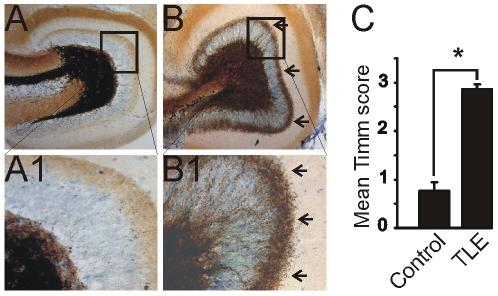
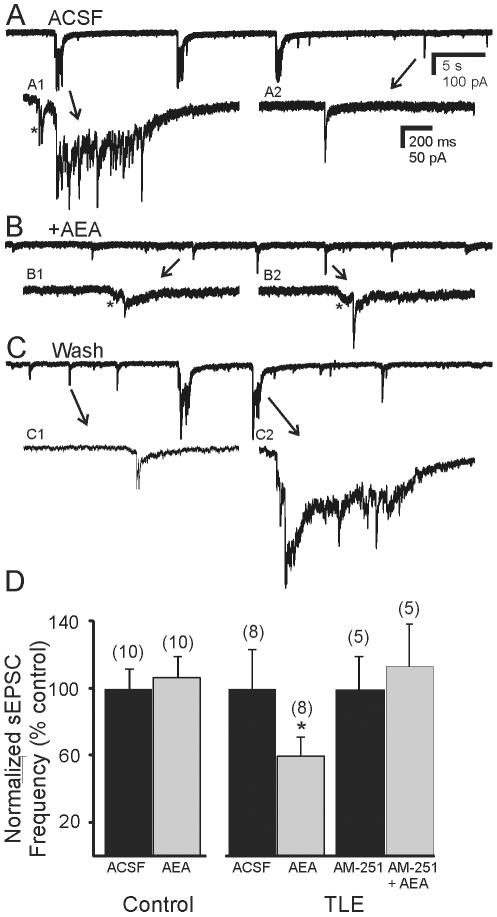
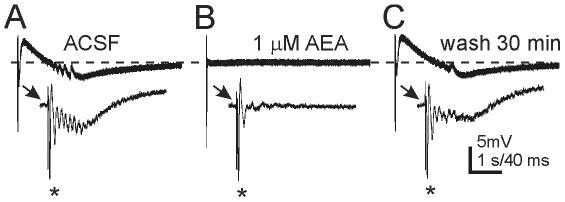
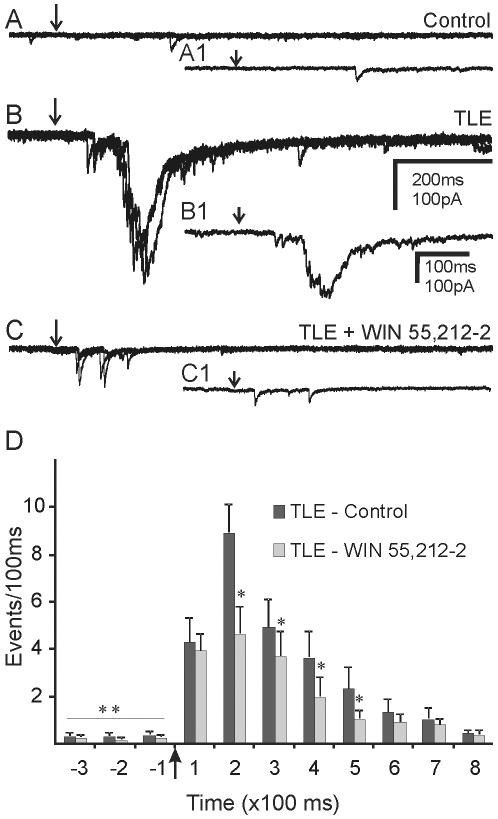
Temporal lobe epilepsy (TLE) is a neurological condition associated with neuron loss, axon sprouting, and hippocampal sclerosis, which results in modified synaptic circuitry. Cannabinoids appear to be anti-convulsive in patients and animal models of TLE, but the mechanisms of this effect are not known. A pilocarpine-induced status epilepticus mouse model of TLE was used to study the effect of cannabinoid agonists on recurrent excitatory circuits of the dentate gyrus using electrophysiological recordings in hippocampal slices isolated from control mice and mice with TLE. Cannabinoid agonists WIN 55,212-2, anandamide (AEA), or 2-arachydonoylglycerol (2-AG) reduced the frequency of spontaneous and tetrodotoxin-resistant excitatory postsynaptic currents (EPSCs) in mice with TLE, but not in controls. WIN 55,212-2 also reduced the frequency of EPSCs evoked by glutamate-photolysis activation of other granule cells in epileptic mice. Secondary population discharges evoked after antidromic electrical stimulation of mossy fibers in the hilus were also attenuated by cannabinoid agonists. Agonist effects were blocked by the cannabinoid type 1 receptor (CB1R) antagonist AM251. No change in glutamate release was observed in slices from mice that did not undergo status epilepticus. Western blot analysis suggested an up-regulation of CB1R in the dentate gyrus of animals with TLE. These findings indicate that activation of CB1R present on nerve terminals can suppress recurrent excitation in the dentate gyrus of mice with TLE. This suggests a mechanism for the anti-convulsive role of cannabinoids aimed at modulating receptors on synaptic terminals expressed de novo after epileptogenesis.
颞叶癫痫(TLE)是一种与神经元丢失、轴突发芽和海马硬化相关的神经疾病,导致突触回路改变。大麻素在 TLE 患者和动物模型中似乎具有抗惊厥作用,但这种作用的机制尚不清楚。使用匹罗卡品诱导的 TLE 状态性癫痫发作小鼠模型,研究大麻素激动剂对来自对照小鼠和 TLE 小鼠的海马切片中齿状回的复发性兴奋性回路的影响。大麻素激动剂 WIN 55,212-2、花生四烯酸乙醇胺(AEA)或 2-花生四烯酸甘油(2-AG)降低了 TLE 小鼠自发和河豚毒素抗性兴奋性突触后电流(EPSC)的频率,但在对照组中没有。WIN 55,212-2 还降低了在癫痫小鼠中通过谷氨酸光解激活其他颗粒细胞诱发的 EPSC 的频率。在海洛因中苔藓纤维的逆行电刺激后诱发的次级群体放电也被大麻素激动剂减弱。激动剂作用被大麻素 1 型受体(CB1R)拮抗剂 AM251 阻断。在未经历状态性癫痫发作的小鼠的切片中未观察到谷氨酸释放的变化。Western blot 分析表明,TLE 动物齿状回中的 CB1R 上调。这些发现表明,神经末梢上 CB1R 的激活可以抑制 TLE 小鼠齿状回中的复发性兴奋。这表明大麻素的抗惊厥作用机制旨在调节癫痫发生后新表达的突触末端上的受体。




 Zotero 插件