
载脂蛋白 E 缺陷小鼠的血管内皮功能障碍:饮食、性别和年龄影响的研究。
Endothelial dysfunction in the apolipoprotein E-deficient mouse: insights into the influence of diet, gender and aging.
机构信息
Departament of Physiological Sciences, Health Sciences Center, Federal University of Espirito Santo, Vitoria, ES, Brazil.
出版信息
Lipids Health Dis. 2011 Nov 14;10:211. doi: 10.1186/1476-511X-10-211.
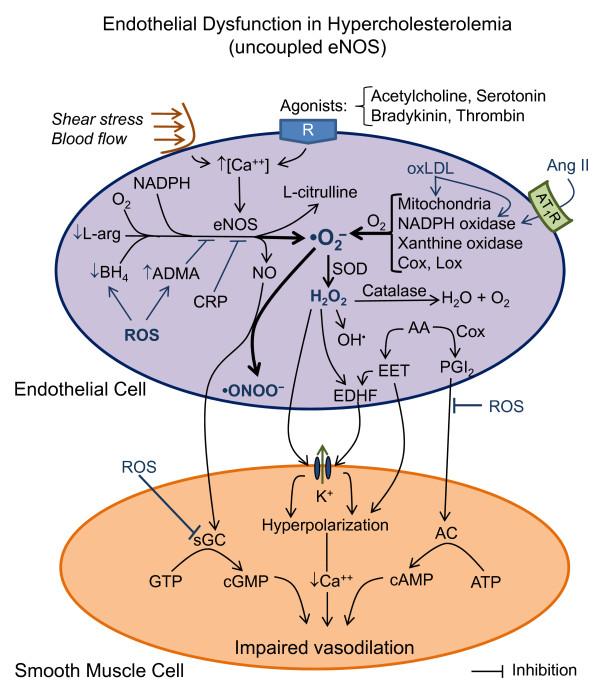
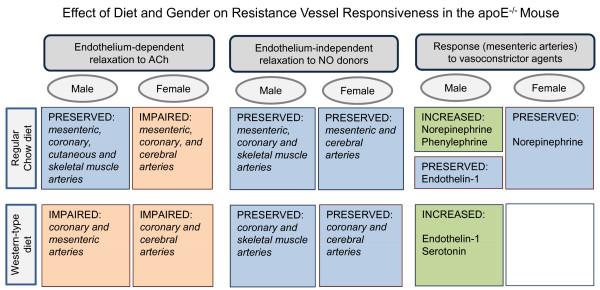
Since the early 1990s, several strains of genetically modified mice have been developed as models for experimental atherosclerosis. Among the available models, the apolipoprotein E-deficient (apoE⁻/⁻) mouse is of particular relevance because of its propensity to spontaneously develop hypercholesterolemia and atherosclerotic lesions that are similar to those found in humans, even when the mice are fed a chow diet. The main purpose of this review is to highlight the key achievements that have contributed to elucidating the mechanisms pertaining to vascular dysfunction in the apoE⁻/⁻ mouse. First, we summarize lipoproteins and atherosclerosis phenotypes in the apoE⁻/⁻ mouse, and then we briefly discuss controversial evidence relative to the influence of gender on the development of atherosclerosis in this murine model. Second, we discuss the main mechanisms underlying the endothelial dysfunction of conducting vessels and resistance vessels and examine how this vascular defect can be influenced by diet, aging and gender in the apoE⁻/⁻ mouse.
自 20 世纪 90 年代初以来,已经开发出几种基因修饰的小鼠作为实验性动脉粥样硬化的模型。在现有的模型中,载脂蛋白 E 缺陷(apoE⁻/⁻)小鼠因其易自发性发生高胆固醇血症和动脉粥样硬化病变而具有特殊的相关性,即使在给予常规饮食时也是如此。本综述的主要目的是强调阐明 apoE⁻/⁻小鼠血管功能障碍相关机制的关键成就。首先,我们总结了 apoE⁻/⁻小鼠中的脂蛋白和动脉粥样硬化表型,然后简要讨论了与性别对该小鼠模型动脉粥样硬化发生的影响相关的有争议的证据。其次,我们讨论了导致传导血管和阻力血管内皮功能障碍的主要机制,并研究了这种血管缺陷如何受到 apoE⁻/⁻小鼠饮食、衰老和性别的影响。




 Zotero 插件