
青少年特发性脊柱侧凸患者瘦素表达正常,脂肪生成能力降低,瘦素受体减少,对瘦素的敏感性降低。
Normal leptin expression, lower adipogenic ability, decreased leptin receptor and hyposensitivity to Leptin in Adolescent Idiopathic Scoliosis.
机构信息
Department of Orthopedics, Sun Yat-sen Memorial Hospital of Sun Yat-sen University, Guangzhou, Guangdong, China.
出版信息
PLoS One. 2012;7(5):e36648. doi: 10.1371/journal.pone.0036648. Epub 2012 May 15.
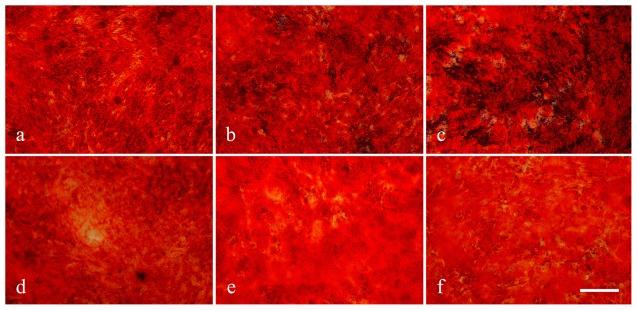
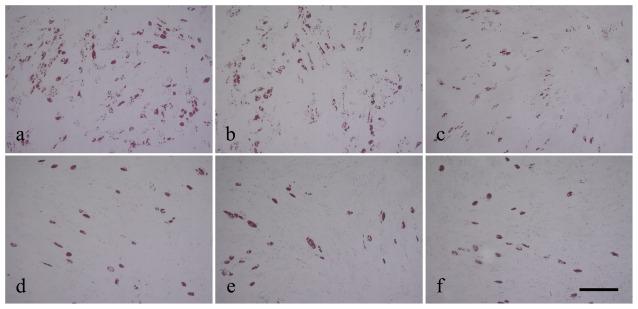
Leptin has been suggested to play a role in the etiology of Adolescent Idiopathic Scoliosis (AIS), however, the leptin levels in AIS girls are still a discrepancy, and no in vitro study of leptin in AIS is reported. We took a series of case-control studies, trying to understand whether Leptin gene polymorphisms are involved in the etiology of the AIS or the change in leptin level is a secondary event, to assess the level of leptin receptor, and to evaluate the differences of response to leptin between AIS cases and controls. We screened all exons of Leptin gene in 45 cases and 45 controls and selected six tag SNPs to cover all the observed variations. Association analysis in 446 AIS patients and 550 healthy controls showed no association between the polymorphisms of Leptin gene and susceptibility/severity to AIS. Moreover, adipogenesis assay of bone mesenchymal stem cells (MSCs) suggested that the adipogenic ability of MSCs from AIS girls was lower than controls. After adjusting the differentiation rate, expressions of leptin and leptin receptor were similar between two groups. Meanwhile, osteogenesis assay of MSC showed the leptin level was similar after adjusting the differentiation rate, but the leptin receptor level was decreased in induced AIS osteoblasts. Immunocytochemistry and western blot analysis showed less leptin receptors expressed in AIS group. Furthermore, factorial designed studies with adipogenesis and osteogenesis revealed that the MSCs from patients have no response to leptin treatment. Our results suggested that Leptin gene variations are not associated with AIS and low serum leptin probably is a secondary outcome which may be related to the low capability of adipogenesis in AIS. The decreased leptin receptor levels may lead to the hyposensitivity to leptin. These findings implied that abnormal peripheral leptin signaling plays an important role in the pathological mechanism of AIS.
瘦素被认为在青少年特发性脊柱侧凸(AIS)的发病机制中起作用,然而,AIS 女孩的瘦素水平仍存在差异,并且没有关于 AIS 中瘦素的体外研究。我们进行了一系列病例对照研究,试图了解瘦素基因多态性是否参与 AIS 的发病机制,或者瘦素水平的变化是否是继发事件,以评估瘦素受体水平,并评估 AIS 病例和对照之间对瘦素的反应差异。我们在 45 例和 45 例对照中筛选了瘦素基因的所有外显子,并选择了六个标记 SNP 来覆盖所有观察到的变异。在 446 例 AIS 患者和 550 例健康对照中进行的关联分析表明,瘦素基因多态性与 AIS 的易感性/严重程度之间没有关联。此外,骨间充质干细胞(MSC)的脂肪生成分析表明,AIS 女孩的 MSC 的脂肪生成能力低于对照。在调整分化率后,两组之间的瘦素和瘦素受体表达相似。同时,MSC 的成骨分析表明,在调整分化率后,瘦素水平相似,但诱导的 AIS 成骨细胞中的瘦素受体水平降低。免疫细胞化学和 Western blot 分析显示 AIS 组中瘦素受体表达较少。此外,脂肪生成和成骨的因子设计研究表明,患者的 MSC 对瘦素治疗没有反应。我们的结果表明,瘦素基因变异与 AIS 无关,而低血清瘦素可能是继发结果,可能与 AIS 中脂肪生成能力低下有关。瘦素受体水平降低可能导致对瘦素的低敏感性。这些发现表明,外周瘦素信号异常在 AIS 的病理机制中起重要作用。



 Zotero 插件