
α和β1整合素通过FAK信号通路介导Aβ诱导的海马神经元神经毒性。
αν and β1 Integrins mediate Aβ-induced neurotoxicity in hippocampal neurons via the FAK signaling pathway.
作者信息
Han Hai-Yan, Zhang Jin-Ping, Ji Su-Qiong, Liang Qi-Ming, Kang Hui-Cong, Tang Rong-Hua, Zhu Sui-Qiang, Xue Zheng
机构信息
Department of Neurology, Tongji Hospital, Huazhong University of Science and Technology, Wuhan, Hubei Province, China.
出版信息
PLoS One. 2013 Jun 3;8(6):e64839. doi: 10.1371/journal.pone.0064839. Print 2014.
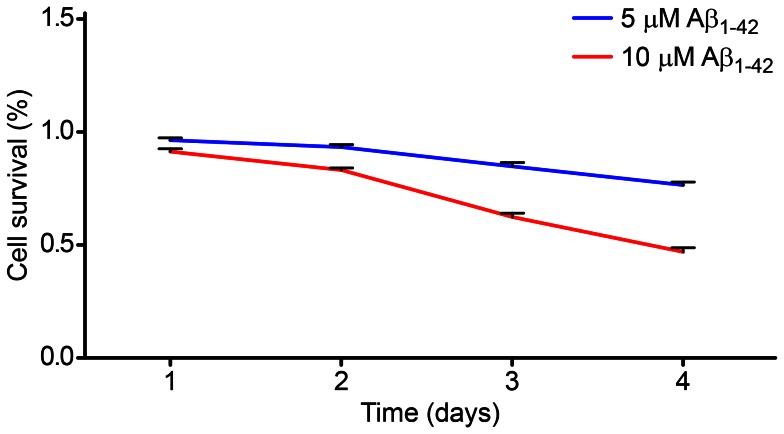
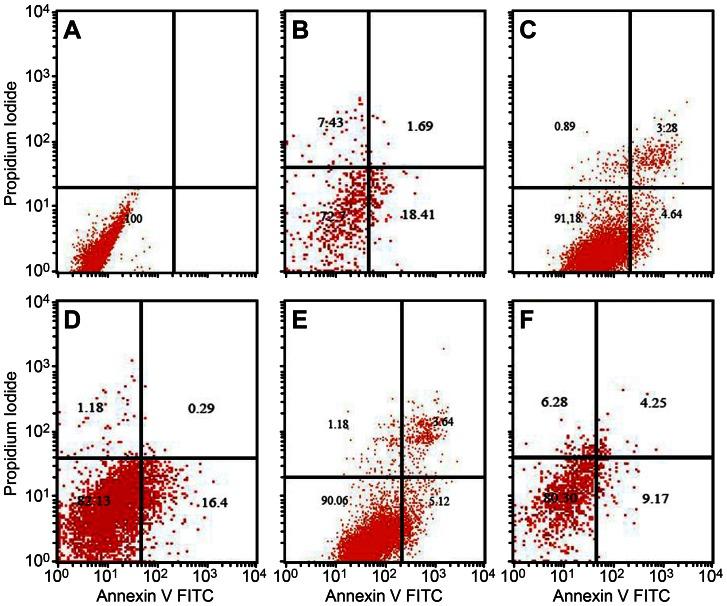
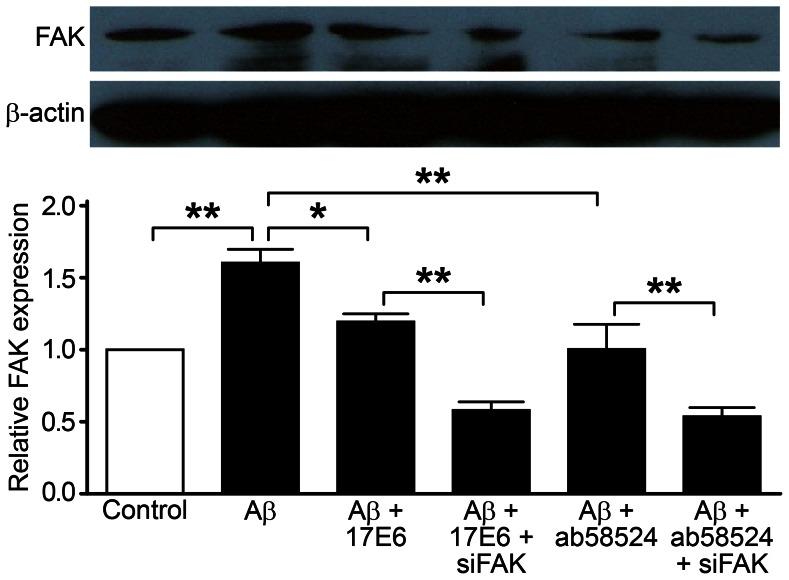
αν and β1 integrins mediate Aβ-induced neurotoxicity in primary hippocampal neurons. We treated hippocampal neurons with 2.5 µg/mL 17E6 and 5 µg/mL ab58524, which are specific αν and β1 integrin antagonists, respectively, for 42 h prior to 10 µM Aβ treatment. Next, we employed small interfering RNA (siRNA) to silence focal adhesion kinase (FAK), a downstream target gene of integrins. The siRNAs were designed with a target sequence, an MOI of 10 and the addition of 5 µg/mL polybrene. Under these conditions, the neurons were transfected and the apoptosis of different cell types was detected. Moreover, we used real-time PCR and Western blotting analyses to detect the expression of FAK and ρFAK genes in different cell types and investigated the underlying mechanism and signal pathway by which αν and β1 integrins mediate Aβ-induced neurotoxicity in hippocampal neurons. An MTT assay showed that both 17E6 and ab58524 significantly increased cell viability compared with the Aβ-treated neurons (P<0.01 and P<0.05, respectively). However, this protective effect was markedly attenuated after transfection with silencing FAK (siFAK). Moreover, TUNEL immunostaining and flow cytometry indicated that both 17E6 and ab58524 significantly protected hippocampal neurons against apoptosis induced by Aβ (P<0.05) compared with the Aβ-treated cells. However, this protective effect was reversed with siFAK treatment. Both the gene and protein expression of FAK increased after Aβ treatment. Interestingly, as the gene and protein levels of FAK decreased, the ρFAK protein expression markedly increased. Furthermore, both the gene and protein expression of FAK and ρFAK were significantly diminished. Thus, we concluded that both αν and β1 integrins interfered with Aβ-induced neurotoxicity in hippocampal neurons and that this mechanism partially contributes to the activation of the Integrin-FAK signaling pathway.
αv和β1整合素介导原代海马神经元中Aβ诱导的神经毒性。在10 μM Aβ处理前42小时,我们分别用2.5 μg/mL的17E6和5 μg/mL的ab58524(分别为特异性αv和β1整合素拮抗剂)处理海马神经元。接下来,我们使用小干扰RNA(siRNA)使整合素的下游靶基因粘着斑激酶(FAK)沉默。所设计的siRNA具有靶序列、10的感染复数(MOI)并添加5 μg/mL的聚凝胺。在这些条件下,对神经元进行转染并检测不同细胞类型的凋亡情况。此外,我们使用实时PCR和蛋白质印迹分析来检测不同细胞类型中FAK和磷酸化FAK(pFAK)基因的表达,并研究αv和β1整合素介导海马神经元中Aβ诱导的神经毒性的潜在机制和信号通路。MTT分析表明,与Aβ处理的神经元相比,17E6和ab58524均显著提高了细胞活力(分别为P<0.01和P<0.05)。然而,在用沉默FAK(siFAK)转染后,这种保护作用明显减弱。此外,TUNEL免疫染色和流式细胞术表明,与Aβ处理的细胞相比,17E6和ab58524均显著保护海马神经元免受Aβ诱导的凋亡(P<0.05)。然而,siFAK处理可逆转这种保护作用。Aβ处理后FAK的基因和蛋白表达均增加。有趣的是,随着FAK基因和蛋白水平的降低,pFAK蛋白表达显著增加。此外,FAK和pFAK的基因和蛋白表达均显著降低。因此,我们得出结论,αv和β1整合素均干扰海马神经元中Aβ诱导的神经毒性,且该机制部分促成整合素-FAK信号通路的激活。




 Zotero 插件