
报告疫苗并发症:妇产科医生对疫苗不良事件报告系统了解多少?
Reporting vaccine complications: what do obstetricians and gynecologists know about the Vaccine Adverse Event Reporting System?
作者信息
Eckert L O, Anderson B L, Gonik B, Schulkin J
机构信息
Department of Obstetrics & Gynecology, University of Washington, P.O. Box 359865, Seattle, WA 98104, USA.
出版信息
Infect Dis Obstet Gynecol. 2013;2013:285257. doi: 10.1155/2013/285257. Epub 2013 Sep 8.
BACKGROUND
Obstetrician-gynecologists are increasingly called upon to be vaccinators as an essential part of a woman's primary and preventive health care. Despite the established safety of vaccines, vaccine adverse events may occur. A national Vaccine Adverse Event Reporting System (VAERS) is a well-established mechanism to track adverse events. However, we hypothesized that many obstetrician-gynecologists are naive to the role and use of VAERS.
METHODS
We devised a ten-question survey to a sample of ACOG fellows to assess their knowledge and understanding of VAERS. We performed descriptive and frequency analysis for each of the questions and used one-way analysis of variance for continuous and chi-squared for categorical variables.
RESULTS
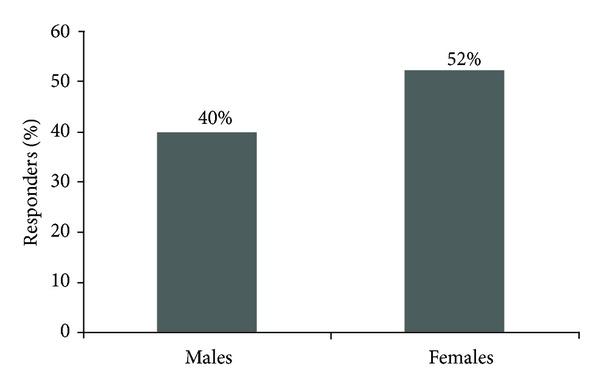
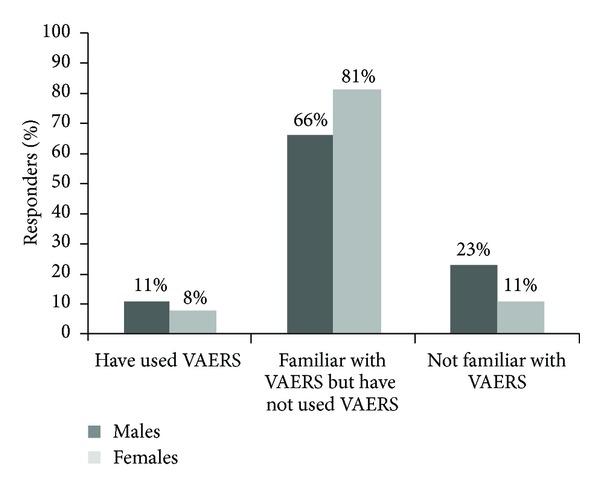
Of the 1000 fellows who received the survey, 377 responded. Only one respondent answered all nine knowledge questions correctly, and 9.2% of physicians had used VAERS. Older physicians were less familiar with VAERS in general and with the specific objectives of VAERS in particular (χ(2) = 10.7, P = .005).
CONCLUSIONS
Obstetrician-gynecologist familiarity with VAERS is lacking. Only when the obstetrician-gynecologist is completely knowledgeable regarding standard vaccine practices, including the availability and use of programs such as VAERS, will providers be functioning as competent and complete vaccinators.
背景
妇产科医生越来越多地被要求成为疫苗接种者,作为女性初级和预防性医疗保健的重要组成部分。尽管疫苗的安全性已得到证实,但仍可能发生疫苗不良事件。国家疫苗不良事件报告系统(VAERS)是一个成熟的跟踪不良事件的机制。然而,我们推测许多妇产科医生对VAERS的作用和使用并不了解。
方法
我们设计了一份包含十个问题的调查问卷,对美国妇产科医师学会(ACOG)会员样本进行调查,以评估他们对VAERS的了解程度。我们对每个问题进行了描述性和频率分析,并对连续变量使用单向方差分析,对分类变量使用卡方分析。
结果
在收到调查问卷的1000名会员中,有377人回复。只有一名受访者正确回答了所有九个知识问题,9.2%的医生使用过VAERS。总体而言,年长的医生对VAERS不太熟悉,对VAERS的具体目标尤其不熟悉(χ(2)=10.7,P=.005)。
结论
妇产科医生对VAERS缺乏了解。只有当妇产科医生对标准疫苗接种操作完全了解,包括VAERS等项目的可用性和使用情况时,医疗服务提供者才能成为称职且全面的疫苗接种者。
 Zotero 插件