
种植体聚集失败患者种植体周围炎致病基因的研究:一项全外显子测序初步研究
Investigation of pathogenic genes in peri-implantitis from implant clustering failure patients: a whole-exome sequencing pilot study.
作者信息
Lee Soohyung, Kim Ji-Young, Hwang Jihye, Kim Sanguk, Lee Jae-Hoon, Han Dong-Hoo
机构信息
Department of Prosthodontics, Oral Science Research Center, College of Dentistry, Yonsei University, Seoul, Korea.
Department of IT Convergence and Engineering, Pohang University of Science and Technology, Pohang, Korea.
出版信息
PLoS One. 2014 Jun 12;9(6):e99360. doi: 10.1371/journal.pone.0099360. eCollection 2014.
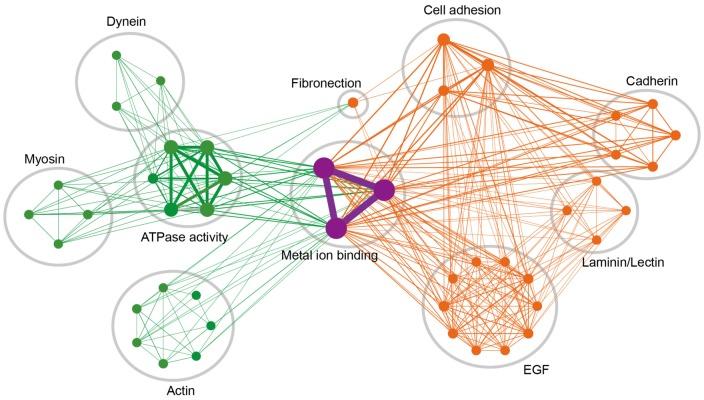
Peri-implantitis is a frequently occurring gum disease linked to multi-factorial traits with various environmental and genetic causalities and no known concrete pathogenesis. The varying severity of peri-implantitis among patients with relatively similar environments suggests a genetic aspect which needs to be investigated to understand and regulate the pathogenesis of the disease. Six unrelated individuals with multiple clusterization implant failure due to severe peri-implantitis were chosen for this study. These six individuals had relatively healthy lifestyles, with minimal environmental causalities affecting peri-implantitis. Research was undertaken to investigate pathogenic genes in peri-implantitis albeit with a small number of subjects and incomplete elimination of environmental causalities. Whole-exome sequencing was performed on collected saliva samples via self DNA collection kit. Common variants with minor allele frequencies (MAF) > = 0.05 from all control datasets were eliminated and variants having high and moderate impact and loss of function were used for comparison. Gene set enrichment analysis was performed to reveal functional groups associated with the genetic variants. 2,022 genes were left after filtering against dbSNP, the 1000 Genomes East Asian population, and healthy Korean randomized subsample data (GSK project). 175 (p-value <0.05) out of 927 gene sets were obtained via GSEA (DAVID). The top 10 was chosen (p-value <0.05) from cluster enrichment showing significance of cytoskeleton, cell adhesion, and metal ion binding. Network analysis was applied to find relationships between functional clusters. Among the functional groups, ion metal binding was located in the center of all clusters, indicating dysfunction of regulation in metal ion concentration might affect cell morphology or cell adhesion, resulting in implant failure. This result may demonstrate the feasibility of and provide pilot data for a larger research project aimed at discovering biomarkers for early diagnosis of peri-implantitis.
种植体周围炎是一种常见的牙龈疾病,与多种环境和遗传因素导致的多因素特征相关,目前尚无明确的发病机制。在环境相对相似的患者中,种植体周围炎的严重程度各异,这表明需要研究遗传因素,以了解和调控该疾病的发病机制。本研究选取了6名因严重种植体周围炎导致多个种植体成簇失败的无血缘关系个体。这6名个体的生活方式相对健康,影响种植体周围炎的环境因素极小。尽管研究对象数量较少且未完全排除环境因素,但仍开展了对种植体周围炎致病基因的研究。通过自行采集DNA的试剂盒,对收集的唾液样本进行全外显子测序。去除所有对照数据集中次要等位基因频率(MAF)>=0.05的常见变异,并使用具有高、中度影响和功能丧失的变异进行比较。进行基因集富集分析以揭示与遗传变异相关的功能组。经过与dbSNP、千人基因组东亚人群以及健康韩国随机子样本数据(GSK项目)进行比对过滤后,留下了2022个基因。通过基因集富集分析(DAVID),从927个基因集中获得了175个(p值<0.05)。从聚类富集结果中选出前10个(p值<0.05),显示细胞骨架、细胞黏附及金属离子结合具有重要意义。应用网络分析来寻找功能簇之间的关系。在这些功能组中,离子金属结合位于所有簇的中心,表明金属离子浓度调节功能障碍可能影响细胞形态或细胞黏附,并导致种植体失败。这一结果可能证明了针对发现种植体周围炎早期诊断生物标志物的更大规模研究项目的可行性,并提供了初步数据。

 Zotero 插件