
包含灭活病毒颗粒和细菌佐剂的黏膜SIV疫苗可诱导CD8(+)调节性T细胞,抑制SIV阳性CD4(+) T细胞活化,并在猕猴模型中预防SIV感染。
Mucosal SIV Vaccines Comprising Inactivated Virus Particles and Bacterial Adjuvants Induce CD8(+) T-Regulatory Cells that Suppress SIV-Positive CD4(+) T-Cell Activation and Prevent SIV Infection in the Macaque Model.
作者信息
Andrieu Jean-Marie, Chen Song, Lai Chunhui, Guo Weizhong, Lu Wei
机构信息
Institut de Recherches sur les Vaccins et l'Immunothérapie des Cancers et du SIDA, Centre Universitaire des Saints Peres, Université de Paris-Descartes , Paris , France.
Tropical Medicine Institute, Guangzhou University of Chinese Medicine , Guangzhou , China.
出版信息
Front Immunol. 2014 Jun 30;5:297. doi: 10.3389/fimmu.2014.00297. eCollection 2014.
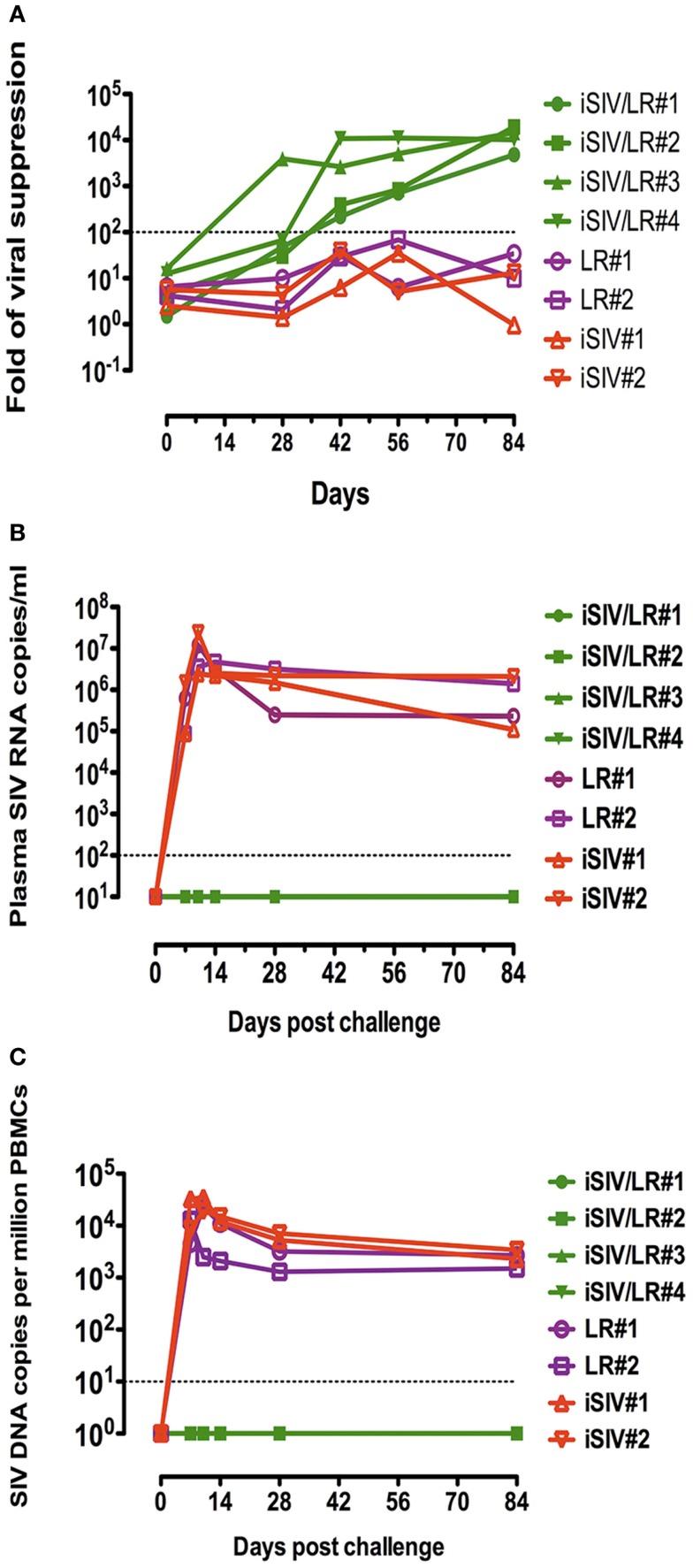
A new paradigm of mucosal vaccination against human immunodeficiency virus (HIV) infection has been investigated in the macaque model. A vaccine consisting of inactivated simian immunodeficiency virus (SIV)mac239 particles together with a living bacterial adjuvant (either the Calmette and Guerin bacillus, Lactobacillus plantarum or Lactobacillus rhamnosus) was administered to macaques via the vaginal or oral/intragastric route. In contrast to all established human and veterinary vaccines, these three vaccine regimens did not elicit SIV-specific antibodies nor cytotoxic T-lymphocytes but induced a previously unrecognized population of non-cytolytic MHCIb/E-restricted CD8(+) T-regulatory cells that suppressed the activation of SIV-positive CD4(+) T-lymphocytes. SIV reverse transcription was thereby blocked in inactivated CD4(+) T-cells; the initial burst of virus replication was prevented and the vaccinated macaques were protected from a challenge infection. For 3-14 months after intragastric immunization, 24 macaques were challenged intrarectally with a high dose of SIVmac239 or with the heterologous strain SIV B670 (both strains grown on macaques PBMC). Twenty-three of these animals were found to be protected for up to 48 months while all 24 control macaques became infected. This protective effect against SIV challenge together with the concomitant identification of a robust ex vivo correlate of protection suggests a new approach for developing an HIV vaccine in humans. The induction of this new class of CD8(+) T-regulatory cells could also possibly be used therapeutically for suppressing HIV replication in infected patients and this novel tolerogenic vaccine paradigm may have potential applications for treating a wide range of immune disorders and is likely to may have profound implications across immunology generally.
一种针对人类免疫缺陷病毒(HIV)感染的黏膜疫苗新范式已在猕猴模型中进行了研究。一种由灭活的猴免疫缺陷病毒(SIV)mac239颗粒与一种活细菌佐剂(卡介苗、植物乳杆菌或鼠李糖乳杆菌)组成的疫苗,通过阴道或口服/胃内途径给予猕猴。与所有已有的人类和兽用疫苗不同,这三种疫苗方案均未引发SIV特异性抗体或细胞毒性T淋巴细胞,而是诱导了一群以前未被识别的非细胞溶解的MHC Ib/E限制性CD8(+) T调节细胞,这些细胞抑制了SIV阳性CD4(+) T淋巴细胞的激活。由此,SIV逆转录在失活的CD4(+) T细胞中被阻断;病毒复制的初始爆发被阻止,接种疫苗的猕猴受到保护,免受攻击感染。在胃内免疫后的3至14个月,24只猕猴经直肠接受高剂量的SIVmac239或异源毒株SIV B670(两种毒株均在猕猴外周血单核细胞上生长)的攻击。其中23只动物被发现受到保护长达48个月,而所有24只对照猕猴均被感染。这种针对SIV攻击的保护作用以及同时确定的强大的体外保护相关性,为开发人类HIV疫苗提出了一种新方法。诱导这类新的CD8(+) T调节细胞也可能用于治疗性抑制感染患者体内的HIV复制,这种新型的耐受性疫苗范式可能在治疗广泛的免疫疾病方面具有潜在应用,并且可能对整个免疫学产生深远影响。


 Zotero 插件