
喀麦隆(中非)尼奥斯湖中的细菌和古细菌群落。
Bacterial and archaeal communities in Lake Nyos (Cameroon, Central Africa).
作者信息
Tiodjio Rosine E, Sakatoku Akihiro, Nakamura Akihiro, Tanaka Daisuke, Fantong Wilson Y, Tchakam Kamtchueng B, Tanyileke Gregory, Ohba Takeshi, Hell Victor J, Kusakabe Minoru, Nakamura Shogo, Ueda Akira
机构信息
Department of Environmental and Energy Sciences, Graduate School of Science and Engineering, University of Toyama, Toyama 930-8555, Japan.
Institute of Mining and Geological Research, P.O. Box 4110, Yaoundé, Cameroon.
出版信息
Sci Rep. 2014 Aug 21;4:6151. doi: 10.1038/srep06151.
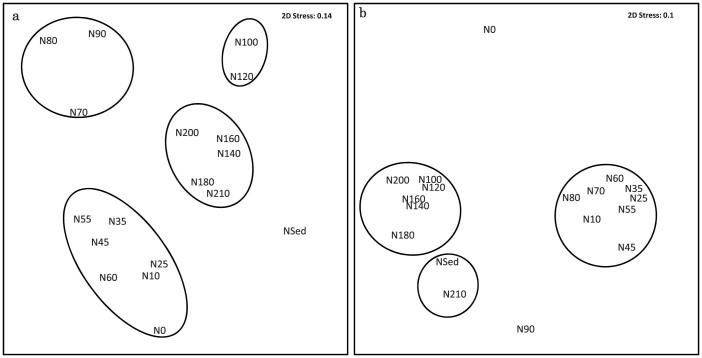
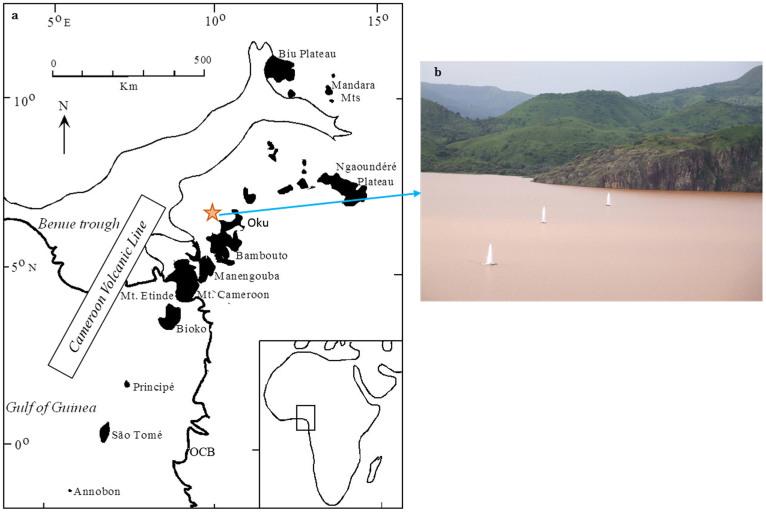
The aim of this study was to assess the microbial diversity associated with Lake Nyos, a lake with an unusual chemistry in Cameroon. Water samples were collected during the dry season on March 2013. Bacterial and archaeal communities were profiled using Polymerase Chain Reaction-Denaturing Gradient Gel Electrophoresis (PCR-DGGE) approach of the 16S rRNA gene. The results indicate a stratification of both communities along the water column. Altogether, the physico-chemical data and microbial sequences suggest a close correspondence of the potential microbial functions to the physico-chemical pattern of the lake. We also obtained evidence of a rich microbial diversity likely to include several novel microorganisms of environmental importance in the large unexplored microbial reservoir of Lake Nyos.
本研究的目的是评估与喀麦隆具有异常化学成分的尼奥斯湖相关的微生物多样性。于2013年3月旱季采集了水样。使用16S rRNA基因的聚合酶链反应 - 变性梯度凝胶电泳(PCR - DGGE)方法对细菌和古菌群落进行了分析。结果表明这两个群落沿水柱分层。总体而言,物理化学数据和微生物序列表明潜在的微生物功能与湖泊的物理化学模式密切对应。我们还获得了证据,证明在尼奥斯湖未充分探索的大型微生物库中存在丰富的微生物多样性,其中可能包括几种具有环境重要性的新型微生物。


 Zotero 插件