
雷帕霉素介导的mTORC2抑制作用由FK506结合蛋白的相对表达量决定。
Rapamycin-mediated mTORC2 inhibition is determined by the relative expression of FK506-binding proteins.
作者信息
Schreiber Katherine H, Ortiz Denise, Academia Emmeline C, Anies Arieanna C, Liao Chen-Yu, Kennedy Brian K
机构信息
The Buck Institute for Research on Aging, 8001 Redwood Blvd., Novato, CA, 94945, USA.
出版信息
Aging Cell. 2015 Apr;14(2):265-73. doi: 10.1111/acel.12313. Epub 2015 Feb 4.
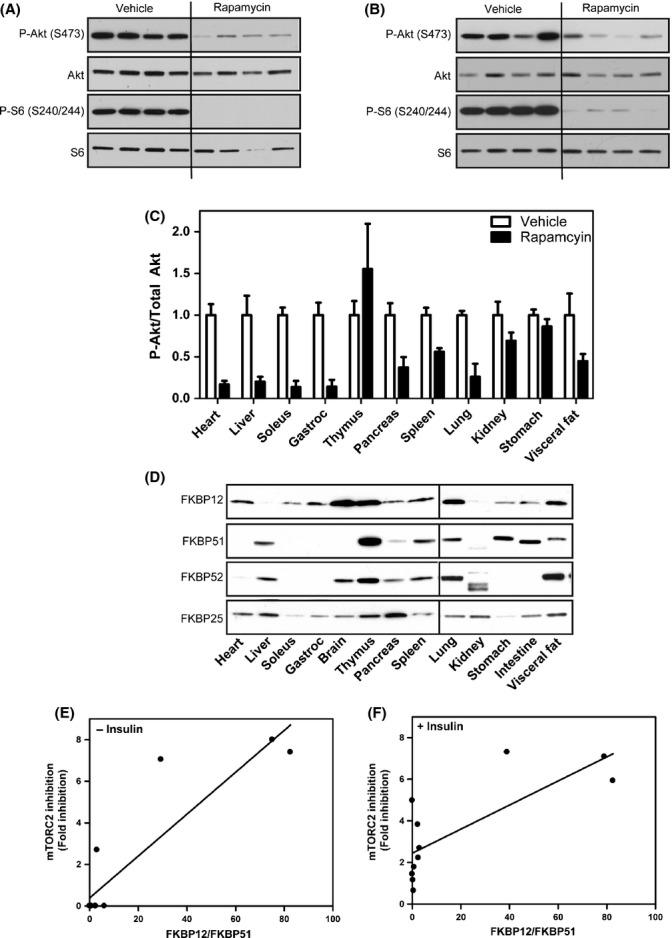
The mechanism by which the drug rapamycin inhibits the mechanistic target of rapamycin (mTOR) is of intense interest because of its likely relevance in cancer biology, aging, and other age-related diseases. While rapamycin acutely and directly inhibits mTORC1, only chronic administration of rapamycin can inhibit mTORC2 in some, but not all, cell lines or tissues. The mechanism leading to cell specificity of mTORC2 inhibition by rapamycin is not understood and is especially important because many of the negative metabolic side effects of rapamycin, reported in mouse studies and human clinical trials, have been attributed recently to mTORC2 inhibition. Here, we identify the expression level of different FK506-binding proteins (FKBPs), primarily FKBP12 and FKBP51, as the key determinants for rapamycin-mediated inhibition of mTORC2. In support, enforced reduction of FKBP12 completely converts a cell line that is sensitive to mTORC2 inhibition to an insensitive cell line, and increased expression can enhance mTORC2 inhibition. Further reduction of FKBP12 in cell lines with already low FKBP12 levels completely blocks mTORC1 inhibition by rapamycin, indicating that relative FKBP12 levels are critical for both mTORC1 and mTORC2 inhibition, but at different levels. In contrast, reduction of FKBP51 renders cells more sensitive to mTORC2 inhibition. Our findings reveal that the expression of FKBP12 and FKBP51 is the rate limiting factor that determines the responsiveness of a cell line or tissue to rapamycin. These findings have implications for treating specific diseases, including neurodegeneration and cancer, as well as targeting aging in general.
药物雷帕霉素抑制雷帕霉素作用机制靶点(mTOR)的机制备受关注,因为其可能与癌症生物学、衰老及其他与年龄相关的疾病相关。虽然雷帕霉素能急性且直接抑制mTORC1,但只有长期给予雷帕霉素才能在部分而非所有细胞系或组织中抑制mTORC2。雷帕霉素抑制mTORC2的细胞特异性机制尚不清楚,且尤为重要,因为在小鼠研究和人体临床试验中报道的雷帕霉素许多负面代谢副作用最近被归因于mTORC2抑制。在此,我们确定不同FK506结合蛋白(FKBPs),主要是FKBP12和FKBP51的表达水平,是雷帕霉素介导的mTORC2抑制的关键决定因素。作为支持,强制降低FKBP12可将对mTORC2抑制敏感的细胞系完全转变为不敏感细胞系,而增加其表达可增强mTORC2抑制。在FKBP12水平本就较低的细胞系中进一步降低FKBP12会完全阻断雷帕霉素对mTORC1的抑制,这表明相对FKBP12水平对mTORC1和mTORC2抑制都至关重要,但程度不同。相比之下,降低FKBP51会使细胞对mTORC2抑制更敏感。我们的研究结果表明,FKBP12和FKBP51的表达是决定细胞系或组织对雷帕霉素反应性的限速因素。这些发现对治疗包括神经退行性疾病和癌症在内的特定疾病以及总体上针对衰老具有重要意义。


 Zotero 插件