
聚四氟乙烯(PTFE)基材上纤连蛋白/磷酸胆碱涂层联合调节内皮细胞粘附和血液相容性的潜力
On the potential for fibronectin/phosphorylcholine coatings on PTFE substrates to jointly modulate endothelial cell adhesion and hemocompatibility properties.
作者信息
Montaño-Machado Vanessa, Chevallier Pascale, Mantovani Diego, Pauthe Emmanuel
机构信息
a Laboratory for Biomaterials & Bioengineering (CRC-I); Department of Min-Met-Materials Engineering & CHU de Quebec Research Center; Laval University ; Quebec City , Canada.
出版信息
Biomatter. 2015;5(1):e979679. doi: 10.4161/21592535.2014.979679.
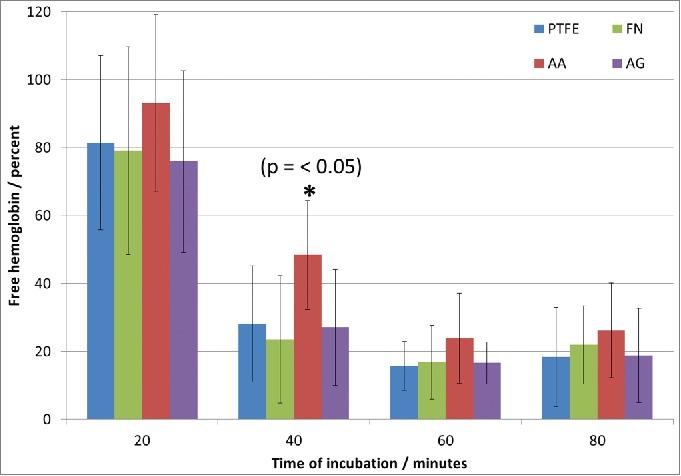
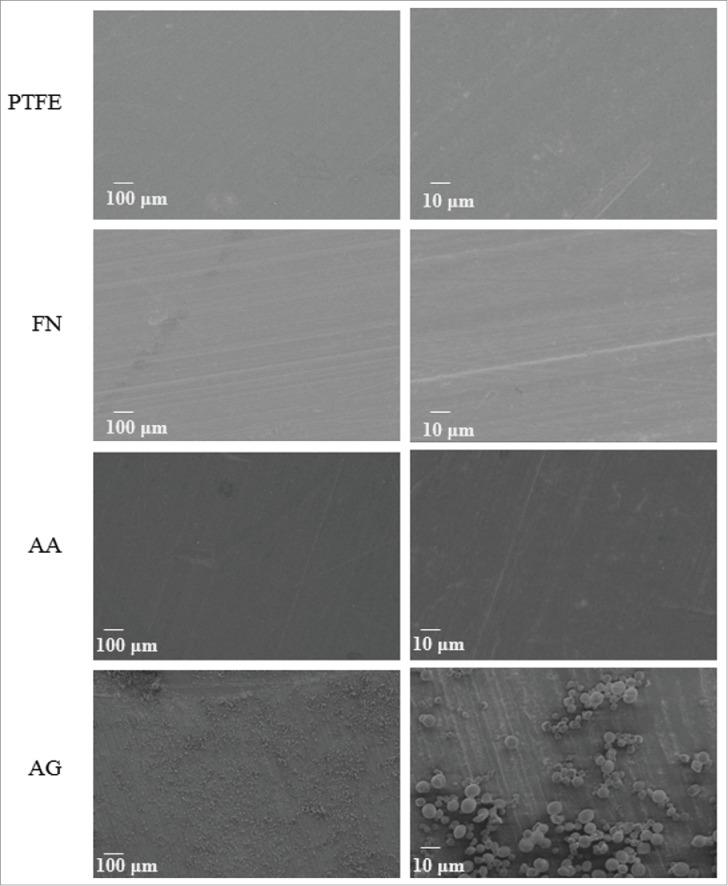
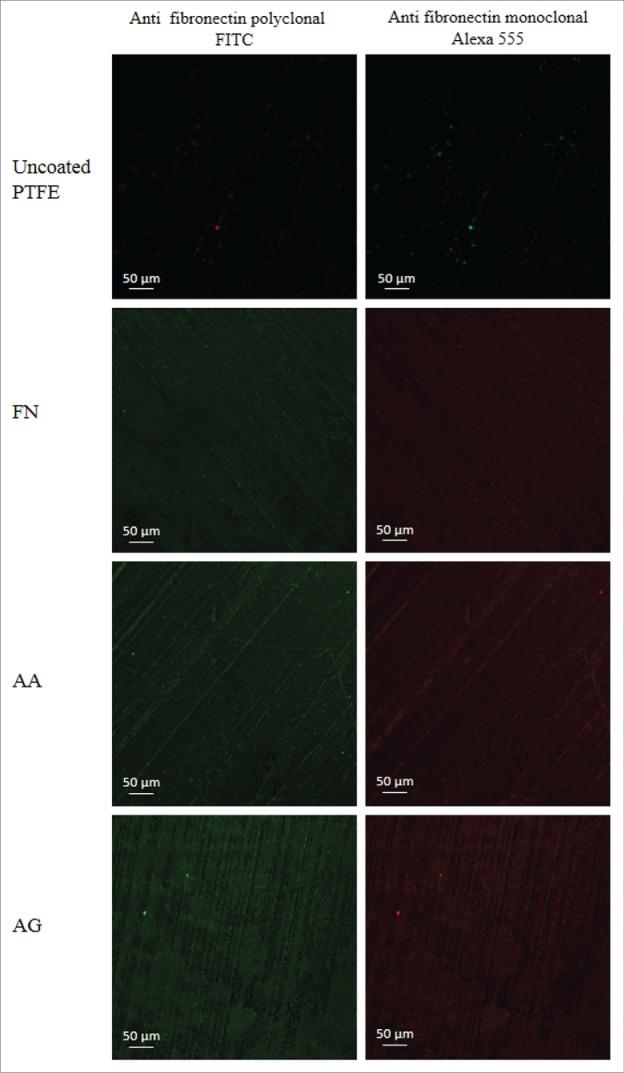
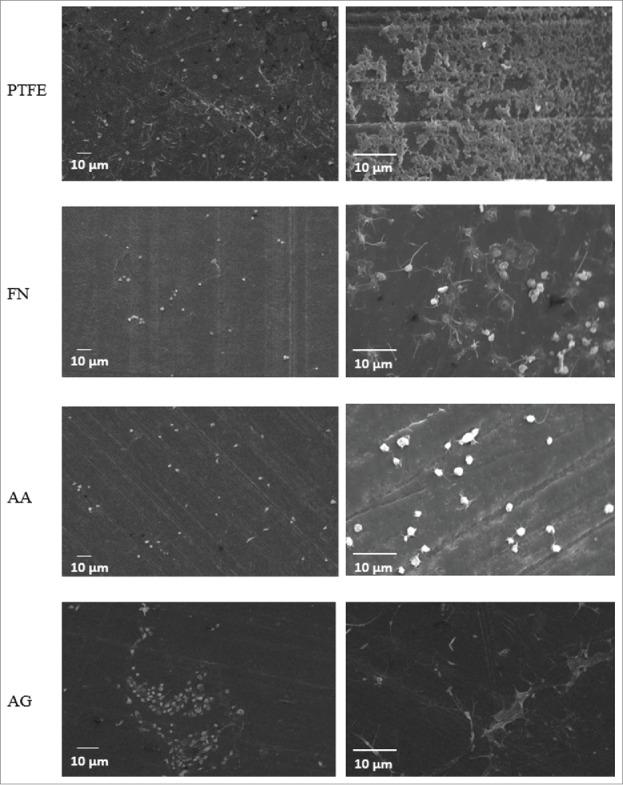
The use of biomolecules as coatings on biomaterials is recognized to constitute a promising approach to modulate the biological response of the host. In this work, we propose a coating composed by 2 biomolecules susceptible to provide complementary properties for cardiovascular applications: fibronectin (FN) to enhance endothelialization, and phosphorylcholine (PRC) for its non thrombogenic properties. Polytetrafluoroethylene (PTFE) was selected as model substrate mainly because it is largely used in cardiovascular applications. Two approaches were investigated: 1) a sequential adsorption of the 2 biomolecules and 2) an adsorption of the protein followed by the grafting of phosphorylcholine via chemical activation. All coatings were characterized by immunofluorescence staining, X-Ray Photoelectron Spectroscopy and Scanning Electron Microscopy analyses. Assays with endothelial cells showed improvement on cell adhesion, spreading and metabolic activity on FN-PRC coatings compared with the uncoated PTFE. Platelets adhesion and activation were both reduced on the coated surfaces when compared with uncoated PTFE. Moreover, clotting time tests exhibited better hemocompatibility properties of the surfaces after a sequential adsorption of FN and PRC. In conclusion, FN-PRC coating improves cell adhesion and non-thrombogenic properties, thus revealing a certain potential for the development of this combined deposition strategy in cardiovascular applications.
将生物分子用作生物材料的涂层被认为是一种调节宿主生物反应的有前景的方法。在这项工作中,我们提出了一种由两种生物分子组成的涂层,这两种生物分子易于为心血管应用提供互补特性:纤连蛋白(FN)用于增强内皮化,磷酸胆碱(PRC)因其抗血栓形成特性。聚四氟乙烯(PTFE)被选作模型基材,主要是因为它在心血管应用中大量使用。研究了两种方法:1)两种生物分子的顺序吸附,以及2)蛋白质吸附后通过化学活化接枝磷酸胆碱。所有涂层均通过免疫荧光染色、X射线光电子能谱和扫描电子显微镜分析进行表征。内皮细胞试验表明,与未涂层的PTFE相比,FN-PRC涂层上的细胞粘附、铺展和代谢活性有所改善。与未涂层的PTFE相比,涂层表面的血小板粘附和活化均降低。此外,凝血时间测试表明,在顺序吸附FN和PRC后,表面具有更好的血液相容性。总之,FN-PRC涂层改善了细胞粘附和抗血栓形成特性,从而揭示了这种组合沉积策略在心血管应用开发中的一定潜力。



 Zotero 插件