
将疫苗物流外包给私营部门:来自南非西开普省的证据和经验教训。
Outsourcing vaccine logistics to the private sector: The evidence and lessons learned from the Western Cape Province in South-Africa.
作者信息
Lydon Patrick, Raubenheimer Ticky, Arnot-Krüger Michelle, Zaffran Michel
机构信息
World Health Organization, Geneva, Switzerland.
Collaborative Centre for Cold Chain Management, Pretoria, South Africa.
出版信息
Vaccine. 2015 Jun 26;33(29):3429-34. doi: 10.1016/j.vaccine.2015.03.042. Epub 2015 Mar 27.
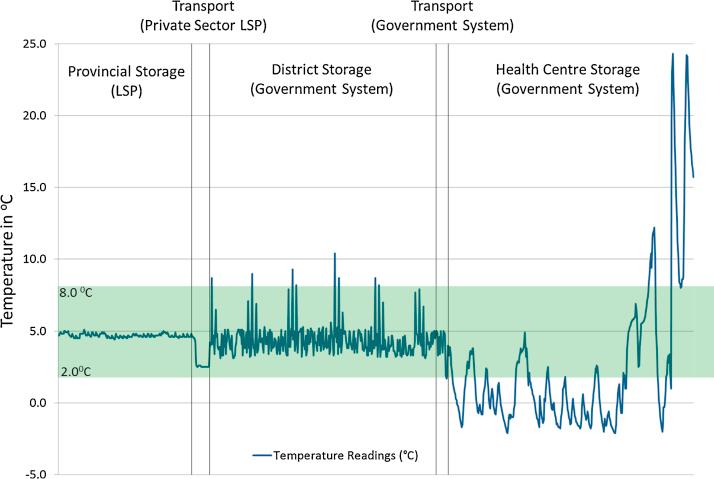
With few exceptions, immunization supply chains in developing countries continue to face chronic difficulties in providing uninterrupted availability of potent vaccines up to service delivery levels, and in the most efficient manner possible. As these countries struggle to keep pace with an ever growing number of vaccines, more and more Ministries of Health are considering options of engaging the private sector to manage vaccine storage, handling and distribution on their behalf. Despite this emerging trend, there is limited evidence on the benefits or challenges of this option to improve public supply chain performance for national immunization programmes. To bridge this knowledge gap, this study aims to shed light on the value proposition of outsourcing by documenting the specific experience of the Western Cape Province of South Africa. The methodology for this review rested on conducting two key supply chain assessments which allowed juxtaposing the performance of the government managed segments of the vaccine supply chain against those managed by the private sector. In particular, measures of effective vaccine management best practice and temperature control in the cold chain were analysed. In addition, the costs of engaging the private sector were analysed to get a better understanding of the economics underpinning outsourcing vaccine logistics. The results from this analysis confirmed some of the theoretical benefits of outsourcing to the private sector. Yet, if the experience in the Western Cape can be deemed a successful one, there are several policy and practice implications that developing countries should be mindful of when considering engaging the private sector. While outsourcing can help improve the performance of the vaccine supply chain, it has the potential to do the reverse if done incorrectly. The findings and lessons learnt from the Western Cape experience can serve as a step towards understanding the role of the private sector in immunization supply chain and logistics systems for developing countries.
除了少数例外情况,发展中国家的免疫供应链在以最高效的方式确保强效疫苗在服务提供层面的不间断供应方面,仍面临长期困难。随着这些国家努力跟上日益增多的疫苗种类,越来越多的卫生部正在考虑让私营部门代其管理疫苗储存、处理和分发的选项。尽管有这一新兴趋势,但关于这一选项对改善国家免疫规划公共供应链绩效的益处或挑战的证据有限。为了填补这一知识空白,本研究旨在通过记录南非西开普省的具体经验,阐明外包的价值主张。本综述的方法基于进行两项关键的供应链评估,这使得能够将疫苗供应链中政府管理部分的绩效与私营部门管理部分的绩效并列比较。特别是,分析了有效疫苗管理最佳实践和冷链温度控制的措施。此外,还分析了引入私营部门的成本,以便更好地理解外包疫苗物流背后的经济学原理。这一分析结果证实了外包给私营部门的一些理论益处。然而,如果西开普省的经验可被视为成功经验,那么发展中国家在考虑引入私营部门时应注意若干政策和实践方面的影响。虽然外包有助于改善疫苗供应链的绩效,但如果操作不当,也有可能产生相反的效果。从西开普省经验中得出的研究结果和经验教训可作为迈向理解私营部门在发展中国家免疫供应链和物流系统中作用的一步。


 Zotero 插件