
热敏性二嵌段共聚物胶束对肺部的被动靶向作用:聚(N-异丙基丙烯酰胺)-嵌段-聚(ε-己内酯)的合成与表征
Passive targeting of thermosensitive diblock copolymer micelles to the lungs: synthesis and characterization of poly(N-isopropylacrylamide)-block-poly(ε-caprolactone).
作者信息
Lee Ren-Shen, Lin Chih-Hung, Aljuffali Ibrahim A, Hu Kai-Yin, Fang Jia-You
机构信息
The Center of General Education, Chang Gung University, Kweishan, Taoyuan, Taiwan.
Center for General Education, Chang Gung University of Science and Technology, Kweishan, Taoyuan, Taiwan.
出版信息
J Nanobiotechnology. 2015 Jun 18;13:42. doi: 10.1186/s12951-015-0103-7.
BACKGROUND
Amphiphilic poly(N-isopropylacrylamide)-block-poly(ε-caprolactone) (PNiPAAm-b-PCL) copolymers were synthesized by ring-opening polymerization to form thermosensitive micelles as nanocarriers for bioimaging and carboplatin delivery.
RESULTS
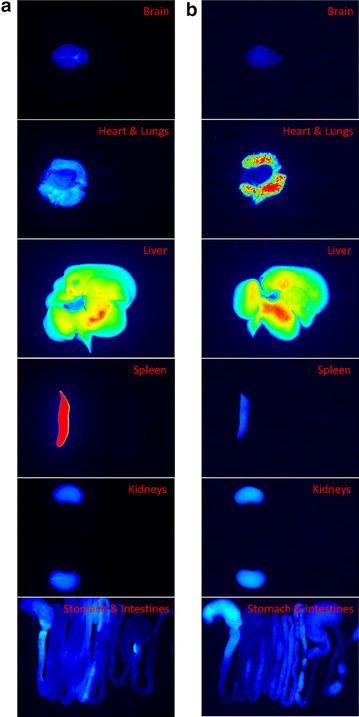
The critical micelle concentration increased from 1.8 to 3.5 mg/l following the decrease of the PNiPAAm chain length. The copolymers revealed a lower critical solution temperature (LCST) between 33 and 40°C. The copolymers self-assembled to form spherical particles of 146-199 nm in diameter. Carboplatin in micelles exhibited a slower release at 37°C relative to that at 25°C due to the gel layer formation on the micellar shell above the LCST. The micelles containing dye or carboplatin were intravenously injected into the rats for in vivo bioimaging and drug biodistribution. The bioimaging profiles showed a significant accumulation of micelles in the lungs. The micelles could minimize the reticuloendothelial system (RES) recognition of the dye. In vivo biodistribution demonstrated an improved pulmonary accumulation of carboplatin from 2.5 to 3.4 μg/mg by the micelles as compared to the control solution. Carboplatin accumulation in the heart and kidneys was reduced after encapsulation by the micelles.
CONCLUSION
This study supports the potential of PNiPAAm-b-PCL micelles to passively target the lungs and attenuate RES uptake and possible side effects.
背景
通过开环聚合合成两亲性聚(N-异丙基丙烯酰胺)-嵌段-聚(ε-己内酯)(PNiPAAm-b-PCL)共聚物,以形成热敏胶束作为生物成像和卡铂递送的纳米载体。
结果
随着PNiPAAm链长的减小,临界胶束浓度从1.8 mg/l增加到3.5 mg/l。共聚物的低临界溶液温度(LCST)在33至40°C之间。共聚物自组装形成直径为146 - 199 nm的球形颗粒。由于在LCST以上胶束壳层形成凝胶层,胶束中的卡铂在37°C时的释放相对于25°C时较慢。将含有染料或卡铂的胶束静脉注射到大鼠体内进行体内生物成像和药物生物分布研究。生物成像结果显示胶束在肺部有显著积累。胶束可使染料对网状内皮系统(RES)的识别最小化。体内生物分布表明,与对照溶液相比,胶束使卡铂在肺部的积累从每毫克2.5 μg提高到3.4 μg。胶束包封后,卡铂在心脏和肾脏中的积累减少。
结论
本研究支持PNiPAAm-b-PCL胶束被动靶向肺部、减弱RES摄取及可能的副作用的潜力。


 Zotero 插件