
内皮细胞雷帕霉素复合物2调控血管生成芽。
Endothelial Cell mTOR Complex-2 Regulates Sprouting Angiogenesis.
作者信息
Farhan Maikel A, Carmine-Simmen Katia, Lewis John D, Moore Ronald B, Murray Allan G
机构信息
Department of Medicine, University of Alberta, Edmonton, Canada.
Department of Oncology, University of Alberta, Edmonton, Canada.
出版信息
PLoS One. 2015 Aug 21;10(8):e0135245. doi: 10.1371/journal.pone.0135245. eCollection 2015.
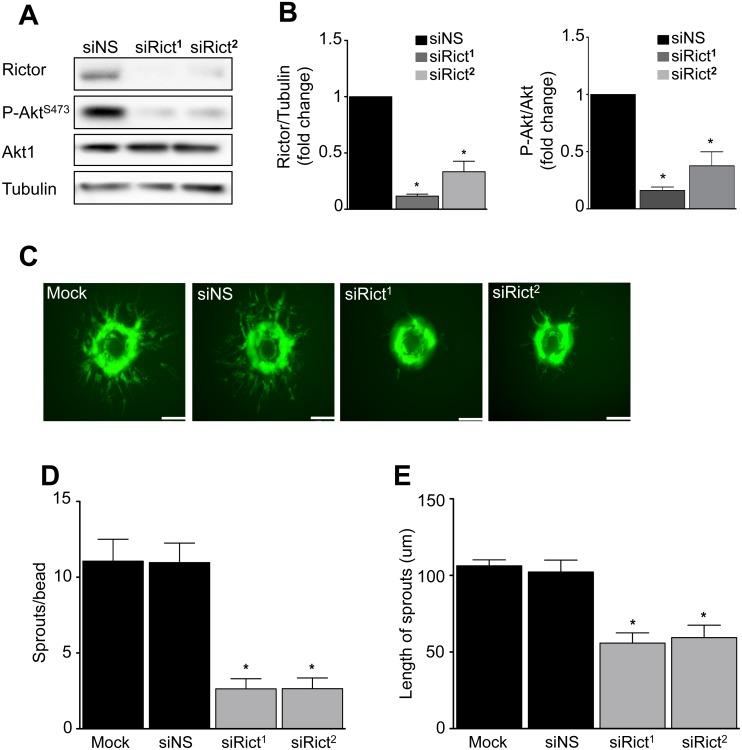
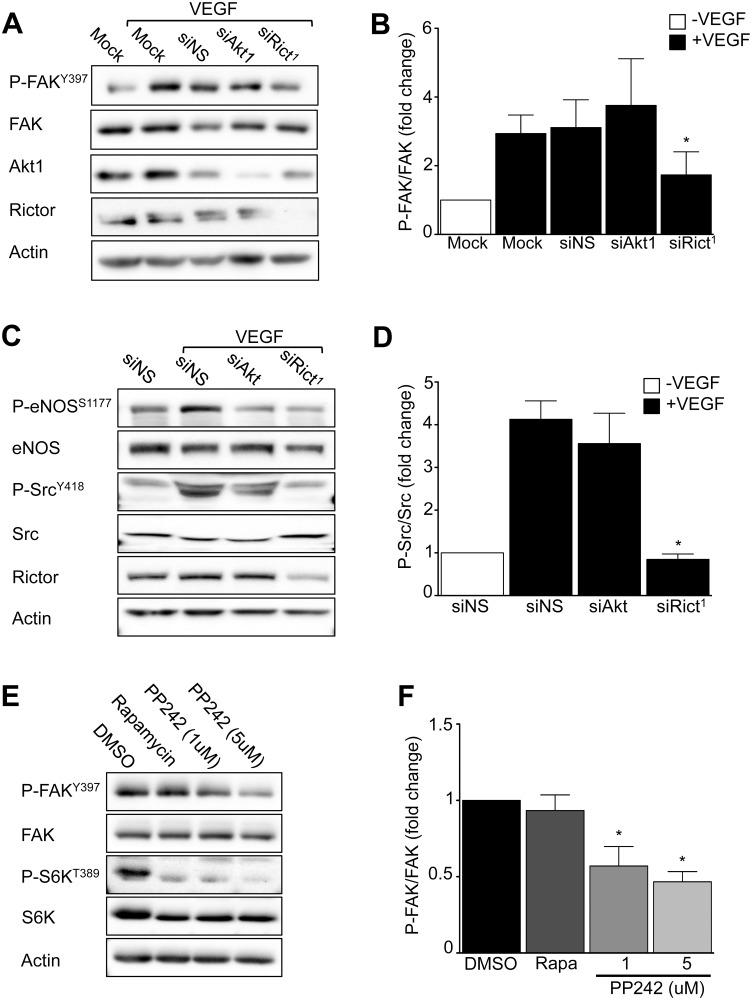
Tumor neovascularization is targeted by inhibition of vascular endothelial growth factor (VEGF) or the receptor to prevent tumor growth, but drug resistance to angiogenesis inhibition limits clinical efficacy. Inhibition of the phosphoinositide 3 kinase pathway intermediate, mammalian target of rapamycin (mTOR), also inhibits tumor growth and may prevent escape from VEGF receptor inhibitors. mTOR is assembled into two separate multi-molecular complexes, mTORC1 and mTORC2. The direct effect of mTORC2 inhibition on the endothelium and tumor angiogenesis is poorly defined. We used pharmacological inhibitors and RNA interference to determine the function of mTORC2 versus Akt1 and mTORC1 in human endothelial cells (EC). Angiogenic sprouting, EC migration, cytoskeleton re-organization, and signaling events regulating matrix adhesion were studied. Sustained inactivation of mTORC1 activity up-regulated mTORC2-dependent Akt1 activation. In turn, ECs exposed to mTORC1-inhibition were resistant to apoptosis and hyper-responsive to renal cell carcinoma (RCC)-stimulated angiogenesis after relief of the inhibition. Conversely, mTORC1/2 dual inhibition or selective mTORC2 inactivation inhibited angiogenesis in response to RCC cells and VEGF. mTORC2-inactivation decreased EC migration more than Akt1- or mTORC1-inactivation. Mechanistically, mTORC2 inactivation robustly suppressed VEGF-stimulated EC actin polymerization, and inhibited focal adhesion formation and activation of focal adhesion kinase, independent of Akt1. Endothelial mTORC2 regulates angiogenesis, in part by regulation of EC focal adhesion kinase activity, matrix adhesion, and cytoskeletal remodeling, independent of Akt/mTORC1.
肿瘤新生血管形成可通过抑制血管内皮生长因子(VEGF)或其受体来靶向治疗,以阻止肿瘤生长,但对血管生成抑制的耐药性限制了临床疗效。抑制磷酸肌醇3激酶途径中间体哺乳动物雷帕霉素靶蛋白(mTOR)也可抑制肿瘤生长,并可能防止对VEGF受体抑制剂产生逃逸。mTOR组装成两个独立的多分子复合物,即mTORC1和mTORC2。mTORC2抑制对内皮细胞和肿瘤血管生成的直接作用尚不清楚。我们使用药理学抑制剂和RNA干扰来确定mTORC2与Akt1和mTORC1在人内皮细胞(EC)中的功能。研究了血管生成芽生、内皮细胞迁移、细胞骨架重组以及调节基质黏附的信号事件。mTORC1活性的持续失活上调了mTORC2依赖性的Akt1激活。反过来,暴露于mTORC1抑制的内皮细胞在抑制解除后对凋亡具有抗性,并且对肾细胞癌(RCC)刺激的血管生成反应过度。相反,mTORC1/2双重抑制或选择性mTORC2失活抑制了对RCC细胞和VEGF的血管生成反应。mTORC2失活比Akt1或mTORC1失活更能降低内皮细胞迁移。从机制上讲,mTORC2失活强烈抑制VEGF刺激的内皮细胞肌动蛋白聚合,并抑制粘着斑形成和粘着斑激酶激活,这与Akt1无关。内皮细胞mTORC2部分通过调节内皮细胞粘着斑激酶活性、基质黏附和细胞骨架重塑来调节血管生成,这与Akt/mTORC1无关。



 Zotero 插件