
提高内源性一氧化氮水平会导致过氧化氢酶失活,并特异性地重新激活肿瘤细胞中的细胞间凋亡信号。
Increasing the endogenous NO level causes catalase inactivation and reactivation of intercellular apoptosis signaling specifically in tumor cells.
作者信息
Bauer Georg
机构信息
Institute of Virology, Department of Medical Microbiology and Hygiene, University Medical Center Freiburg, Hermann-Herder Strasse 11, D-79104 Freiburg, Germany.
出版信息
Redox Biol. 2015 Dec;6:353-371. doi: 10.1016/j.redox.2015.07.017. Epub 2015 Aug 24.
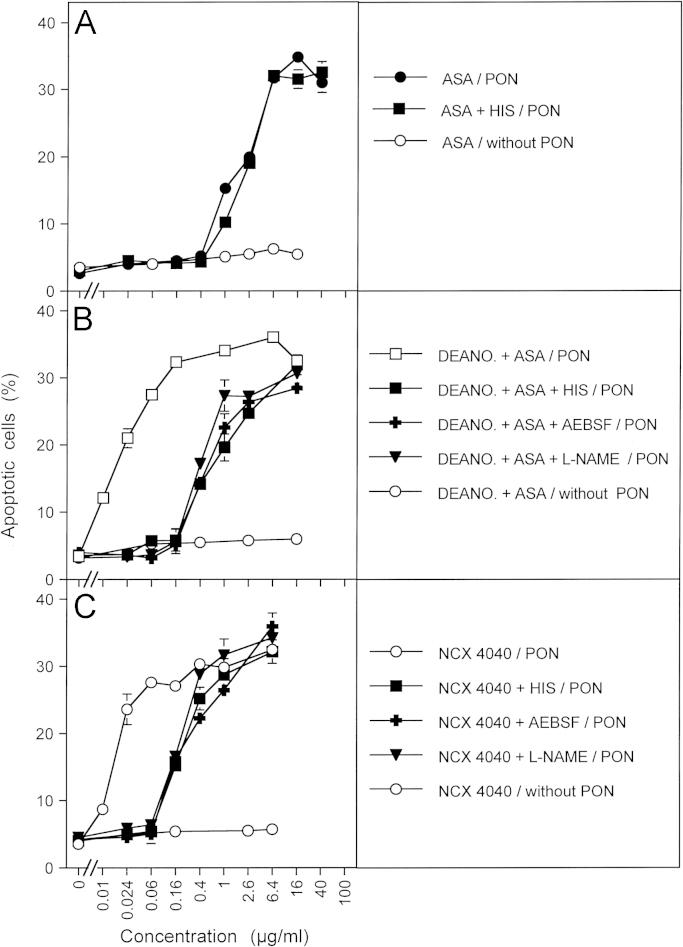
Tumor cells generate extracellular superoxide anions and are protected against intercellular apoptosis-inducing HOCl- and NO/peroxynitrite signaling through the expression of membrane-associated catalase. This enzyme decomposes H2O2 and thus prevents HOCl synthesis. It efficiently interferes with NO/peroxynitrite signaling through oxidation of NO and decomposition of peroxynitrite. The regulatory potential of catalase at the crosspoint of ROS and RNS chemical biology, as well as its high local concentration on the outside of the cell membrane of tumor cells, establish tight control of intercellular signaling and thus prevent tumor cell apoptosis. Therefore, inhibition of catalase or its inactivation by singlet oxygen reactivate intercellular apoptosis-inducing signaling. Nitric oxide and peroxynitrite are connected with catalase in multiple and meaningful ways, as (i) NO can be oxidated by compound I of catalase, (ii) NO can reversibly inhibit catalase, (iii) peroxynitrite can be decomposed by catalase and (iv) the interaction between peroxynitrite and H2O2 leads to the generation of singlet oxygen that inactivates catalase. Therefore, modulation of the concentration of free NO through addition of arginine, inhibition of arginase, induction of NOS expression or inhibition of NO dioxygenase triggers an autoamplificatory biochemical cascade that is based on initial formation of singlet oxygen, amplification of superoxide anion/H2O2 and NO generation through singlet oxygen dependent stimulation of the FAS receptor and caspase-8. Finally, singlet oxygen is generated at sufficiently high concentration to inactivate protective catalase and to reactivate intercellular apoptosis-inducing ROS signaling. This regulatory network allows to establish several pathways for synergistic interactions, like the combination of modulators of NO metabolism with enhancers of superoxide anion generation, modulators of NO metabolism that act at different targets and between modulators of NO metabolism and direct catalase inhibitors. The latter aspect is explicitely studied for the interaction between catalase inhibiting acetylsalicylic acid and an NO donor. It is also shown that hybrid molecules like NO-aspirin utilize this synergistic potential. Our data open novel approaches for rational tumor therapy based on specific ROS signaling and its control in tumor cells.
肿瘤细胞会产生细胞外超氧阴离子,并通过膜相关过氧化氢酶的表达来抵御细胞间诱导凋亡的次氯酸和一氧化氮/过氧亚硝酸盐信号。这种酶分解过氧化氢,从而阻止次氯酸的合成。它通过一氧化氮的氧化和过氧亚硝酸盐的分解有效地干扰一氧化氮/过氧亚硝酸盐信号。过氧化氢酶在活性氧和活性氮化学生物学交叉点的调节潜力,以及其在肿瘤细胞膜外的高局部浓度,建立了对细胞间信号的严格控制,从而防止肿瘤细胞凋亡。因此,抑制过氧化氢酶或其被单线态氧灭活会重新激活细胞间诱导凋亡的信号。一氧化氮和过氧亚硝酸盐与过氧化氢酶以多种有意义的方式相连,如(i)一氧化氮可被过氧化氢酶的化合物I氧化,(ii)一氧化氮可可逆地抑制过氧化氢酶,(iii)过氧亚硝酸盐可被过氧化氢酶分解,以及(iv)过氧亚硝酸盐与过氧化氢之间的相互作用导致单线态氧的产生,从而使过氧化氢酶失活。因此,通过添加精氨酸、抑制精氨酸酶、诱导一氧化氮合酶表达或抑制一氧化氮双加氧酶来调节游离一氧化氮的浓度,会触发一个基于单线态氧初始形成、超氧阴离子/过氧化氢放大以及通过单线态氧依赖刺激FAS受体和半胱天冬酶-8产生一氧化氮的自动放大生化级联反应。最后,单线态氧以足够高的浓度产生,使保护性过氧化氢酶失活,并重新激活细胞间诱导凋亡的活性氧信号。这种调节网络允许建立多种协同相互作用的途径,如一氧化氮代谢调节剂与超氧阴离子生成增强剂的组合、作用于不同靶点的一氧化氮代谢调节剂以及一氧化氮代谢调节剂与直接过氧化氢酶抑制剂之间的组合。后者方面针对过氧化氢酶抑制性乙酰水杨酸与一氧化氮供体之间的相互作用进行了明确研究。还表明,像一氧化氮-阿司匹林这样的杂合分子利用了这种协同潜力。我们的数据为基于肿瘤细胞中特定活性氧信号及其控制的合理肿瘤治疗开辟了新途径。




 Zotero 插件