
高分辨率冷冻电镜揭示RNA病毒的组装和基因组包装机制
Mechanisms of assembly and genome packaging in an RNA virus revealed by high-resolution cryo-EM.
作者信息
Hesketh Emma L, Meshcheriakova Yulia, Dent Kyle C, Saxena Pooja, Thompson Rebecca F, Cockburn Joseph J, Lomonossoff George P, Ranson Neil A
机构信息
Astbury Centre for Structural Molecular Biology, University of Leeds, Mount Preston Street, Leeds LS2 9JT, UK.
Department of Biological Chemistry, John Innes Centre, Norwich Research Park, Colney, Norwich NR4 7UH, UK.
出版信息
Nat Commun. 2015 Dec 10;6:10113. doi: 10.1038/ncomms10113.
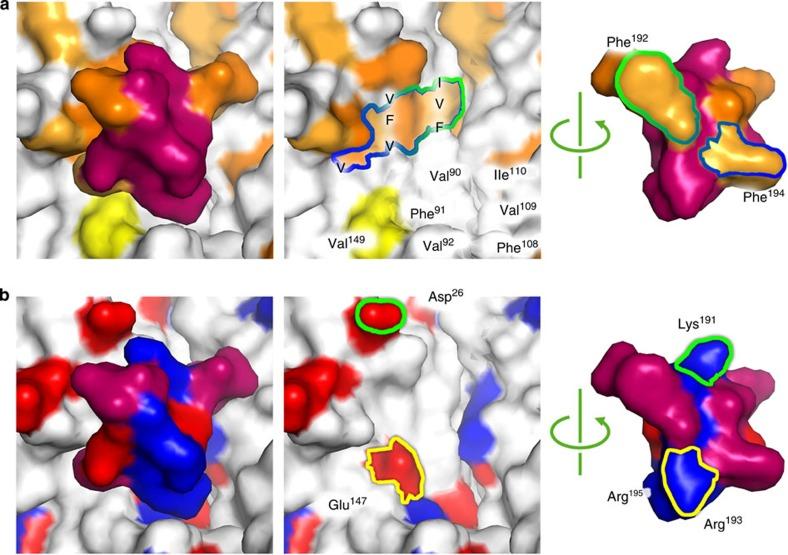
Cowpea mosaic virus is a plant-infecting member of the Picornavirales and is of major interest in the development of biotechnology applications. Despite the availability of >100 crystal structures of Picornavirales capsids, relatively little is known about the mechanisms of capsid assembly and genome encapsidation. Here we have determined cryo-electron microscopy reconstructions for the wild-type virus and an empty virus-like particle, to 3.4 Å and 3.0 Å resolution, respectively, and built de novo atomic models of their capsids. These new structures reveal the C-terminal region of the small coat protein subunit, which is essential for virus assembly and which was missing from previously determined crystal structures, as well as residues that bind to the viral genome. These observations allow us to develop a new model for genome encapsidation and capsid assembly.
豇豆花叶病毒是小RNA病毒目(Picornavirales)中一种能感染植物的病毒,在生物技术应用开发方面具有重大研究价值。尽管已有超过100种小RNA病毒目衣壳的晶体结构,但关于衣壳组装和基因组包装机制的了解相对较少。在此,我们分别以3.4 Å和3.0 Å的分辨率确定了野生型病毒和空病毒样颗粒的冷冻电子显微镜重建结构,并从头构建了它们衣壳的原子模型。这些新结构揭示了小衣壳蛋白亚基的C末端区域,该区域对病毒组装至关重要,且在先前确定的晶体结构中缺失,同时还揭示了与病毒基因组结合的残基。这些观察结果使我们能够建立一种新的基因组包装和衣壳组装模型。




 Zotero 插件