
肯尼亚医院在新临床信息网络中的入院特征以及基本检查、治疗和结果使用情况的差异
Characteristics of admissions and variations in the use of basic investigations, treatments and outcomes in Kenyan hospitals within a new Clinical Information Network.
作者信息
Ayieko Philip, Ogero Morris, Makone Boniface, Julius Thomas, Mbevi George, Nyachiro Wycliffe, Nyamai Rachel, Were Fred, Githanga David, Irimu Grace, English Mike
机构信息
Kenya Medical Research Institute/Wellcome Trust Research Programme, Nairobi, Kenya.
Division of Maternal, Newborn, Child and Adolescent Health, Ministry of Health, Nairobi, Kenya.
出版信息
Arch Dis Child. 2016 Mar;101(3):223-9. doi: 10.1136/archdischild-2015-309269. Epub 2015 Dec 10.
BACKGROUND
Lack of detailed information about hospital activities, processes and outcomes hampers planning, performance monitoring and improvement in low-income countries (LIC). Clinical networks offer one means to advance methods for data collection and use, informing wider health system development in time, but are rare in LIC. We report baseline data from a new Clinical Information Network (CIN) in Kenya seeking to promote data-informed improvement and learning.
METHODS
Data from 13 hospitals engaged in the Kenyan CIN between April 2014 and March 2015 were captured from medical and laboratory records. We use these data to characterise clinical care and outcomes of hospital admission.
RESULTS
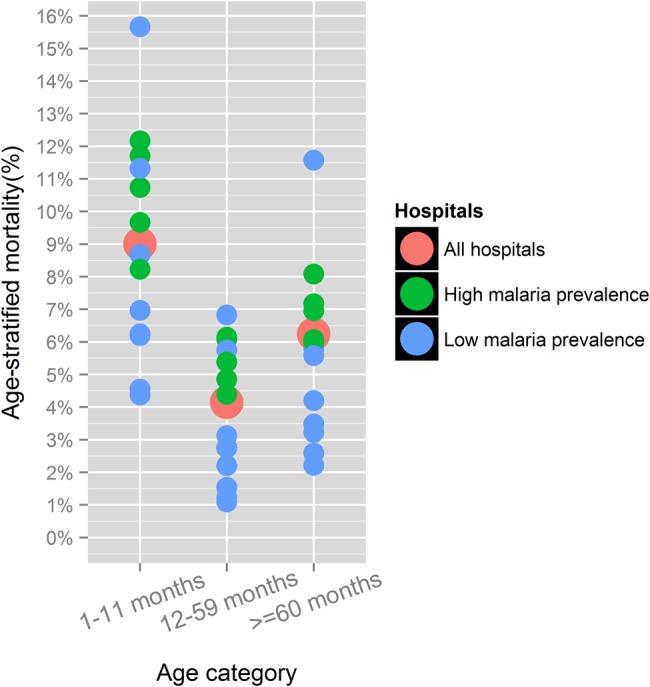
Data were available for a total of 30 042 children aged between 2 months and 15 years. Malaria (in five hospitals), pneumonia and diarrhoea/dehydration (all hospitals) accounted for the majority of diagnoses and comorbidity was found in 17 710 (59%) patients. Overall, 1808 deaths (6%) occurred (range per hospital 2.5%-11.1%) with 1037 deaths (57.4%) occurring by day 2 of admission (range 41%-67.8%). While malaria investigations are commonly done, clinical health workers rarely investigate for other possible causes of fever, test for blood glucose in severe illness or ascertain HIV status of admissions. Adherence to clinical guideline-recommended treatment for malaria, pneumonia, meningitis and acute severe malnutrition varied widely across hospitals.
CONCLUSION
Developing clinical networks is feasible with appropriate support. Early data demonstrate that hospital mortality remains high in Kenya, that resources to investigate severe illness are limited, that care provided and outcomes vary widely and that adoption of effective interventions remains slow. Findings suggest considerable scope for improving care within and across sites.
背景
在低收入国家,缺乏关于医院活动、流程及结果的详细信息会阻碍规划、绩效监测及改进工作。临床网络为推进数据收集与使用方法提供了一种途径,能及时为更广泛的卫生系统发展提供信息,但在低收入国家却很罕见。我们报告了肯尼亚一个新的临床信息网络(CIN)的基线数据,该网络旨在促进基于数据的改进与学习。
方法
收集了2014年4月至2015年3月期间参与肯尼亚CIN的13家医院的医疗和实验室记录数据。我们利用这些数据来描述住院患者的临床护理及结果。
结果
共有30042名年龄在2个月至15岁之间的儿童有数据记录。疟疾(5家医院)、肺炎和腹泻/脱水(所有医院)占诊断的大多数,17710名(59%)患者存在合并症。总体而言,有1808例死亡(6%)(每家医院的范围为2.5%-11.1%),其中1037例死亡(57.4%)发生在入院第2天(范围为41%-67.8%)。虽然疟疾检查通常会进行,但临床医护人员很少调查发热的其他可能原因、在重症时检测血糖或确定入院患者的艾滋病毒感染状况。不同医院对疟疾、肺炎、脑膜炎和急性重度营养不良的临床指南推荐治疗的依从性差异很大。
结论
在适当支持下,发展临床网络是可行的。早期数据表明肯尼亚医院死亡率仍然很高,调查重症的资源有限,所提供的护理和结果差异很大,有效干预措施的采用仍然缓慢。研究结果表明在各医院内部及之间改善护理有很大空间。


 Zotero 插件