
通过米非司酮诱导的Cre重组在转基因斑马鱼中控制致癌性kras V12表达来建立条件性肝肿瘤模型。
Development of a conditional liver tumor model by mifepristone-inducible Cre recombination to control oncogenic kras V12 expression in transgenic zebrafish.
作者信息
Nguyen Anh Tuan, Koh Vivien, Spitsbergen Jan M, Gong Zhiyuan
机构信息
Department of Biological Sciences, National University of Singapore, Singapore 117543.
Department of Microbiology, Oregon State University, Corvallis, Oregon, USA, 97331.
出版信息
Sci Rep. 2016 Jan 21;6:19559. doi: 10.1038/srep19559.
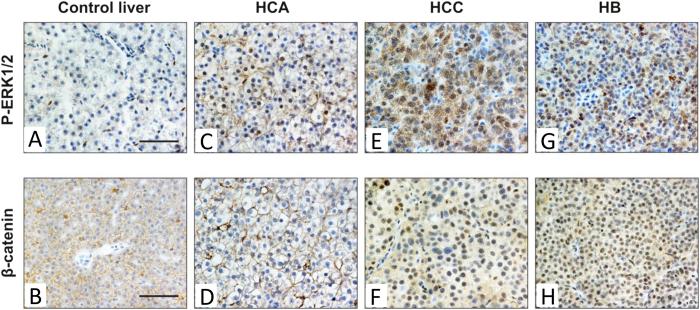
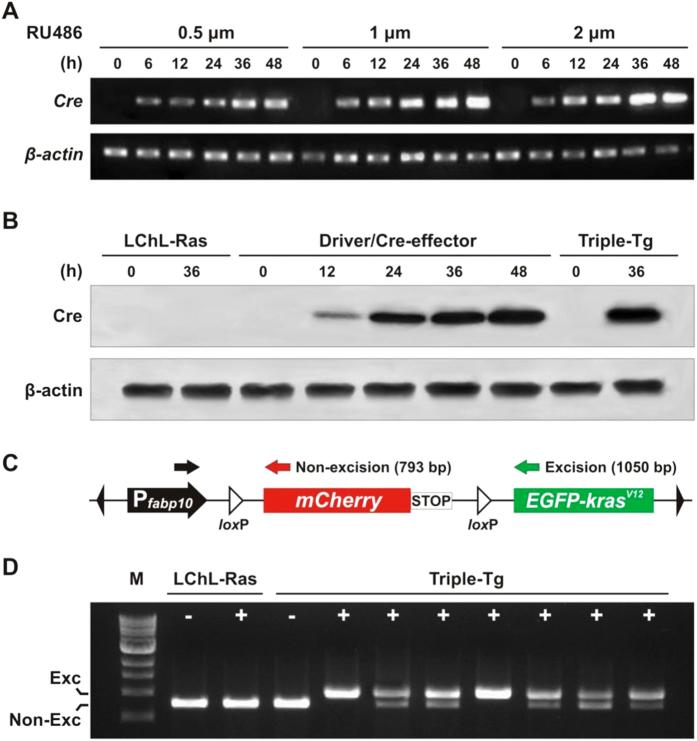
Here we report a new transgenic expression system by combination of liver-specific expression, mifepristone induction and Cre-loxP recombination to conditionally control the expression of oncogenic kras(V12). This transgenic system allowed expression of kras(V12) specifically in the liver by a brief exposure of mifepristone to induce permanent genomic recombination mediated by the Cre-loxP system. We found that liver tumors were generally induced from multiple foci due to incomplete Cre-loxP recombination, thus mimicking naturally occurring human tumors resulting from one or a few mutated cells and clonal proliferation to form nodules. Similar to our earlier studies by both constitutive and inducible expression of the kras(V12) oncogene, hepatocellular carcinoma (HCC) is the main type of liver tumor induced by kras(V12) expression. Moreover, mixed tumors with hepatocellular adenoma and hepatoblastoma (HB) were also frequently observed. Molecular analyses also indicated similar increase of phosphorylated ERK1/2 in all types of liver tumors, but nuclear localization of β-catenin, a sign of malignant transformation, was found only in HCC and HB. Taken together, our new transgenic system reported in this study allows transgenic kras(V12) expression specifically in the zebrafish liver only by a brief exposure of mifepristone to induce permanent genomic recombination mediated by the Cre-loxP system.
在此,我们报告一种新的转基因表达系统,该系统通过肝脏特异性表达、米非司酮诱导和Cre-loxP重组相结合,来条件性控制致癌性kras(V12)的表达。这种转基因系统通过短暂暴露米非司酮以诱导由Cre-loxP系统介导的永久性基因组重组,从而使kras(V12)在肝脏中特异性表达。我们发现,由于Cre-loxP重组不完全,肝脏肿瘤通常由多个病灶诱发,从而模拟了由一个或几个突变细胞及克隆增殖形成结节所导致的自然发生的人类肿瘤。与我们之前通过组成型和诱导型表达kras(V12)癌基因所进行的研究相似,肝细胞癌(HCC)是由kras(V12)表达诱发的主要肝脏肿瘤类型。此外,还经常观察到伴有肝细胞腺瘤和肝母细胞瘤(HB)的混合肿瘤。分子分析还表明,在所有类型的肝脏肿瘤中磷酸化ERK1/2均有类似增加,但仅在HCC和HB中发现了β-连环蛋白的核定位,这是恶性转化的一个标志。综上所述,我们在本研究中报告的新转基因系统仅通过短暂暴露米非司酮以诱导由Cre-loxP系统介导的永久性基因组重组,就能使转基因kras(V12)在斑马鱼肝脏中特异性表达。



 Zotero 插件