
与原子蒸气相连接的波长可调谐纠缠光子源。
Wavelength-tunable sources of entangled photons interfaced with atomic vapours.
作者信息
Trotta Rinaldo, Martín-Sánchez Javier, Wildmann Johannes S, Piredda Giovanni, Reindl Marcus, Schimpf Christian, Zallo Eugenio, Stroj Sandra, Edlinger Johannes, Rastelli Armando
机构信息
Institute of Semiconductor and Solid State Physics, Johannes Kepler University Linz, Altenbergerstr. 69, A-4040 Linz, Austria.
Forschungszentrum Mikrotechnik, FH Vorarlberg, Hochschulstr. 1, A-6850 Dornbirn, Austria.
出版信息
Nat Commun. 2016 Jan 27;7:10375. doi: 10.1038/ncomms10375.
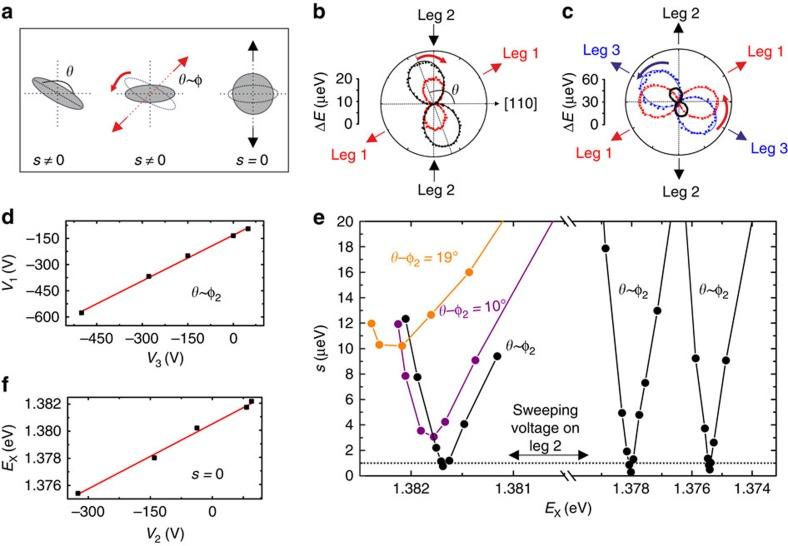
The prospect of using the quantum nature of light for secure communication keeps spurring the search and investigation of suitable sources of entangled photons. A single semiconductor quantum dot is one of the most attractive, as it can generate indistinguishable entangled photons deterministically and is compatible with current photonic-integration technologies. However, the lack of control over the energy of the entangled photons is hampering the exploitation of dissimilar quantum dots in protocols requiring the teleportation of quantum entanglement over remote locations. Here we introduce quantum dot-based sources of polarization-entangled photons whose energy can be tuned via three-directional strain engineering without degrading the degree of entanglement of the photon pairs. As a test-bench for quantum communication, we interface quantum dots with clouds of atomic vapours, and we demonstrate slow-entangled photons from a single quantum emitter. These results pave the way towards the implementation of hybrid quantum networks where entanglement is distributed among distant parties using optoelectronic devices.
利用光的量子特性进行安全通信的前景不断推动着对合适的纠缠光子源的探索和研究。单个半导体量子点是最具吸引力的来源之一,因为它能够确定性地产生不可区分的纠缠光子,并且与当前的光子集成技术兼容。然而,在需要在远程位置进行量子纠缠隐形传态的协议中,对纠缠光子能量缺乏控制阻碍了不同量子点的应用。在此,我们介绍了基于量子点的偏振纠缠光子源,其能量可通过三向应变工程进行调谐,而不会降低光子对的纠缠程度。作为量子通信的测试平台,我们将量子点与原子蒸气云连接,并展示了来自单个量子发射器的慢纠缠光子。这些结果为实现混合量子网络铺平了道路,在该网络中,纠缠通过光电器件在远距离各方之间进行分配。



 Zotero 插件