
二烯丙基二硫化物通过下调LIMK1抑制胃癌中的上皮-间质转化、侵袭和增殖。
Diallyl disulfide suppresses epithelial-mesenchymal transition, invasion and proliferation by downregulation of LIMK1 in gastric cancer.
作者信息
Su Bo, Su Jian, Zeng Ying, Liu Fang, Xia Hong, Ma Yan-Hua, Zhou Zhi-Gang, Zhang Shuo, Yang Bang-Min, Wu You-Hua, Zeng Xi, Ai Xiao-Hong, Ling Hui, Jiang Hao, Su Qi
机构信息
Center for Gastric Cancer Research of Hunan Province, First Affiliated Hospital, University of South China, Hengyang, 421001 Hunan, China.
Key Laboratory of Cancer Cellular and Molecular Pathology of Hunan Provincial University, Cancer Research Institute, University of South China, Hengyang, 421001 Hunan, China.
出版信息
Oncotarget. 2016 Mar 1;7(9):10498-512. doi: 10.18632/oncotarget.7252.
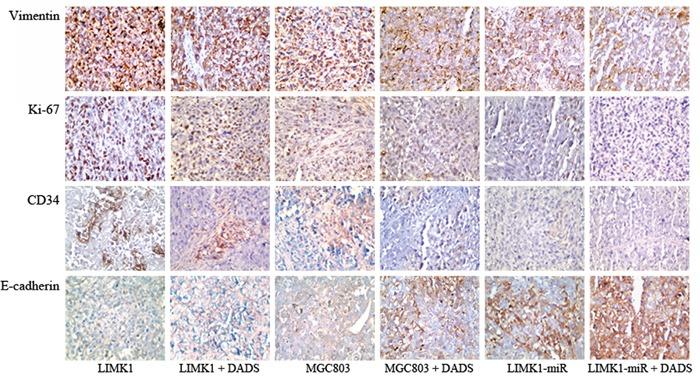
Diallyl disulfide (DADS) has been shown to have multi-targeted antitumor activities. We have previously discovered that it has a repressive effect on LIM kinase-1 (LIMK1) expression in gastric cancer MGC803 cells. This suggests that DADS may inhibit epithelial-mesenchymal transition (EMT) by downregulating LIMK1, resulting in the inhibition of invasion and growth in gastric cancer. In this study, we reveal that LIMK1 expression is correlated with tumor differentiation, invasion depth, clinical stage, lymph node metastasis, and poor prognosis. DADS downregulated the Rac1-Pak1/Rock1-LIMK1 pathway in MGC803 cells, as shown by decreased p-LIMK1 and p-cofilin1 levels, and suppressed cell migration and invasion. Knockdown and overexpression experiments performed in vitro demonstrated that downregulating LIMK1 with DADS resulted in restrained EMT that was coupled with decreased matrix metalloproteinase-9 (MMP-9) and increased tissue inhibitor of metalloproteinase-3 (TIMP-3) expression. In in vitro and in vivo experiments, the DADS-induced suppression of cell proliferation was enhanced and antagonized by the knockdown and overexpression of LIMK1, respectively. Similar results were observed for DADS-induced changes in the expression of vimentin, CD34, Ki-67, and E-cadherin in xenografted tumors. These results indicate that downregulation of LIMK1 by DADS could explain the inhibition of EMT, invasion and proliferation in gastric cancer cells.
二烯丙基二硫化物(DADS)已被证明具有多靶点抗肿瘤活性。我们之前发现它对胃癌MGC803细胞中LIM激酶-1(LIMK1)的表达有抑制作用。这表明DADS可能通过下调LIMK1来抑制上皮-间质转化(EMT),从而抑制胃癌的侵袭和生长。在本研究中,我们发现LIMK1的表达与肿瘤分化、侵袭深度、临床分期、淋巴结转移及预后不良相关。DADS下调了MGC803细胞中的Rac1-Pak1/Rock1-LIMK1信号通路,表现为p-LIMK1和p-cofilin1水平降低,并抑制了细胞迁移和侵袭。体外进行的敲低和过表达实验表明,DADS下调LIMK1导致EMT受到抑制,同时基质金属蛋白酶-9(MMP-9)表达降低,金属蛋白酶组织抑制剂-3(TIMP-3)表达增加。在体外和体内实验中,LIMK1的敲低和过表达分别增强和拮抗了DADS诱导的细胞增殖抑制作用。在异种移植肿瘤中,DADS诱导的波形蛋白、CD34、Ki-67和E-钙黏蛋白表达变化也观察到了类似结果。这些结果表明,DADS下调LIMK1可以解释其对胃癌细胞EMT、侵袭和增殖的抑制作用。


 Zotero 插件