
细颗粒物(PM2.5)对载脂蛋白E基因敲除(ApoE(-/-))小鼠全身氧化应激和心脏功能的影响。
Effects of Fine Particulate Matter (PM2.5) on Systemic Oxidative Stress and Cardiac Function in ApoE(-/-) Mice.
作者信息
Pei Yiling, Jiang Rongfang, Zou Yunzeng, Wang Yu, Zhang Suhui, Wang Guanghe, Zhao Jinzhuo, Song Weimin
机构信息
Department of Environmental Health, School of Public Health and Key Laboratory of Public Health Safety, Fudan University, Shanghai 200032, China.
Department of Cardiology, Shanghai Institute of Cardiovascular Diseases, Zhongshan Hospital, Fudan University, Shanghai 200032, China.
出版信息
Int J Environ Res Public Health. 2016 May 12;13(5):484. doi: 10.3390/ijerph13050484.
AIM
In this study, we aimed to explore the toxic mechanisms of cardiovascular injuries induced by ambient fine particulate matter (PM2.5) in atherosclerotic-susceptible ApoE(-/-) mice. An acute toxicological animal experiment was designed with PM2.5 exposure once a day, every other day, for three days.
METHODS
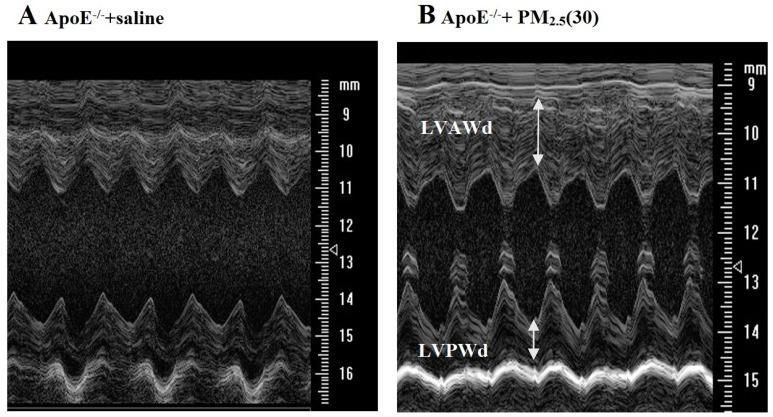
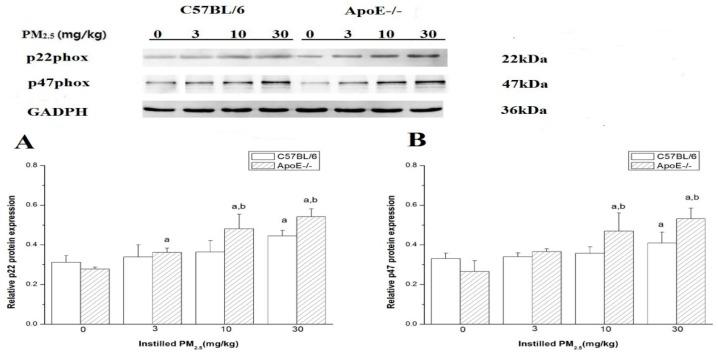
ApoE(-/-) and C57BL/6 mice were randomly categorized into four groups, respectively (n = 6): one control group, three groups exposed to PM2.5 alone at low-, mid-, and high-dose (3, 10, or 30 mg/kg b.w.). Heart rate (HR) and electrocardiogram (ECG) were monitored before instillation of PM2.5 and 24 h after the last instillation, respectively. Cardiac function was monitored by echocardiography (Echo) after the last instillation. Biomarkers of systemic oxidative injuries (MDA, SOD), heart oxidative stress (MDA, SOD), and NAD(P)H oxidase subunits (p22phox, p47phox) mRNA and protein expression were analyzed in mice. The results showed that PM2.5 exposure could trigger the significant increase of MDA, and induce the decrease of heart rate variability (HRV), a marker of cardiac autonomic nervous system (ANS) function with a dose-response manner. Meanwhile, abnormal ECG types were monitored in mice after exposure to PM2.5. The expression of cytokines related with oxidative injuries, and mRNA and protein expression of NADPH, increased significantly in ApoE(-/-) mice in the high-dose group when compared with the dose-matched C57BL6 mice, but no significant difference was observed at Echo. In conclusion, PM2.5 exposure could cause oxidative and ANS injuries, and ApoE(-/-) mice displayed more severe oxidative effects induced by PM2.5.
目的
在本研究中,我们旨在探究环境细颗粒物(PM2.5)对动脉粥样硬化易感的载脂蛋白E基因敲除(ApoE(-/-))小鼠心血管损伤的毒性机制。设计了一项急性毒理学动物实验,每天暴露于PM2.5一次,隔天进行,共三天。
方法
将ApoE(-/-)和C57BL/6小鼠分别随机分为四组(n = 6):一个对照组,三个分别低、中、高剂量(3、10或30 mg/kg体重)单独暴露于PM2.5的组。分别在滴注PM2.5前和最后一次滴注后24小时监测心率(HR)和心电图(ECG)。最后一次滴注后通过超声心动图(Echo)监测心脏功能。分析小鼠全身氧化损伤的生物标志物(丙二醛(MDA)、超氧化物歧化酶(SOD))、心脏氧化应激(MDA、SOD)以及烟酰胺腺嘌呤二核苷酸磷酸(NAD(P)H)氧化酶亚基(p22phox、p47phox)的mRNA和蛋白表达。结果表明,暴露于PM2.5可引发MDA显著增加,并呈剂量反应方式诱导心脏自主神经系统(ANS)功能标志物心率变异性(HRV)降低。同时,暴露于PM2.5后的小鼠监测到异常心电图类型。与剂量匹配的C57BL6小鼠相比,高剂量组ApoE(-/-)小鼠中与氧化损伤相关的细胞因子表达以及NADPH的mRNA和蛋白表达显著增加,但在Echo检查中未观察到显著差异。总之,暴露于PM2.5可导致氧化损伤和ANS损伤,且ApoE(-/-)小鼠表现出由PM2.5诱导的更严重氧化效应。




 Zotero 插件