
DYT1肌张力障碍会增加人类的冒险行为。
DYT1 dystonia increases risk taking in humans.
作者信息
Arkadir David, Radulescu Angela, Raymond Deborah, Lubarr Naomi, Bressman Susan B, Mazzoni Pietro, Niv Yael
机构信息
Department of Neurology, Hadassah Medical Center and the Hebrew University, Jerusalem, Israel.
Department of Psychology, Princeton University, Princeton, United States.
出版信息
Elife. 2016 Jun 1;5:e14155. doi: 10.7554/eLife.14155.
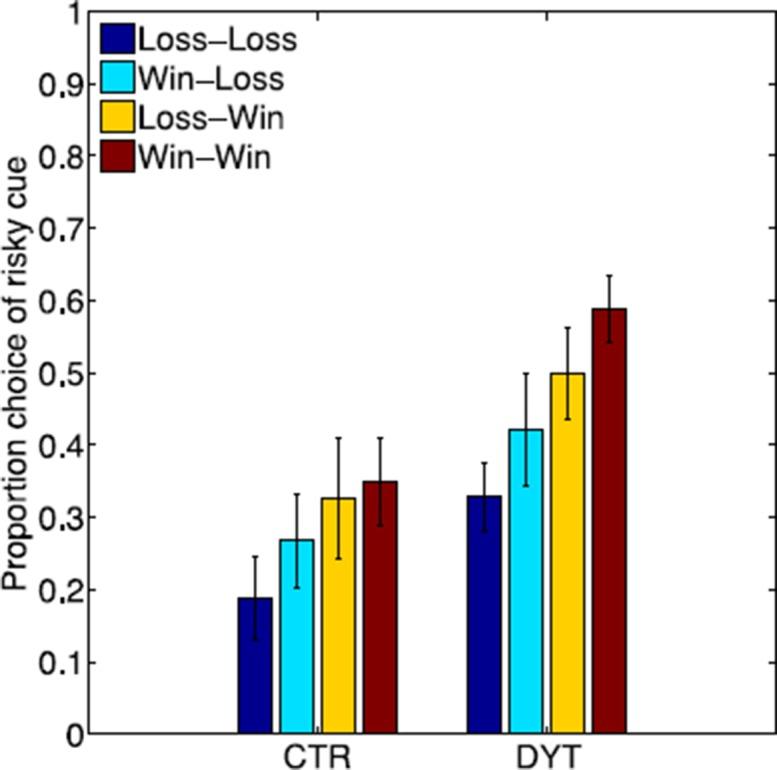
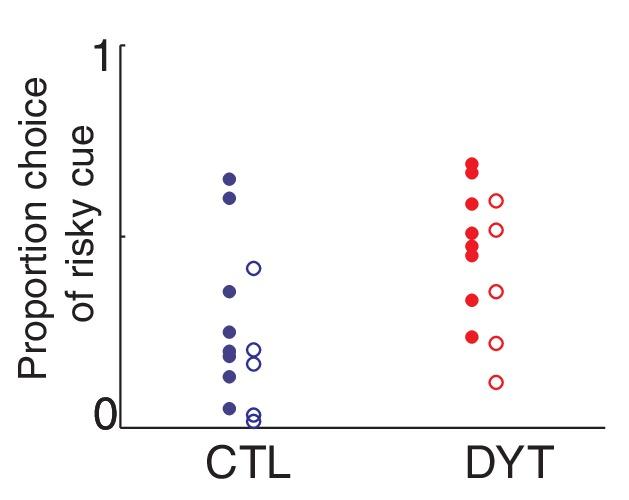
It has been difficult to link synaptic modification to overt behavioral changes. Rodent models of DYT1 dystonia, a motor disorder caused by a single gene mutation, demonstrate increased long-term potentiation and decreased long-term depression in corticostriatal synapses. Computationally, such asymmetric learning predicts risk taking in probabilistic tasks. Here we demonstrate abnormal risk taking in DYT1 dystonia patients, which is correlated with disease severity, thereby supporting striatal plasticity in shaping choice behavior in humans.
将突触修饰与明显的行为变化联系起来一直很困难。DYT1肌张力障碍是一种由单基因突变引起的运动障碍,啮齿动物模型显示皮质纹状体突触的长时程增强增加,长时程抑制减少。从计算角度来看,这种不对称学习预示着在概率任务中会冒险。在此,我们证明了DYT1肌张力障碍患者存在异常冒险行为,且这种行为与疾病严重程度相关,从而支持纹状体可塑性在塑造人类选择行为中的作用。




 Zotero 插件