
中风相关感染的潜在特异性免疫指标部分受交感神经通路激活的调节。
Potential specific immunological indicators for stroke associated infection are partly modulated by sympathetic pathway activation.
作者信息
Wang Huan, Yan Fu-Ling, Cunningham Michael, Deng Qi-Wen, Zuo Lei, Xing Fang-Lan, Shi Lu-Hang, Hu Shan-Shan, Huang Ya
机构信息
Neurologic Department, Affiliated Zhongda Hospital, School of Medicine, Southeast University, Nanjing, China.
Public Health School of Southeast University, Nanjing, China.
出版信息
Oncotarget. 2016 Aug 9;7(32):52404-52415. doi: 10.18632/oncotarget.10497.
BACKGROUND
Evidence has led to the consideration of immunodepression after stroke as an important contributor to stroke associated infection (SAI). However, so far no specific immunological indicator has been identified for SAI, and the underlying mechanism remains poorly understood.
RESULTS
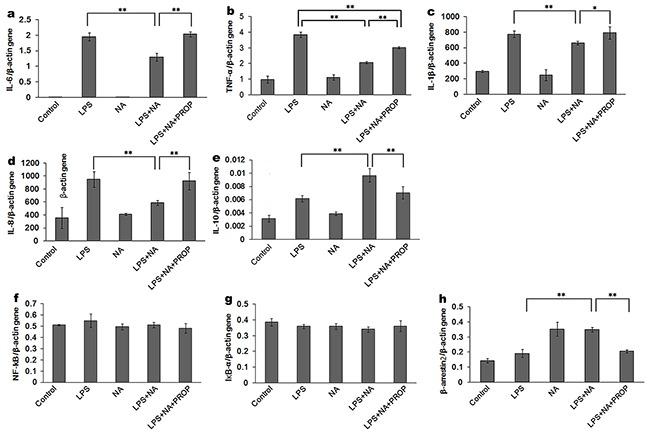
SAI patients had significantly higher IL-6 and IL-10 levels and lower HLA-DR levels than no-infection patients within 48h after stroke onset. NA significantly increased IL-10 levels, reduced HLA-DR expression, and decreased IL-6 expression by increasing β-arrestin2 expression which reduced the activation of the NF-κB pathway. Propranolol reversed this effect of NA by reducing β-arrestin2 expression.
MATERIALS AND METHODS
A systematic search for eligible clinical studies was applied to pool the differences in peripheral cytokine levels between infection and no-infection stroke patients. The underlying mechanism behind these differences was investigated in vitro by applying norepinephrine (NA) and lipopolysaccharide (LPS) to simulate sympathetic pathway activation and sepsis respectively in THP-1 cells. Propranolol was applied to determine the effect of reversing the activation of the sympathetic pathway. Immunological indicators were also detected to assess the immune activation of THP-1 cells and measurements of the expression of β-arrestin2, NF-κB, IκBα and phosphor-IκBα were performed to assess the activation of the sympathetic pathway.
CONCLUSION
IL-6, IL-10 and HLA-DR are good candidate biomarkers for SAI. The activation of the sympathetic pathway could partly account for the specific immunological alterations found in SAI patients including HLA-DR decrease and IL-10 increase, which both could be reversed by propranolol. However, the mechanism underlying IL-6 increase still needs further exploration.
背景
有证据表明,中风后免疫抑制被认为是中风相关感染(SAI)的一个重要促成因素。然而,迄今为止,尚未确定SAI的特异性免疫指标,其潜在机制仍知之甚少。
结果
SAI患者在中风发作后48小时内,其白细胞介素-6(IL-6)和白细胞介素-10(IL-10)水平显著高于未感染患者,而人类白细胞抗原-DR(HLA-DR)水平则较低。去甲肾上腺素(NA)通过增加β-抑制蛋白2的表达,显著提高了IL-10水平,降低了HLA-DR表达,并降低了IL-6表达,进而减少了核因子κB(NF-κB)通路的激活。普萘洛尔通过降低β-抑制蛋白2的表达,逆转了NA的这种作用。
材料与方法
通过系统检索符合条件的临床研究,汇总感染性和非感染性中风患者外周细胞因子水平的差异。在体外,分别应用去甲肾上腺素(NA)和脂多糖(LPS)模拟THP-1细胞中交感神经通路激活和脓毒症,研究这些差异背后的潜在机制。应用普萘洛尔来确定逆转交感神经通路激活的效果。还检测了免疫指标,以评估THP-1细胞的免疫激活情况,并检测β-抑制蛋白2、NF-κB、IκBα和磷酸化IκBα的表达,以评估交感神经通路的激活情况。
结论
IL-6、IL-10和HLA-DR是SAI的良好候选生物标志物。交感神经通路的激活可能部分解释了SAI患者中发现的特异性免疫改变,包括HLA-DR降低和IL-10升高,而普萘洛尔均可逆转这些改变。然而,IL-6升高的潜在机制仍需进一步探索。



 Zotero 插件