
在睡眠中用光遗传学方法阻断尖波涟漪事件不会干扰海马体CA1区稳定空间表征的形成。
Optogenetically Blocking Sharp Wave Ripple Events in Sleep Does Not Interfere with the Formation of Stable Spatial Representation in the CA1 Area of the Hippocampus.
作者信息
Kovács Krisztián A, O'Neill Joseph, Schoenenberger Philipp, Penttonen Markku, Ranguel Guerrero Damaris K, Csicsvari Jozsef
机构信息
Institute of Science and Technology Austria, Klosterneuburg, Austria.
Department of Psychology, University of Jyvaskyla, Jyvaskyla, Finland.
出版信息
PLoS One. 2016 Oct 19;11(10):e0164675. doi: 10.1371/journal.pone.0164675. eCollection 2016.
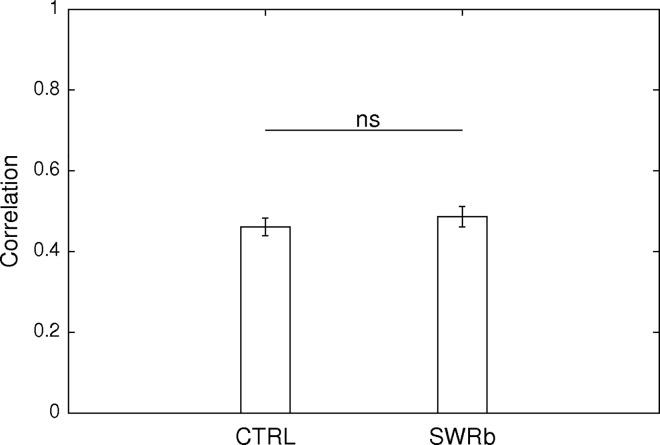
During hippocampal sharp wave/ripple (SWR) events, previously occurring, sensory input-driven neuronal firing patterns are replayed. Such replay is thought to be important for plasticity-related processes and consolidation of memory traces. It has previously been shown that the electrical stimulation-induced disruption of SWR events interferes with learning in rodents in different experimental paradigms. On the other hand, the cognitive map theory posits that the plastic changes of the firing of hippocampal place cells constitute the electrophysiological counterpart of the spatial learning, observable at the behavioral level. Therefore, we tested whether intact SWR events occurring during the sleep/rest session after the first exploration of a novel environment are needed for the stabilization of the CA1 code, which process requires plasticity. We found that the newly-formed representation in the CA1 has the same level of stability with optogenetic SWR blockade as with a control manipulation that delivered the same amount of light into the brain. Therefore our results suggest that at least in the case of passive exploratory behavior, SWR-related plasticity is dispensable for the stability of CA1 ensembles.
在海马体尖波/涟漪(SWR)事件期间,先前发生的、由感觉输入驱动的神经元放电模式会被重演。这种重演被认为对与可塑性相关的过程以及记忆痕迹的巩固很重要。此前已有研究表明,电刺激诱导的SWR事件中断会在不同实验范式中干扰啮齿动物的学习。另一方面,认知地图理论认为,海马体位置细胞放电的可塑性变化构成了空间学习在电生理方面的对应物,这在行为层面是可观察到的。因此,我们测试了在首次探索新环境后的睡眠/休息期间发生的完整SWR事件对于CA1编码的稳定是否必要,而这一过程需要可塑性。我们发现,与向大脑输送相同量光线的对照操作相比,光遗传学阻断SWR时,CA1中新形成的表征具有相同水平的稳定性。因此,我们的结果表明,至少在被动探索行为的情况下,与SWR相关的可塑性对于CA1神经元集群的稳定性是可有可无的。


 Zotero 插件