
人口转变和公共卫生政策如何影响巴西的帕金森病患者?
How do demographic transitions and public health policies affect patients with Parkinson's disease in Brazil?
作者信息
Bovolenta Tânia M, Felicio Andre C
机构信息
R. Neurology Program, Hospital Israelita Albert Einstein, São Paulo, Brazil.
出版信息
Clin Interv Aging. 2017 Jan 25;12:197-205. doi: 10.2147/CIA.S123029. eCollection 2017.
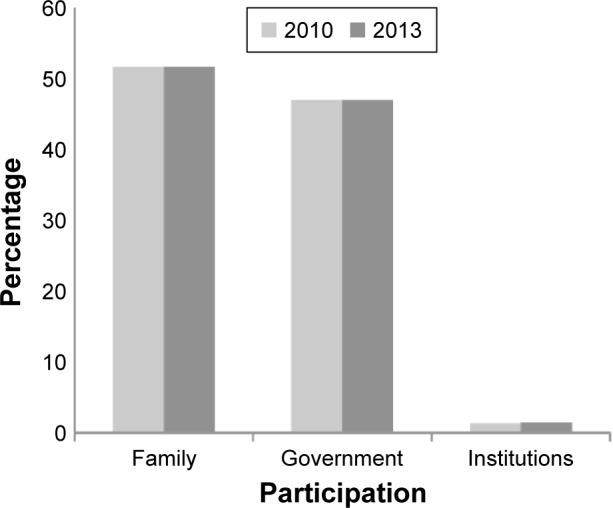
Brazil is currently experiencing a significant demographic transition characterized by a decrease in fertility rates and an exponential increase in the number of elderly citizens, which presents a special challenge for the health care professionals. More than other portions of the population, the elderly are most commonly affected by chronic diseases such as Parkinson's disease. Policymakers contend that Brazil is reasonably well-prepared regarding elderly health care, with policies that aim to ensure the quality of life and the well-being of this portion of the population. However, what happens in practice falls short of what the Brazilian Constitution sets forth. Specifically, there is a clear contradiction between what the law recognizes as being a citizen's rights and the implementation of guidelines. Because health financing in Brazil remains relatively low, the civil society tries to fill in the gaps as much as possible in the treatment of elderly patients suffering from chronic diseases such as Parkinson's disease. In this review, we outline the current legislation in Brazil regarding the elderly and in particular, patients with Parkinson's disease, in the context of a rapidly aging population.
巴西目前正在经历重大的人口结构转变,其特点是生育率下降,老年公民数量呈指数级增长,这给医疗保健专业人员带来了特殊挑战。与其他人口群体相比,老年人最常受到帕金森病等慢性病的影响。政策制定者认为,巴西在老年人医疗保健方面准备相当充分,制定了旨在确保这部分人口生活质量和福祉的政策。然而,实际情况却未能达到巴西宪法的规定。具体而言,法律所承认的公民权利与指导方针的实施之间存在明显矛盾。由于巴西的卫生融资水平仍然相对较低,民间社会试图在治疗患有帕金森病等慢性病的老年患者方面尽可能填补空白。在本综述中,我们概述了在人口迅速老龄化背景下巴西目前关于老年人,特别是帕金森病患者的立法。

 Zotero 插件