
酶固定化介孔二氧化硅纳米容器(IBN-4)在前药激活癌症诊疗中的应用。
Utilization of Enzyme-Immobilized Mesoporous Silica Nanocontainers (IBN-4) in Prodrug-Activated Cancer Theranostics.
作者信息
Hung Bau-Yen, Kuthati Yaswanth, Kankala Ranjith Kumar, Kankala Shravankumar, Deng Jin-Pei, Liu Chen-Lun, Lee Chia-Hung
机构信息
Department of Life Science and Institute of Biotechnology, National Dong Hwa University, Hualien-974, Taiwan.
Department of Chemistry, Kakatiya University, Telangana State-506009, India.
出版信息
Nanomaterials (Basel). 2015 Dec 4;5(4):2169-2191. doi: 10.3390/nano5042169.
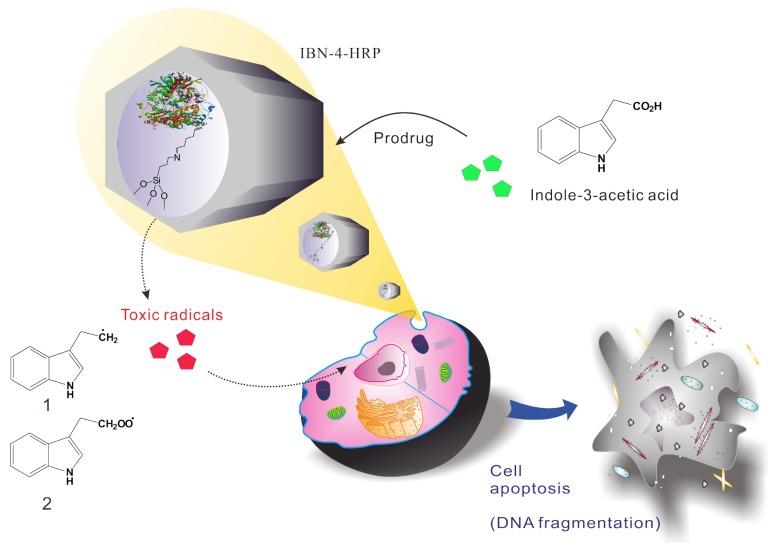
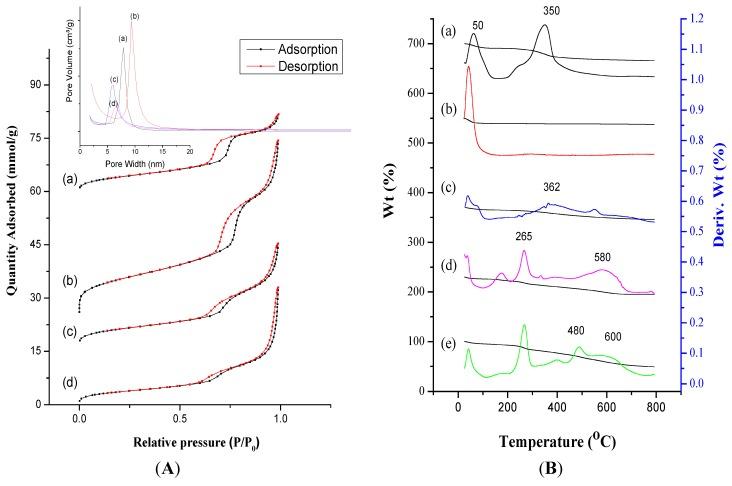
To develop a carrier for use in enzyme prodrug therapy, Horseradish peroxidase (HRP) was immobilized onto mesoporous silica nanoparticles (IBN-4: Institute of Bioengineering and Nanotechnology), where the nanoparticle surfaces were functionalized with 3-aminopropyltrimethoxysilane and further conjugated with glutaraldehyde. Consequently, the enzymes could be stabilized in nanochannels through the formation of covalent imine bonds. This strategy was used to protect HRP from immune exclusion, degradation and denaturation under biological conditions. Furthermore, immobilization of HRP in the nanochannels of IBN-4 nanomaterials exhibited good functional stability upon repetitive use and long-term storage (60 days) at 4 °C. The generation of functionalized and HRP-immobilized nanomaterials was further verified using various characterization techniques. The possibility of using HRP-encapsulated IBN-4 materials in prodrug cancer therapy was also demonstrated by evaluating their ability to convert a prodrug (indole-3- acetic acid (IAA)) into cytotoxic radicals, which triggered tumor cell apoptosis in human colon carcinoma (HT-29 cell line) cells. A lactate dehydrogenase (LDH) assay revealed that cells could be exposed to the IBN-4 nanocomposites without damaging their membranes, confirming apoptotic cell death. In summary, we demonstrated the potential of utilizing large porous mesoporous silica nanomaterials (IBN-4) as enzyme carriers for prodrug therapy.
为开发一种用于酶前药疗法的载体,将辣根过氧化物酶(HRP)固定在介孔二氧化硅纳米颗粒(IBN - 4:生物工程与纳米技术研究所)上,纳米颗粒表面用3 - 氨丙基三甲氧基硅烷进行功能化处理,并进一步与戊二醛偶联。因此,酶可通过形成共价亚胺键在纳米通道中稳定下来。该策略用于在生物条件下保护HRP免受免疫排斥、降解和变性。此外,将HRP固定在IBN - 4纳米材料的纳米通道中,在4℃重复使用和长期储存(60天)时表现出良好的功能稳定性。使用各种表征技术进一步验证了功能化和固定有HRP的纳米材料的生成。通过评估其将前药(吲哚 - 3 - 乙酸(IAA))转化为细胞毒性自由基的能力,也证明了使用包封有HRP的IBN - 4材料进行前药癌症治疗的可能性,这种自由基引发了人结肠癌细胞(HT - 29细胞系)的凋亡。乳酸脱氢酶(LDH)测定表明,细胞可以暴露于IBN - 4纳米复合材料而不损伤其细胞膜,证实了凋亡性细胞死亡。总之,我们证明了利用大孔介孔二氧化硅纳米材料(IBN - 4)作为前药疗法酶载体的潜力。




 Zotero 插件