
产热脂肪细胞促进高密度脂蛋白(HDL)周转和胆固醇逆转运。
Thermogenic adipocytes promote HDL turnover and reverse cholesterol transport.
机构信息
Department of Biochemistry and Molecular Cell Biology, University Medical Center Hamburg-Eppendorf, Martinistr. 52, 20246 Hamburg, Germany.
Department of Orthopaedics, University Medical Center Hamburg-Eppendorf, Martinistr. 52, 20246 Hamburg, Germany.
出版信息
Nat Commun. 2017 Apr 19;8:15010. doi: 10.1038/ncomms15010.
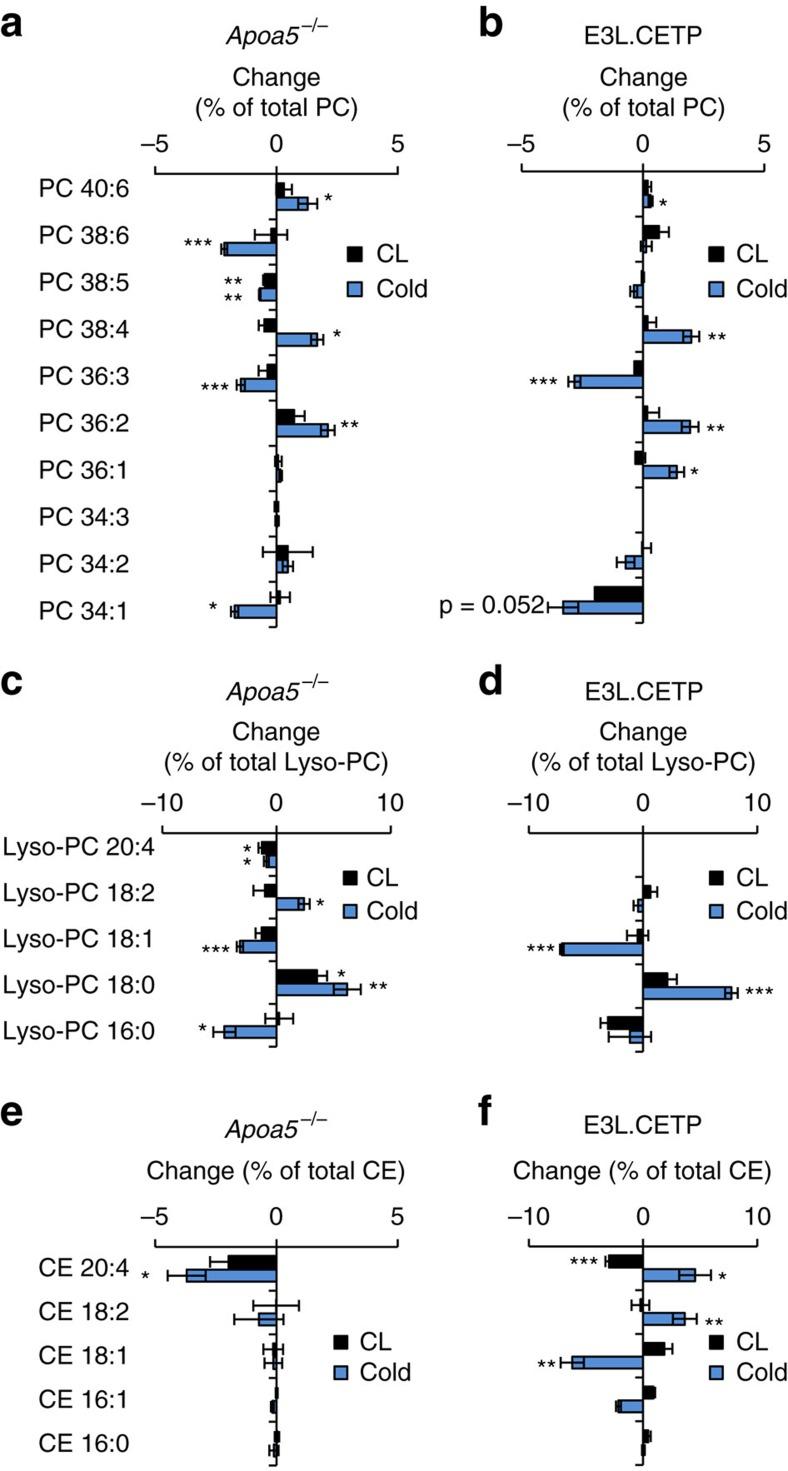
Brown and beige adipocytes combust nutrients for thermogenesis and through their metabolic activity decrease pro-atherogenic remnant lipoproteins in hyperlipidemic mice. However, whether the activation of thermogenic adipocytes affects the metabolism and anti-atherogenic properties of high-density lipoproteins (HDL) is unknown. Here, we report a reduction in atherosclerosis in response to pharmacological stimulation of thermogenesis linked to increased HDL levels in APOE*3-Leiden.CETP mice. Both cold-induced and pharmacological thermogenic activation enhances HDL remodelling, which is associated with specific lipidomic changes in mouse and human HDL. Furthermore, thermogenic stimulation promotes HDL-cholesterol clearance and increases macrophage-to-faeces reverse cholesterol transport in mice. Mechanistically, we show that intravascular lipolysis by adipocyte lipoprotein lipase and hepatic uptake of HDL by scavenger receptor B-I are the driving forces of HDL-cholesterol disposal in liver. Our findings corroborate the notion that high metabolic activity of thermogenic adipocytes confers atheroprotective properties via increased systemic cholesterol flux through the HDL compartment.
棕色和米色脂肪细胞通过代谢活性燃烧营养物质以产热,并降低高脂血症小鼠中促动脉粥样硬化的残粒脂蛋白。然而,尚不清楚产热脂肪细胞的激活是否会影响高密度脂蛋白 (HDL) 的代谢和抗动脉粥样硬化特性。在这里,我们报告了一种与 APOE*3-Leiden.CETP 小鼠中 HDL 水平升高相关的、对产热的药理学刺激的反应性动脉粥样硬化减少。冷诱导和药理学产热激活均可增强 HDL 重塑,这与小鼠和人类 HDL 中的特定脂质组学变化相关。此外,产热刺激可促进 HDL 胆固醇清除,并增加小鼠中巨噬细胞向粪便的胆固醇逆向转运。从机制上讲,我们表明,脂肪细胞脂蛋白脂肪酶的血管内脂肪分解和清道夫受体 B-I 对 HDL 的肝摄取是 HDL 胆固醇在肝脏中清除的驱动力。我们的研究结果证实了这样一种观点,即产热脂肪细胞的高代谢活性通过增加通过 HDL 隔室的全身胆固醇通量赋予抗动脉粥样硬化特性。




 Zotero 插件