
基于 CVD 石墨烯层和剥离石墨烯纳米片的应变计,具有增强的重现性和可扩展性,适用于大量生产。
Strain Gauges Based on CVD Graphene Layers and Exfoliated Graphene Nanoplatelets with Enhanced Reproducibility and Scalability for Large Quantities.
机构信息
Department of Mechanical Engineering, University of Siegen, 57076 Siegen, Germany.
Chair for Electronic Devices, RWTH Aachen University, 52074 Aachen, Germany.
出版信息
Sensors (Basel). 2017 Dec 18;17(12):2937. doi: 10.3390/s17122937.
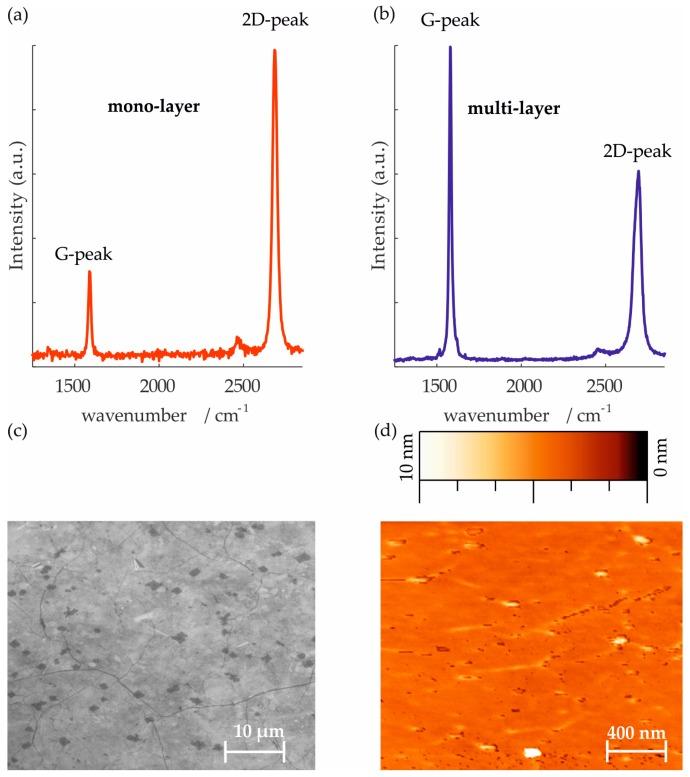
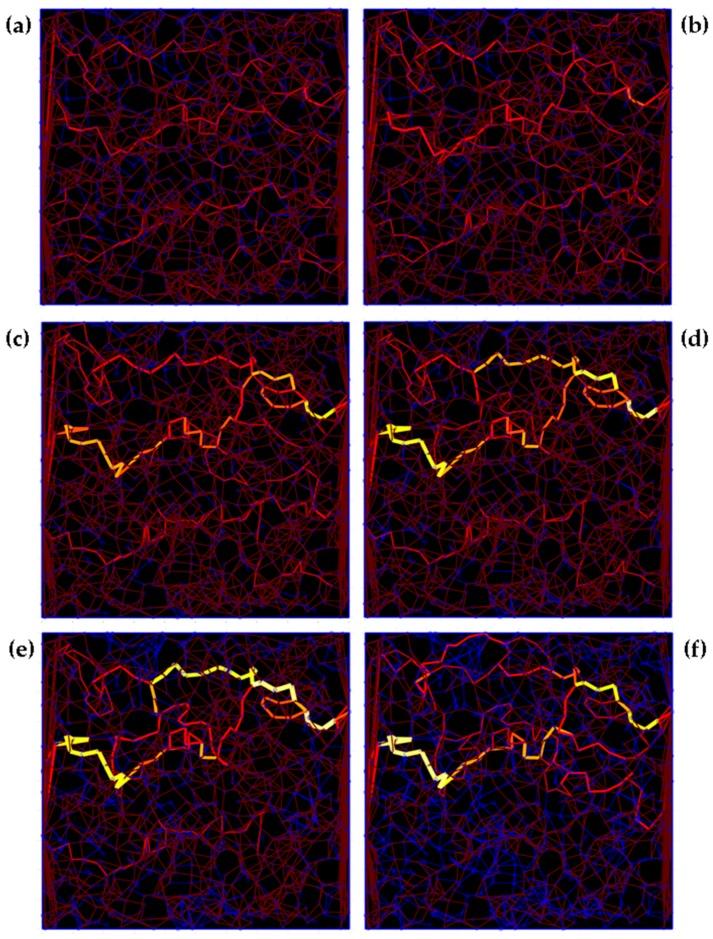
The two-dimensional material graphene promises a broad variety of sensing activities. Based on its low weight and high versatility, the sensor density can significantly be increased on a structure, which can improve reliability and reduce fluctuation in damage detection strategies such as structural health monitoring (SHM). Moreover; it initializes the basis of structure-sensor fusion towards self-sensing structures. Strain gauges are extensively used sensors in scientific and industrial applications. In this work, sensing in small strain fields (from -0.1% up to 0.1%) with regard to structural dynamics of a mechanical structure is presented with sensitivities comparable to bulk materials by measuring the inherent piezoresistive effect of graphene grown by chemical vapor deposition (CVD) with a very high aspect ratio of approximately 4.86 × 10⁸. It is demonstrated that the increasing number of graphene layers with CVD graphene plays a key role in reproducible strain gauge application since defects of individual layers may become less important in the current path. This may lead to a more stable response and, thus, resulting in a lower scattering.. Further results demonstrate the piezoresistive effect in a network consisting of liquid exfoliated graphene nanoplatelets (GNP), which result in even higher strain sensitivity and reproducibility. A model-assisted approach provides the main parameters to find an optimum of sensitivity and reproducibility of GNP films. The fabricated GNP strain gauges show a minimal deviation in PRE effect with a GF of approximately 5.6 and predict a linear electromechanical behaviour up to 1% strain. Spray deposition is used to develop a low-cost and scalable manufacturing process for GNP strain gauges. In this context, the challenge of reproducible and reliable manufacturing and operating must be overcome. The developed sensors exhibit strain gauges by considering the significant importance of reproducible sensor performances and open the path for graphene strain gauges for potential usages in science and industry.
二维材料石墨烯有望实现多种传感功能。基于其重量轻、多功能性强的特点,可以显著增加结构上的传感器密度,从而提高可靠性并降低结构健康监测(SHM)等损伤检测策略中的波动。此外,它为自感结构初始化了结构-传感器融合的基础。应变计是科学和工业应用中广泛使用的传感器。在这项工作中,通过测量通过化学气相沉积(CVD)生长的石墨烯的固有压阻效应,在机械结构的结构动力学方面呈现了小应变场(从-0.1%到 0.1%)中的传感,其灵敏度与体材料相当,具有约 4.86×10⁸的非常高的纵横比。结果表明,CVD 石墨烯中石墨烯层数的增加在可重复应变计应用中起着关键作用,因为单个层的缺陷在当前路径中可能变得不那么重要。这可能导致响应更稳定,从而导致散射更低。进一步的结果表明,由剥离的石墨烯纳米片(GNP)组成的网络中的压阻效应,导致更高的应变灵敏度和可重复性。模型辅助方法提供了找到 GNP 薄膜灵敏度和可重复性最佳值的主要参数。所制造的 GNP 应变计在 PRE 效应方面表现出最小的偏差,GF 约为 5.6,并预测在 1%应变下具有线性机电行为。喷涂沉积用于开发 GNP 应变计的低成本和可扩展制造工艺。在这种情况下,必须克服可重复和可靠制造和运行的挑战。所开发的传感器通过考虑重现性传感器性能的重要性来考虑应变计,为石墨烯应变计在科学和工业中的潜在用途开辟了道路。




 Zotero 插件