Novavax AB, Kungsgatan 109, SE-75318, Uppsala, Sweden.
Department of Viroscience, Erasmus MC, Rotterdam, The Netherlands.
Immunol Res. 2018 Apr;66(2):224-233. doi: 10.1007/s12026-018-8991-x.
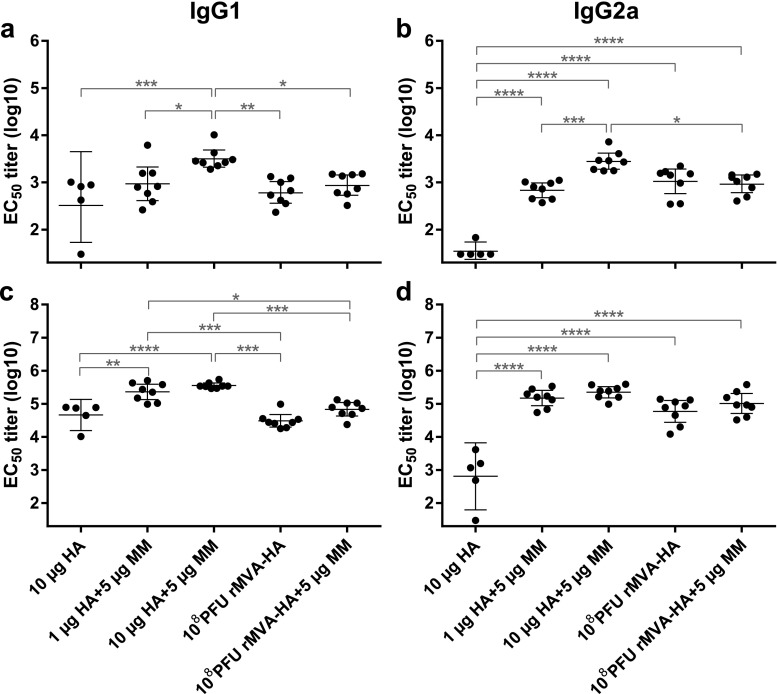
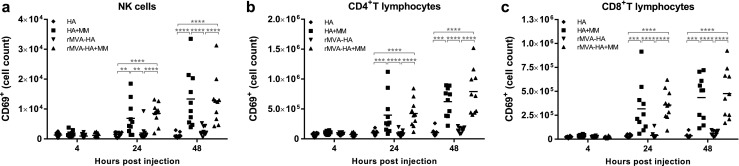
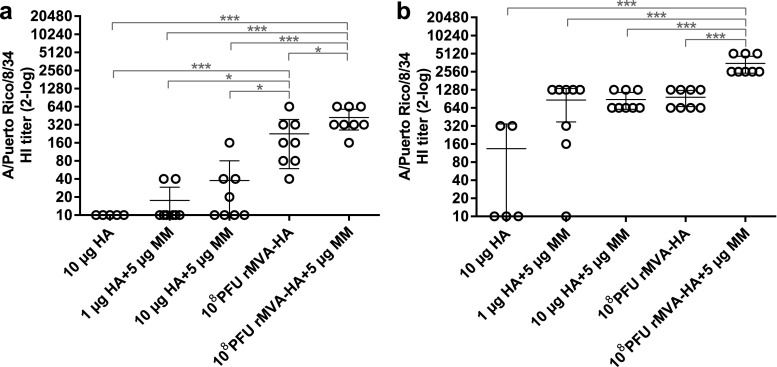
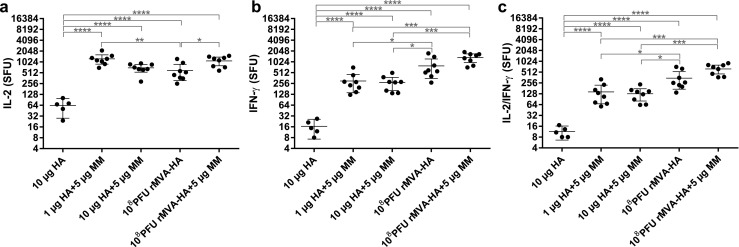
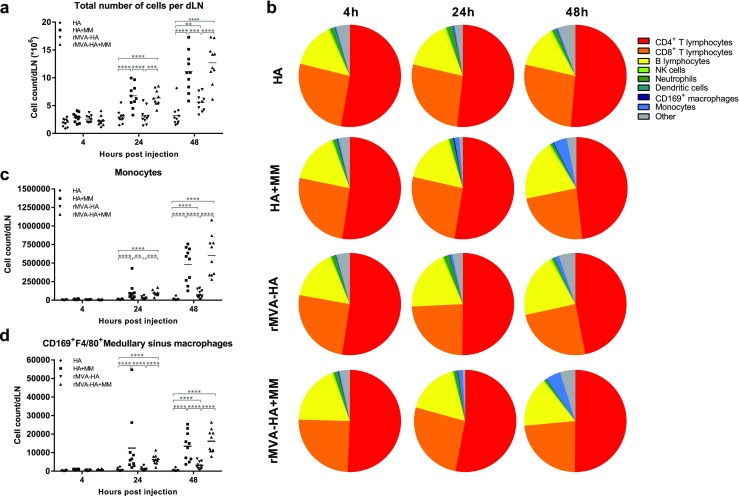
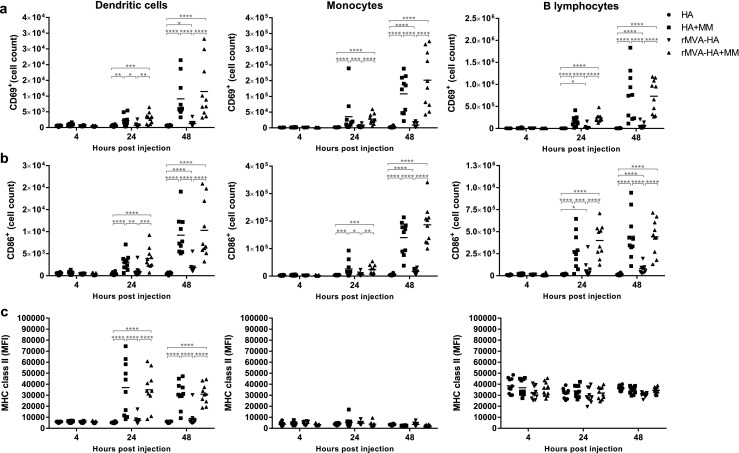
Influenza viruses continuously circulate in the human population and escape recognition by virus neutralizing antibodies induced by prior infection or vaccination through accumulation of mutations in the surface proteins hemagglutinin (HA) and neuraminidase (NA). Various strategies to develop a vaccine that provides broad protection against different influenza A viruses are under investigation, including use of recombinant (r) viral vectors and adjuvants. The replication-deficient modified vaccinia virus Ankara (MVA) is a promising vaccine vector that efficiently induces B and T cell responses specific for the antigen of interest. It is assumed that live vaccine vectors do not require an adjuvant to be immunogenic as the vector already mediates recruitment and activation of immune cells. To address this topic, BALB/c mice were vaccinated with either protein- or rMVA-based HA influenza vaccines, formulated with or without the saponin-based Matrix-M™ adjuvant. Co-formulation with Matrix-M significantly increased HA vaccine immunogenicity, resulting in antigen-specific humoral and cellular immune responses comparable to those induced by unadjuvanted rMVA-HA. Of special interest, rMVA-HA immunogenicity was also enhanced by addition of Matrix-M, demonstrated by enhanced HA inhibition antibody titres and cellular immune responses. Matrix-M added to either protein- or rMVA-based HA vaccines mediated recruitment and activation of antigen-presenting cells and lymphocytes to the draining lymph node 24 and 48 h post-vaccination. Taken together, these results suggest that adjuvants can be used not only with protein-based vaccines but also in combination with rMVA to increase vaccine immunogenicity, which may be a step forward to generate new and more effective influenza vaccines.
流感病毒在人群中持续传播,并通过在表面蛋白血凝素 (HA) 和神经氨酸酶 (NA) 中积累突变,逃避先前感染或接种疫苗所诱导的病毒中和抗体的识别。目前正在研究各种开发疫苗的策略,以提供针对不同甲型流感病毒的广泛保护,包括使用重组 (r) 病毒载体和佐剂。复制缺陷型改良安卡拉痘苗病毒 (MVA) 是一种很有前途的疫苗载体,可有效诱导针对感兴趣抗原的 B 和 T 细胞反应。人们认为活疫苗载体不需要佐剂即可具有免疫原性,因为载体已经介导免疫细胞的募集和激活。为了解决这个问题,用基于蛋白或 rMVA 的 HA 流感疫苗对 BALB/c 小鼠进行了接种,这些疫苗分别与或不与基于皂苷的 Matrix-M™佐剂联合配制。与 Matrix-M 联合配制显著提高了 HA 疫苗的免疫原性,导致抗原特异性体液和细胞免疫反应可与未佐剂的 rMVA-HA 诱导的反应相媲美。特别有趣的是,添加 Matrix-M 还增强了 rMVA-HA 的免疫原性,表现为增强的 HA 抑制抗体滴度和细胞免疫反应。添加到基于蛋白或 rMVA 的 HA 疫苗中的 Matrix-M 介导了抗原呈递细胞和淋巴细胞在接种后 24 和 48 小时向引流淋巴结的募集和激活。总之,这些结果表明,佐剂不仅可以与蛋白疫苗一起使用,还可以与 rMVA 联合使用以提高疫苗的免疫原性,这可能是朝着开发新的、更有效的流感疫苗迈出的一步。