
壳聚糖包被纳米颗粒:壳聚糖分子量对鼻腔黏膜给药的影响。
Chitosan-Coated Nanoparticles: Effect of Chitosan Molecular Weight on Nasal Transmucosal Delivery.
作者信息
Bruinsmann Franciele Aline, Pigana Stefania, Aguirre Tanira, Dadalt Souto Gabriele, Garrastazu Pereira Gabriela, Bianchera Annalisa, Tiozzo Fasiolo Laura, Colombo Gaia, Marques Magno, Raffin Pohlmann Adriana, Stanisçuaski Guterres Silvia, Sonvico Fabio
机构信息
Programa de Pós-Graduação em Ciências Farmacêuticas, Universidade Federal do Rio Grande do Sul, Porto Alegre 90610-000, Brazil.
Food and Drug Department, University of Parma, Parco Area delle Scienze 27/a, 43124 Parma, Italy.
出版信息
Pharmaceutics. 2019 Feb 18;11(2):86. doi: 10.3390/pharmaceutics11020086.
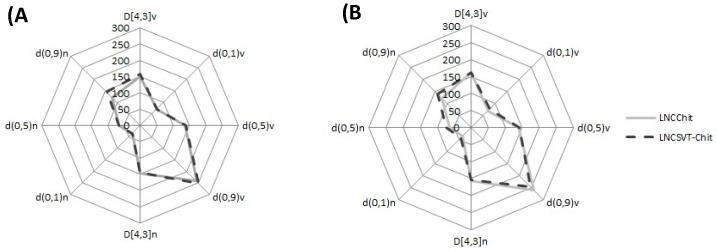
Drug delivery to the brain represents a challenge, especially in the therapy of central nervous system malignancies. Simvastatin (SVT), as with other statins, has shown potential anticancer properties that are difficult to exploit in the central nervous system (CNS). In the present work the physico⁻chemical, mucoadhesive, and permeability-enhancing properties of simvastatin-loaded poly-ε-caprolactone nanocapsules coated with chitosan for nose-to-brain administration were investigated. Lipid-core nanocapsules coated with chitosan (LNC) of different molecular weight (MW) were prepared by a novel one-pot technique, and characterized for particle size, surface charge, particle number density, morphology, drug encapsulation efficiency, interaction between surface nanocapsules with mucin, drug release, and permeability across two nasal mucosa models. Results show that all formulations presented adequate particle sizes (below 220 nm), positive surface charge, narrow droplet size distribution (PDI < 0.2), and high encapsulation efficiency. Nanocapsules presented controlled drug release and mucoadhesive properties that are dependent on the MW of the coating chitosan. The results of permeation across the RPMI 2650 human nasal cell line evidenced that LNC increased the permeation of SVT. In particular, the amount of SVT that permeated after 4 hr for nanocapsules coated with low-MW chitosan, high-MW chitosan, and control SVT was 13.9 ± 0.8 μg, 9.2 ± 1.2 µg, and 1.4 ± 0.2 µg, respectively. These results were confirmed by SVT ex vivo permeation across rabbit nasal mucosa. This study highlighted the suitability of LNC as a promising strategy for the administration of simvastatin for a nose-to-brain approach for the therapy of brain tumors.
药物递送至脑部是一项挑战,尤其是在中枢神经系统恶性肿瘤的治疗中。辛伐他汀(SVT)与其他他汀类药物一样,已显示出潜在的抗癌特性,但在中枢神经系统(CNS)中难以发挥作用。在本研究中,对用于鼻脑给药的壳聚糖包衣的载辛伐他汀聚ε-己内酯纳米胶囊的物理化学、粘膜粘附和通透性增强特性进行了研究。采用一种新颖的一锅法制备了不同分子量(MW)的壳聚糖包衣脂质核纳米胶囊(LNC),并对其粒径、表面电荷、粒子数密度、形态、药物包封率、表面纳米胶囊与粘蛋白之间的相互作用、药物释放以及在两种鼻黏膜模型中的通透性进行了表征。结果表明,所有制剂均呈现出合适的粒径(低于220nm)、正表面电荷、窄的液滴尺寸分布(PDI<0.2)以及高包封率。纳米胶囊呈现出可控的药物释放和粘膜粘附特性,这取决于包衣壳聚糖的分子量。通过RPMI 2650人鼻细胞系的渗透结果表明,LNC增加了SVT的渗透。特别是,低分子量壳聚糖包衣纳米胶囊、高分子量壳聚糖包衣纳米胶囊和对照SVT在4小时后渗透的SVT量分别为13.9±0.8μg、9.2±1.2μg和1.4±0.2μg。SVT经兔鼻黏膜的体外渗透证实了这些结果。本研究强调了LNC作为一种有前景的策略,用于通过鼻脑途径给药辛伐他汀以治疗脑肿瘤的适用性。



 Zotero 插件