
重复经颅磁刺激对遗传性痉挛性截瘫运动症状的影响。
The Effect of Repetitive Transcranial Magnetic Stimulation on Motor Symptoms in Hereditary Spastic Paraplegia.
机构信息
Department of Neurology, Jagiellonian University Medical College, Krakow, Poland.
出版信息
Neural Plast. 2019 May 12;2019:7638675. doi: 10.1155/2019/7638675. eCollection 2019.
BACKGROUND
Hereditary spastic paraplegia (HSP) is a heterogeneous group of inherited disorders affecting predominantly the motor cortex and pyramidal tract, which results in slowly progressing gait disorders, as well as spasticity and weakness of lower extremities. Repetitive transcranial magnetic stimulation (rTMS) has been previously investigated as a therapeutic tool for similar motor deficits in a number of neurologic conditions. The aim of this randomized, controlled trial was to investigate the therapeutic potential of rTMS in various forms of HSP, including pure and complicated forms, as well as adrenomyeloneuropathy.
METHODS
We recruited 15 patients (five women and 10 men; mean age 43.7 ± 10.6 years) with the mentioned forms of HSP. The intervention included five sessions of bilateral 10 Hz rTMS over primary motor areas of the muscles of lower extremities and five sessions of similar sham stimulation.
RESULTS
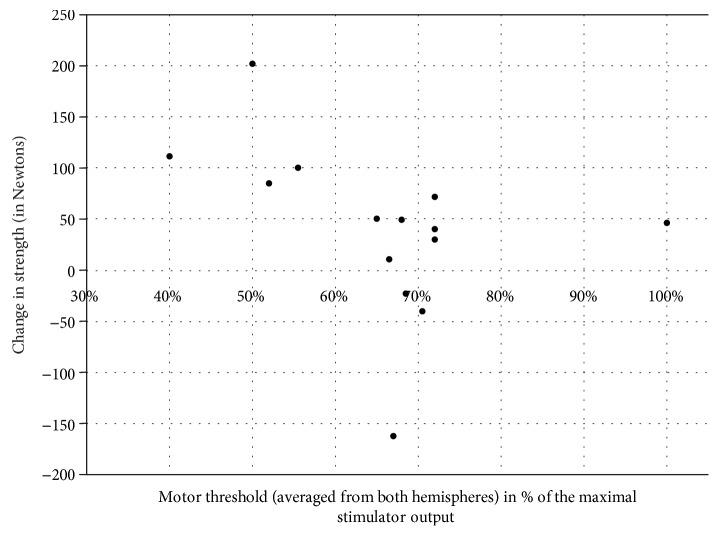
One patient dropped out due to seizure, and 14 patients completed the study protocol. After real stimulation, the strength of the proximal and distal muscles of lower extremities increased, and the spasticity of the proximal muscles decreased. Change in spasticity was still present during follow-up assessment. No effect was observed regarding gait velocity. No changes were seen after sham stimulation. A post hoc analysis revealed an inverse relation between motor threshold and the change of the strength after active rTMS.
CONCLUSIONS
rTMS may have potential in improving weakness and spasticity of lower extremities in HSP, especially of proximal muscles whose motor areas are located more superficially. This trial is registered with Clinicaltrials.gov NCT03627416.
背景
遗传性痉挛性截瘫(HSP)是一组异质性遗传性疾病,主要影响运动皮层和锥体束,导致进行性步态障碍,以及下肢痉挛和无力。重复经颅磁刺激(rTMS)已被先前研究作为治疗多种神经疾病中类似运动缺陷的治疗工具。本随机对照试验的目的是研究 rTMS 在 HSP 的各种形式中的治疗潜力,包括单纯和复杂形式以及肾上腺脑白质营养不良。
方法
我们招募了 15 名患者(5 名女性和 10 名男性;平均年龄 43.7 ± 10.6 岁),患有上述形式的 HSP。干预措施包括五次双侧 10 Hz rTMS 刺激下肢肌肉的初级运动区和五次类似的假刺激。
结果
一名患者因癫痫发作退出,14 名患者完成了研究方案。真实刺激后,下肢近端和远端肌肉的力量增加,近端肌肉的痉挛减轻。随访评估时仍存在痉挛变化。步态速度没有变化。假刺激后没有变化。事后分析显示,运动阈值与主动 rTMS 后力量变化之间存在反比关系。
结论
rTMS 可能具有改善 HSP 下肢无力和痉挛的潜力,特别是运动区位于较浅部位的近端肌肉。本试验在 Clinicaltrials.gov 注册,编号为 NCT03627416。

 Zotero 插件