
聚合物超声塑化注射成型过程中界面摩擦热机理研究
Study on the Mechanism of Interfacial Friction Heating in Polymer Ultrasonic Plasticization Injection Molding Process.
作者信息
Peng Tao, Jiang Bingyan, Zou Yang
机构信息
School of Mechanical and Electrical Engineering, Lushan South Road 932, Changsha 410083, China.
State Key Laboratory of High Performance Complex Manufacturing, Central South University, Lushan South Road 932, Changsha 410083, China.
出版信息
Polymers (Basel). 2019 Aug 27;11(9):1407. doi: 10.3390/polym11091407.
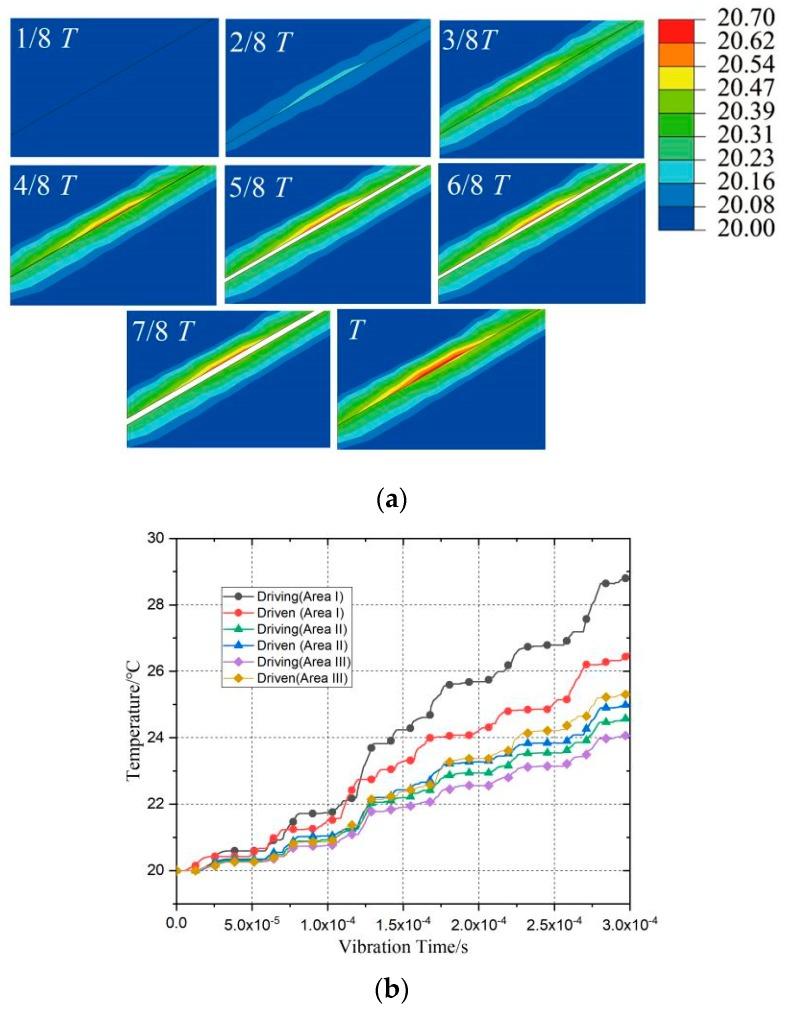
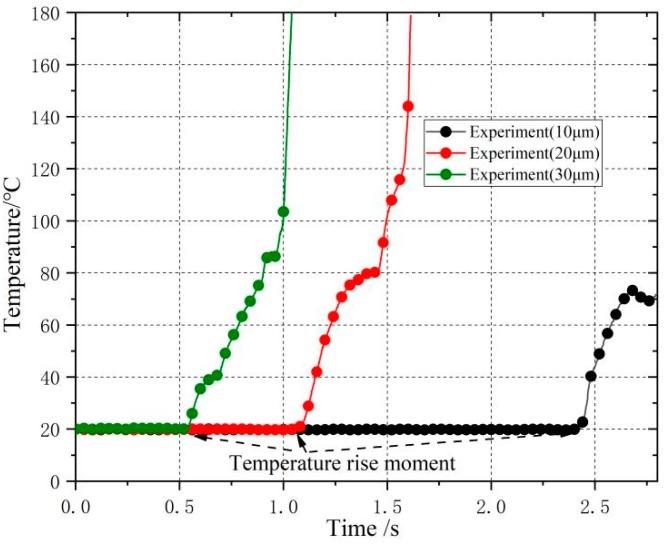
Ultrasonic Plasticization Injection Molding (UPIM) is an effective way to manufacture polymeric micro parts and has great potential for energy saving with processing polymeric materials of a small amount. To better control the UPIM process and improve the quality of micro parts, it is necessary to study the heat generation mechanism. In this paper, the interfacial friction heating process of UPIM was studied by finite element (FEM) simulation and experiment, and the temperature change in the friction interface was estimated. Then, the effects of different process parameters such as ultrasonic frequency and ultrasonic amplitude on the friction heating process were analyzed. The results showed that the rising trend of friction heating temperature was transient (finished within 1 s), and the change trend of FEM simulation was consistent with experimental results. Adjusting ultrasonic frequency and amplitude has a significant influence on the friction heating process. Increasing the ultrasonic frequency and amplitude can improve the efficiency of friction heating.
超声塑化注射成型(UPIM)是制造聚合物微零件的一种有效方法,在加工少量聚合物材料时具有巨大的节能潜力。为了更好地控制UPIM工艺并提高微零件的质量,研究其发热机理很有必要。本文通过有限元(FEM)模拟和实验研究了UPIM的界面摩擦加热过程,并估算了摩擦界面的温度变化。然后,分析了超声频率和超声振幅等不同工艺参数对摩擦加热过程的影响。结果表明,摩擦加热温度的上升趋势是瞬态的(在1秒内完成),FEM模拟的变化趋势与实验结果一致。调整超声频率和振幅对摩擦加热过程有显著影响。提高超声频率和振幅可以提高摩擦加热效率。



 Zotero 插件