
S-亚硝基化:氧化还原信号传导的新兴范式。
S-Nitrosylation: An Emerging Paradigm of Redox Signaling.
作者信息
Fernando Veani, Zheng Xunzhen, Walia Yashna, Sharma Vandana, Letson Joshua, Furuta Saori
机构信息
Department of Cancer Biology, University of Toledo Health Science Campus, 3000 Arlington Ave., Toledo, OH 43614, USA.
出版信息
Antioxidants (Basel). 2019 Sep 17;8(9):404. doi: 10.3390/antiox8090404.
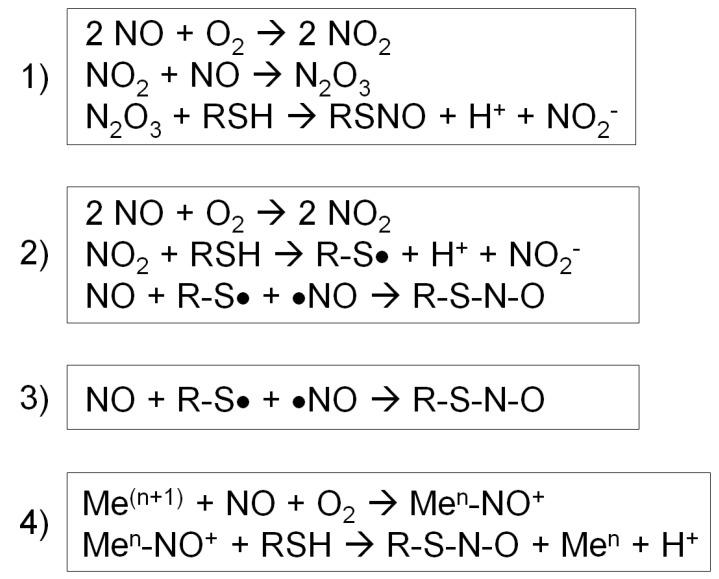
Nitric oxide (NO) is a highly reactive molecule, generated through metabolism of L-arginine by NO synthase (NOS). Abnormal NO levels in mammalian cells are associated with multiple human diseases, including cancer. Recent studies have uncovered that the NO signaling is compartmentalized, owing to the localization of NOS and the nature of biochemical reactions of NO, including S-nitrosylation. S-nitrosylation is a selective covalent post-translational modification adding a nitrosyl group to the reactive thiol group of a cysteine to form S-nitrosothiol (SNO), which is a key mechanism in transferring NO-mediated signals. While S-nitrosylation occurs only at select cysteine thiols, such a spatial constraint is partially resolved by transnitrosylation, where the nitrosyl moiety is transferred between two interacting proteins to successively transfer the NO signal to a distant location. As NOS is present in various subcellular locales, a stress could trigger concerted S-nitrosylation and transnitrosylation of a large number of proteins involved in divergent signaling cascades. S-nitrosylation is an emerging paradigm of redox signaling by which cells confer protection against oxidative stress.
一氧化氮(NO)是一种高反应性分子,由一氧化氮合酶(NOS)通过L-精氨酸的代谢产生。哺乳动物细胞中异常的NO水平与多种人类疾病相关,包括癌症。最近的研究发现,由于NOS的定位以及NO生化反应的性质,包括S-亚硝基化,NO信号是分隔的。S-亚硝基化是一种选择性共价翻译后修饰,将一个亚硝基基团添加到半胱氨酸的反应性硫醇基团上,形成S-亚硝基硫醇(SNO),这是传递NO介导信号的关键机制。虽然S-亚硝基化仅发生在特定的半胱氨酸硫醇上,但这种空间限制通过转亚硝基化部分得到解决,其中亚硝基部分在两个相互作用的蛋白质之间转移,从而将NO信号依次传递到远处。由于NOS存在于各种亚细胞区域,应激可能会触发大量参与不同信号级联的蛋白质的协同S-亚硝基化和转亚硝基化。S-亚硝基化是氧化还原信号传导的一种新兴模式,通过这种模式细胞可抵御氧化应激。




 Zotero 插件