
流式细胞术在 HIV 阴性儿童播散性感染相关原发性免疫缺陷症诊断中的应用。
Application of Flow Cytometry in the Diagnostics Pipeline of Primary Immunodeficiencies Underlying Disseminated Infection in HIV-Negative Children.
机构信息
Department of Paediatrics and Adolescent Medicine, Li Ka Shing Faculty of Medicine, The University of Hong Kong, Hong Kong, China.
Department of Pediatrics, The University of Hong Kong-Shenzhen Hospital, Shenzhen, China.
出版信息
Front Immunol. 2019 Sep 13;10:2189. doi: 10.3389/fimmu.2019.02189. eCollection 2019.
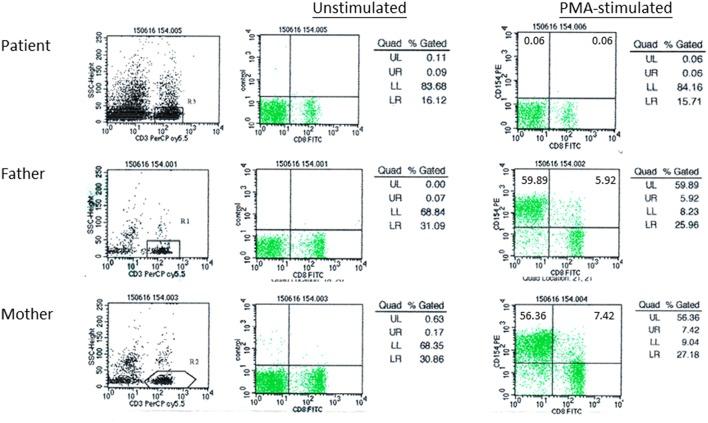
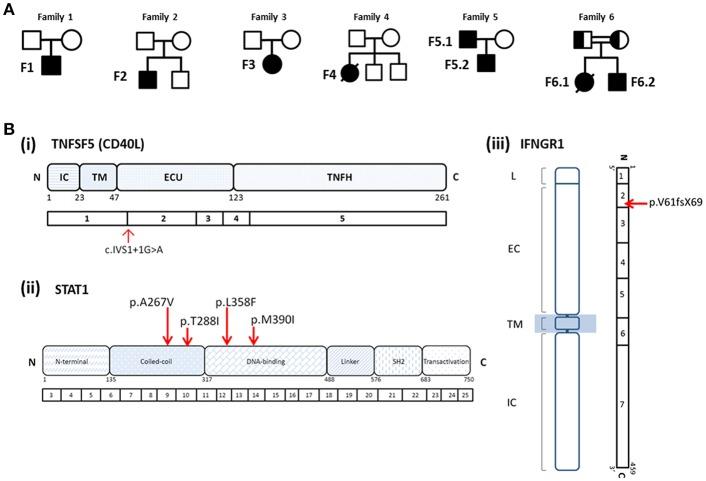
is an AIDS-defining infection in Southeast Asia and is associated with high mortality. It is rare in non-immunosuppressed individuals, especially children. Little is known about host immune response and genetic susceptibility to this endemic fungus. Genetic defects in the interferon-gamma (IFN-γ)/STAT1 signaling pathway, CD40/CD40 ligand- and IL12/IL12-receptor-mediated crosstalk between phagocytes and T-cells, and STAT3-mediated Th17 differentiation have been reported in HIV-negative children with talaromycosis and other endemic mycoses such as histoplasmosis, coccidioidomycosis, and paracoccidioidomycosis. There is a need to design a diagnostic algorithm to evaluate such patients. In this article, we review a cohort of pediatric patients with disseminated talaromycosis referred to the Asian Primary Immunodeficiency Network for genetic diagnosis of PID. Using these illustrative cases, we propose a diagnostics pipeline that begins with immunoglobulin pattern (IgG, IgA, IgM, and IgE) and enumeration of lymphocyte subpopulations (T-, B-, and NK-cells). The former could provide clues for hyper-IgM syndrome and hyper-IgE syndrome. Flow cytometric evaluation of CD40L expression should be performed for patients suspected to have X-linked hyper-IgM syndrome. Defects in interferon-mediated JAK-STAT signaling are evaluated by STAT1 phosphorylation studies by flow cytometry. STAT1 hyperphosphorylation in response to IFN-α or IFN-γ and delayed dephosphorylation is diagnostic for gain-of-function STAT1 disorder, while absent STAT1 phosphorylation in response to IFN-γ but normal response to IFN-α is suggestive of IFN-γ receptor deficiency. This simple and rapid diagnostic algorithm will be useful in guiding genetic studies for patients with disseminated talaromycosis requiring immunological investigations.
是东南亚的一种艾滋病定义性感染,与高死亡率相关。在非免疫抑制个体中,尤其是儿童中,这种情况很少见。对于这种地方性真菌的宿主免疫反应和遗传易感性知之甚少。干扰素-γ(IFN-γ)/STAT1 信号通路、吞噬细胞和 T 细胞之间的 CD40/CD40L 和 IL12/IL12 受体的交叉对话以及 STAT3 介导的 Th17 分化中的遗传缺陷已在感染 HIV 的儿童中发现,这些儿童患有足放线菌病和其他地方性真菌病,如组织胞浆菌病、球孢子菌病和副球孢子菌病。需要设计一种诊断算法来评估这些患者。在本文中,我们回顾了亚洲原发性免疫缺陷网络转介的一组患有播散性足放线菌病的儿科患者,以便对 PID 进行遗传诊断。使用这些说明性病例,我们提出了一个诊断管道,该管道从免疫球蛋白模式(IgG、IgA、IgM 和 IgE)和淋巴细胞亚群(T、B 和 NK 细胞)计数开始。前者可以为高 IgM 综合征和高 IgE 综合征提供线索。对于疑似 X 连锁高 IgM 综合征的患者,应进行 CD40L 表达的流式细胞术评估。通过流式细胞术评估干扰素介导的 JAK-STAT 信号传导缺陷。STAT1 对 IFN-α或 IFN-γ的过度磷酸化和延迟去磷酸化是获得性功能 STAT1 紊乱的诊断标志,而 IFN-γ但对 IFN-α正常反应的 STAT1 磷酸化缺失提示 IFN-γ受体缺乏。这种简单快速的诊断算法将有助于指导需要免疫研究的播散性足放线菌病患者进行基因研究。



 Zotero 插件