
自身免疫性胰腺炎的类固醇治疗和类固醇反应。
Steroid Therapy and Steroid Response in Autoimmune Pancreatitis.
机构信息
Division of Endoscopy, Shizuoka Cancer Center 1007, Shimonagakubo, Nagaizumi, Suntogun, Shizuoka 411-8777, Japan.
Genetic Medicine Promotion, Shizuoka Cancer Center 1007, Shimonagakubo, Nagaizumi, Suntogun, Shizuoka 411-8777, Japan.
出版信息
Int J Mol Sci. 2019 Dec 30;21(1):257. doi: 10.3390/ijms21010257.
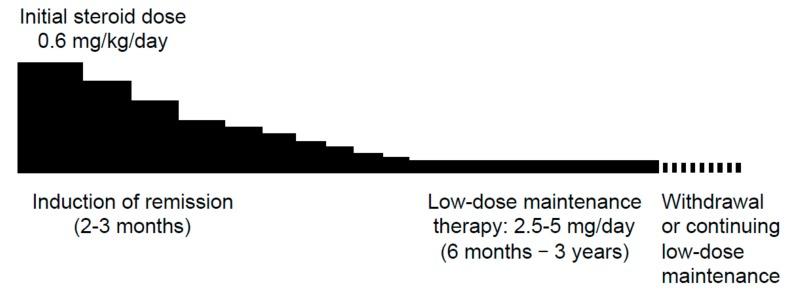
Autoimmune pancreatitis (AIP), a unique subtype of pancreatitis, is often accompanied by systemic inflammatory disorders. AIP is classified into two distinct subtypes on the basis of the histological subtype: immunoglobulin G4 (IgG4)-related lymphoplasmacytic sclerosing pancreatitis (type 1) and idiopathic duct-centric pancreatitis (type 2). Type 1 AIP is often accompanied by systemic lesions, biliary strictures, hepatic inflammatory pseudotumors, interstitial pneumonia and nephritis, dacryoadenitis, and sialadenitis. Type 2 AIP is associated with inflammatory bowel diseases in approximately 30% of cases. Standard therapy for AIP is oral corticosteroid administration. Steroid treatment is generally indicated for symptomatic cases and is exceptionally applied for cases with diagnostic difficulty (diagnostic steroid trial) after a negative workup for malignancy. More than 90% of patients respond to steroid treatment within 1 month, and most within 2 weeks. The steroid response can be confirmed on clinical images (computed tomography, ultrasonography, endoscopic ultrasonography, magnetic resonance imaging, and F-fluorodeoxyglucose-positron emission tomography). Hence, the steroid response is included as an optional diagnostic item of AIP. Steroid treatment results in normalization of serological markers, including IgG4. Short- and long-term corticosteroid treatment may induce adverse events, including chronic glycometabolism, obesity, an immunocompromised status against infection, cataracts, glaucoma, osteoporosis, and myopathy. AIP is common in old age and is often associated with diabetes mellitus (33-78%). Thus, there is an argument for corticosteroid therapy in diabetes patients with no symptoms. With low-dose steroid treatment or treatment withdrawal, there is a high incidence of AIP recurrence (24-52%). Therefore, there is a need for long-term steroid maintenance therapy and/or steroid-sparing agents (immunomodulators and rituximab). Corticosteroids play a critical role in the diagnosis and treatment of AIP.
自身免疫性胰腺炎(AIP)是一种独特的胰腺炎亚型,常伴有全身炎症性疾病。根据组织学亚型,AIP 分为两种不同的亚型:免疫球蛋白 G4(IgG4)相关淋巴浆细胞硬化性胰腺炎(1 型)和特发性胆管中心性胰腺炎(2 型)。1 型 AIP 常伴有全身病变、胆管狭窄、肝炎性假瘤、间质性肺炎和肾炎、泪腺炎和唾液腺炎。约 30%的 2 型 AIP 与炎症性肠病有关。AIP 的标准治疗是口服皮质类固醇。皮质类固醇治疗通常适用于有症状的病例,在排除恶性肿瘤后(诊断性类固醇试验),对于诊断困难的病例也可例外使用。超过 90%的患者在 1 个月内对类固醇治疗有反应,大多数在 2 周内有反应。在临床影像(计算机断层扫描、超声、内镜超声、磁共振成像和 F-氟脱氧葡萄糖正电子发射断层扫描)上可以确认类固醇反应。因此,类固醇反应被纳入 AIP 的可选诊断项目。类固醇治疗可使包括 IgG4 在内的血清标志物正常化。短期和长期皮质类固醇治疗可能会引起不良反应,包括慢性糖代谢紊乱、肥胖、感染免疫受损、白内障、青光眼、骨质疏松症和肌病。AIP 在老年中常见,常伴有糖尿病(33-78%)。因此,对于无症状的糖尿病患者,存在使用皮质类固醇治疗的理由。低剂量类固醇治疗或停药后,AIP 复发率很高(24-52%)。因此,需要长期类固醇维持治疗和/或类固醇保留剂(免疫调节剂和利妥昔单抗)。皮质类固醇在 AIP 的诊断和治疗中起着关键作用。



 Zotero 插件