
放疗创新的技术驱动型研究。
Technology-driven research for radiotherapy innovation.
作者信息
Fiorino Claudio, Guckemberger Matthias, Schwarz Marco, van der Heide Uulke A, Heijmen Ben
机构信息
Medical Physics, San Raffaele Scientific Institute, Milano, Italy.
Department of Radiation Oncology, University Hospital Zurich, University of Zurich, Switzerland.
出版信息
Mol Oncol. 2020 Jul;14(7):1500-1513. doi: 10.1002/1878-0261.12659. Epub 2020 Mar 19.
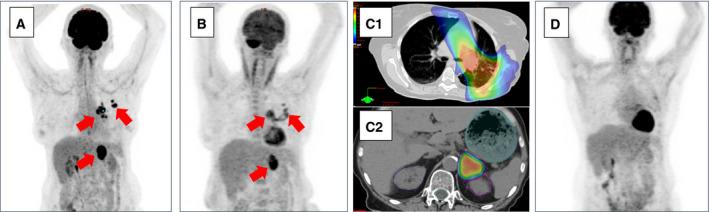
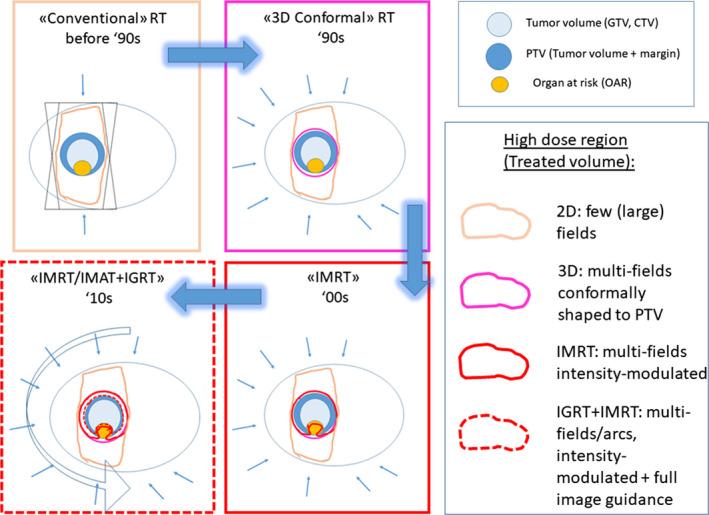
Technology has a pivotal role in the continuous development of radiotherapy. The long road toward modern 'high-tech' radiation oncology has been studded with discoveries and technological innovations that resulted from the interaction of various disciplines. In the last decades, a dramatic technology-driven revolution has hugely improved the capability of accurately and safely delivering complex-shaped dose distributions. This has contributed to many clinical improvements, such as the successful management of lung cancer and oligometastatic disease through stereotactic body radiotherapy. Technology-driven research is an active and lively field with promising potential in several domains, including image guidance, adaptive radiotherapy, integration of artificial intelligence, heavy-particle therapy, and 'flash' ultra-high dose-rate radiotherapy. The evolution toward personalized Oncology will deeply influence technology-driven research, aiming to integrate predictive models and omics analyses into fast and efficient solutions to deliver the best treatment for each single patient. Personalized radiation oncology will need affordable technological solutions for middle-/low-income countries, as these are expected to experience the highest increase of cancer incidence and mortality. Moreover, technology solutions for automation of commissioning, quality assurance, safety tests, image segmentation, and plan optimization will be required. Although a large fraction of cancer patients receive radiotherapy, this is certainly not reflected in the worldwide budget for radiotherapy research. Differently from the pharmaceutical companies-driven research, resources for research in radiotherapy are highly limited to equipment vendors, who can, in turn, initiate a limited number of collaborations with academic research centers. Thus, enhancement of investments in technology-driven radiotherapy research via public funds, national governments, and the European Union would have a crucial societal impact. It would allow for radiotherapy to further strengthen its role as a highly effective and cost-efficient cancer treatment modality, and it could facilitate a rapid and equalitarian large-scale transfer of technology to clinic, with direct impact on patient care.
技术在放射治疗的持续发展中起着关键作用。通往现代“高科技”放射肿瘤学的漫长道路上充满了各种学科相互作用所带来的发现和技术创新。在过去几十年中,一场由技术驱动的巨大革命极大地提高了精确且安全地递送复杂形状剂量分布的能力。这促成了许多临床改善,例如通过立体定向体部放射治疗成功治疗肺癌和寡转移疾病。技术驱动的研究是一个活跃且充满活力的领域,在包括图像引导、自适应放射治疗、人工智能整合、重粒子治疗以及“闪光”超高剂量率放射治疗等多个领域具有广阔的潜力。向个性化肿瘤学的发展将深刻影响技术驱动的研究,旨在将预测模型和组学分析整合到快速高效的解决方案中,为每位患者提供最佳治疗。个性化放射肿瘤学将需要针对中低收入国家的经济适用技术解决方案,因为预计这些国家的癌症发病率和死亡率增长幅度最大。此外,还将需要用于调试自动化、质量保证、安全测试、图像分割和计划优化的技术解决方案。尽管很大一部分癌症患者接受放射治疗,但这在全球放射治疗研究预算中并未得到体现。与制药公司驱动的研究不同,放射治疗研究资源高度局限于设备供应商,而设备供应商反过来只能与学术研究中心开展有限数量的合作。因此,通过公共资金、各国政府和欧盟加强对技术驱动的放射治疗研究的投资将产生至关重要的社会影响。这将使放射治疗能够进一步强化其作为一种高效且具有成本效益的癌症治疗方式的作用,并有助于将技术快速且公平地大规模转化应用于临床,直接影响患者护理。

 Zotero 插件