
中国结核病临床试验联盟网络:国际结核病临床试验能力建设的典范。
The China tuberculosis clinical trials consortium network: a model for international TB clinical trials capacity building.
机构信息
Beijing Chest Hospital, Capital Medical University/Beijing Tuberculosis and Thoracic Tumor Institute, No. 9, Beiguan Ave, Tongzhou District, Beijing, 101149, China.
FHI Clinical, 359 Blackwell Street, Suite 200, Durham, 27701, USA.
出版信息
Infect Dis Poverty. 2020 May 15;9(1):52. doi: 10.1186/s40249-020-00671-w.
BACKGROUND
With the second largest tuberculosis (TB) burden globally, China is committed to actively engage in international TB clinical trials to contribute to global TB research. However, lack of research capacity among local sites has been identified as a barrier.
MAIN TEXT
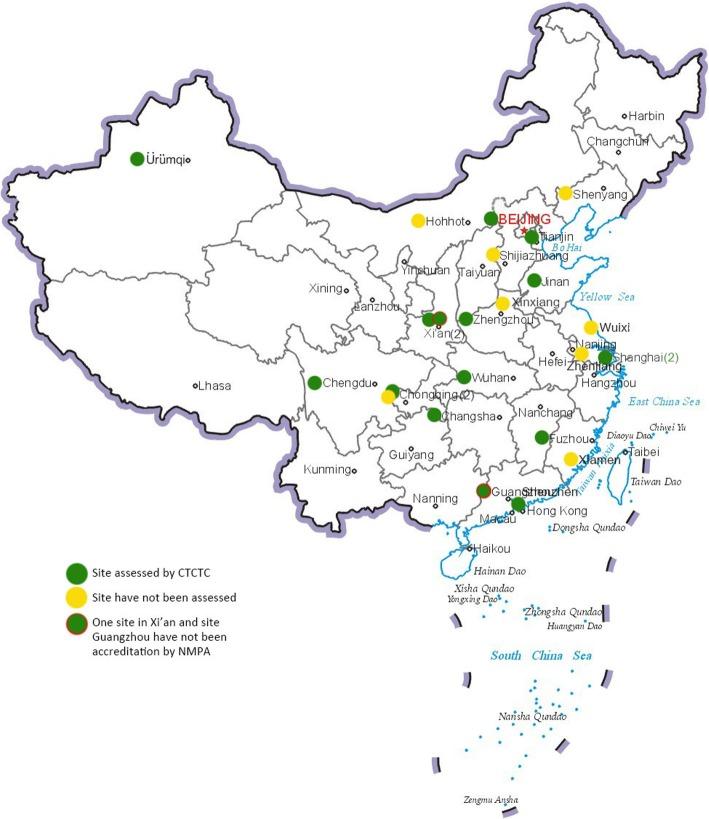
The China Tuberculosis Clinical Trials Consortium (CTCTC) was initiated by Beijing Chest Hospital with investment from the US National Institutes of Health and technical support from Family Health International 360 in 2013, as a nationwide collaborative clinical trial network to strengthen selected clinical site research capacity and attract TB clinical trials. The program aims to: 1) recruit leading hospitals that care for TB patients; 2) conduct on-site assessment to identify capacity gaps and needs for improvement; 3) design and deliver capacity building activities; 4) attract and deliver high quality results for TB clinical trials. A total of 24 sites have joined CTCTC, covering 20 provinces in China. Twenty-two sites have been accredited by the National Medical Products Administration (NMPA) to be qualified to conduct TB clinical trials. The onsite assessment, extensive trainings among the CTCTC sites and young investigators have resulted in better understanding and improvement of the site capacity in conducting TB clinical trials. The establishment and growth of the CTCTC network has benefited from the good leadership, effective international cooperation and local commitment. Issues in human resources, regulatory environment and sustainability have been challenging the network from continuing growth. Clinical researchers have full-time clinical responsibilities in China and it is thus important to build a cadre of other human resources to assist. The regulatory environment is becoming friendlier in China to introduce international clinical trials to the CTCTC network.
CONCLUSIONS
The CTCTC, with mature management structure and sustainable development model, which are distilled five key lessons for other developing countries or investigators of interest. They are the respectively using assessment-based approach to design tailored training package, understanding the availability of clinical researchers, providing solutions to maintain sustainability, understanding local regulatory environments and working with an international organization with local on-site team, respectively. Although, the experiences and capacity of China's TB hospitals in conducting clinical research vary. Considerable efforts to continue building the capacity are still needed, although the gap is smaller for a few top-tier hospitals.
背景
中国是全球结核病(TB)负担第二大的国家,致力于积极参与国际结核病临床试验,为全球结核病研究做出贡献。然而,当地机构缺乏研究能力已被确定为一个障碍。
主要内容
中国结核病临床研究联盟(CTCTC)于 2013 年由北京胸科医院发起,由美国国立卫生研究院投资,由 360 家庭健康国际提供技术支持,是一个全国性的协作临床试验网络,旨在加强选定的临床机构的研究能力并吸引结核病临床试验。该计划旨在:1)招募治疗结核病患者的领先医院;2)进行现场评估,以确定能力差距和改进需求;3)设计和提供能力建设活动;4)吸引和提供结核病临床试验的高质量结果。共有 24 个机构加入了 CTCTC,覆盖了中国的 20 个省。22 个机构已获得国家药品监督管理局(NMPA)的认证,有资格进行结核病临床试验。现场评估、CTCTC 各机构之间的广泛培训以及青年研究人员的培训,使各机构对开展结核病临床试验的能力有了更好的了解和提高。CTCTC 网络的建立和发展得益于良好的领导、有效的国际合作和地方承诺。人力资源、监管环境和可持续性方面的问题一直是阻碍网络继续发展的挑战。临床研究人员在中国有全职的临床职责,因此建立一支其他人力资源队伍来协助是很重要的。中国的监管环境对向 CTCTC 网络引入国际临床试验变得更加友好。
结论
CTCTC 具有成熟的管理结构和可持续发展模式,为其他发展中国家或有兴趣的研究人员提炼了五条关键经验。它们分别是:使用基于评估的方法设计定制培训包,了解临床研究人员的可用性,提供维持可持续性的解决方案,了解当地监管环境以及与具有本地现场团队的国际组织合作。尽管如此,中国结核病医院在开展临床研究方面的经验和能力各不相同。尽管对于少数顶尖医院来说差距较小,但仍需要继续努力建立能力。
 Zotero 插件