College of Animal Science and Veterinary Medicine, Shenyang Agricultural University, Shenyang 110866, China.
College of Animal Science and Veterinary Medicine, Shenyang Agricultural University, Shenyang 110866, China.
Poult Sci. 2020 Jul;99(7):3532-3539. doi: 10.1016/j.psj.2020.03.034. Epub 2020 Apr 15.
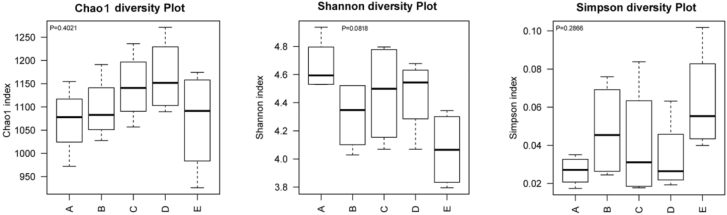
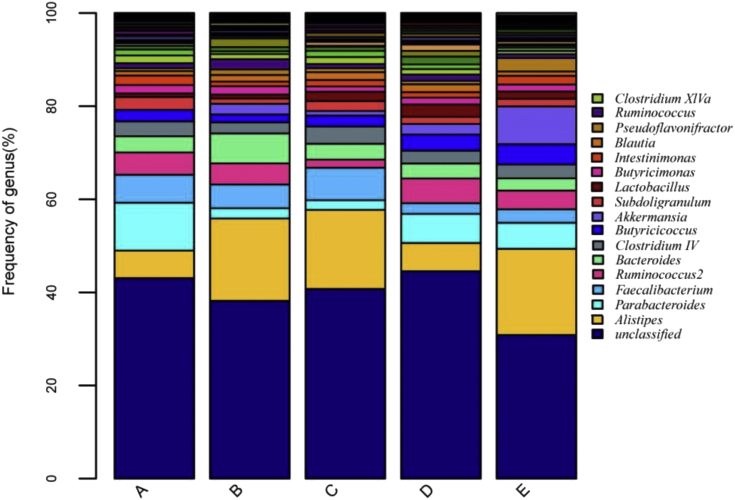
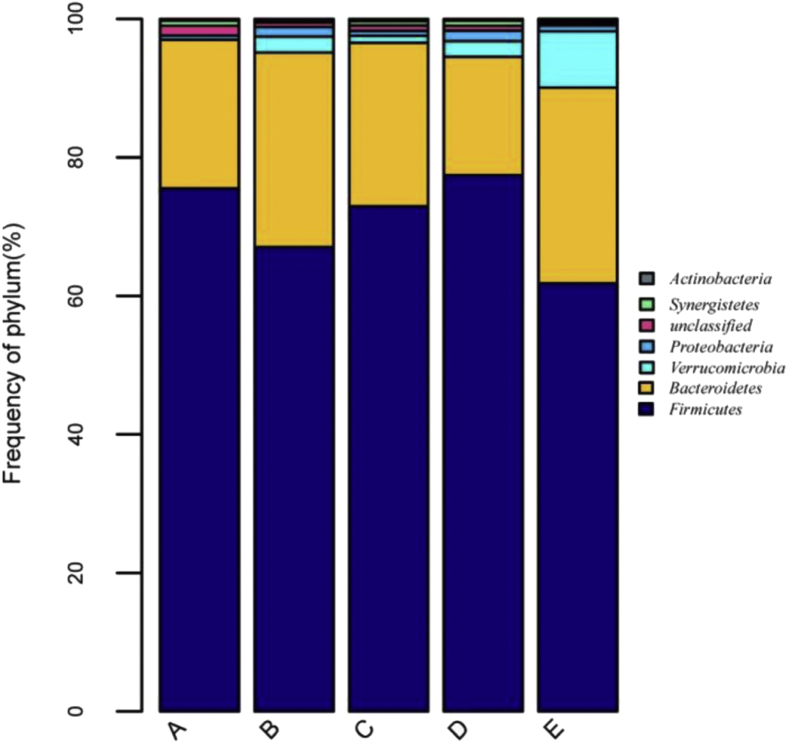
Soybean oligosaccharides have been previously shown to be associated with the production of major odor-causing compounds in broilers, although little is known about the role of stachyose and raffinose, which are key components of soybean oligosaccharide, in broiler cecal microbiota and odor compound production. To this end, soybean oligosaccharide, stachyose, and raffinose were added to the birds' diets to investigate their effects on odor compound production and the microbial community characteristics of the cecum in broilers. A total of 300 one-day-old Arbor Acre broilers with similar initial live weight were randomly allocated into 5 dietary groups with 6 replicates of 10 birds. The diets included soybean meal (positive control), soybean meal-free (negative control), 0.6% soybean oligosaccharide, 0.6% stachyose, or 0.6% raffinose. After a 49-D feeding period, both ceca were aseptically removed postmortem, and the contents were collected and analyzed for skatole, indole, volatile fatty acids, and lactic acid by using high performance liquid chromatography. Bacterial communities were detected by using a high-throughput sequencing platform based on IlluminaMiSeq 2500. Levels of skatole and indole tended to be lower in the dietary supplementation of oligosaccharides. The lowest levels of skatole and indole were observed in the stachyose group (P < 0.05), while the highest levels were found in the negative control group (P < 0.05). Concentrations of acetic acid and propionic acid in the stachyose group were increased (P < 0.05) while those of butyric acid and lactic acid were decreased (P < 0.05) compared with the soybean oligosaccharide and raffinose groups. Firmicutes and Bacteroidetes were prevalent in all groups, the proportion of Bacteroidetes was slightly decreased in the stachyose group, and Verrucomicrobia was abundant in the raffinose group (P > 0.05). Bacterial genera Alistipes and Parabacteroides were comparably abundant in the stachyose group, while Bacteroides, Lactobacillus, and Akkermansia were more abundant in the negative control, stachyose, and raffinose groups, respectively. Collectively, these findings demonstrated that dietary oligosaccharide supplementation significantly reduced odor compound production by modulating the cecal microbial community. Compared with soybean oligosaccharide and raffinose, the addition of stachyose into diets may help improve gut fermentation and minimize odor compound generation in broilers.
大豆低聚糖先前被证明与肉鸡产生的主要气味化合物有关,尽管人们对大豆低聚糖的关键成分棉子糖和水苏糖在肉鸡盲肠微生物群和气味化合物产生中的作用知之甚少。为此,在鸡饲料中添加大豆低聚糖、棉子糖和水苏糖,以研究它们对肉鸡盲肠微生物群和气味化合物产生的影响。
总共 300 只 1 日龄的 Arbor Acre 肉鸡,初始体重相似,随机分配到 5 个饮食组,每组 6 个重复,每个重复 10 只鸡。日粮包括豆粕(阳性对照)、无豆粕(阴性对照)、0.6%大豆低聚糖、0.6%棉子糖或 0.6%水苏糖。
经过 49 天的饲养期后,鸡死后无菌取出盲肠,收集内容物,采用高效液相色谱法分析粪臭素、吲哚、挥发性脂肪酸和乳酸。采用基于 IlluminaMiSeq 2500 的高通量测序平台检测细菌群落。
在添加低聚糖的日粮中,粪臭素和吲哚的水平趋于降低。棉子糖组的粪臭素和吲哚含量最低(P < 0.05),而阴性对照组的含量最高(P < 0.05)。棉子糖组乙酸和丙酸浓度增加(P < 0.05),丁酸和乳酸浓度降低(P < 0.05),与大豆低聚糖和水苏糖组相比。
厚壁菌门和拟杆菌门在所有组中都很普遍,棉子糖组中拟杆菌门的比例略有下降,而 Raffinose 组中疣微菌门丰富(P > 0.05)。棉子糖组中 Alistipes 和 Parabacteroides 细菌属的丰度相当,而阴性对照组、棉子糖组和水苏糖组中 Bacteroides、Lactobacillus 和 Akkermansia 的丰度较高。
总之,这些发现表明,日粮低聚糖补充通过调节盲肠微生物群显著减少了气味化合物的产生。与大豆低聚糖和水苏糖相比,在日粮中添加棉子糖可能有助于改善肠道发酵,减少肉鸡中气味化合物的产生。