
阿尔茨海默病的神经退行性通路:综述。
Neurodegenerative Pathways in Alzheimer's Disease: A Review.
机构信息
Department of Pharmaceutical Chemistry, Manipal College of Pharmaceutical Sciences, Manipal Academy of Higher Education, Manipal, Karnataka-576104, India.
Department of Pharmaceutical Biotechnology, Manipal College of Pharmaceutical Sciences, Manipal Academy of Higher Education, Manipal, Karnataka-576104, India.
出版信息
Curr Neuropharmacol. 2021;19(5):679-692. doi: 10.2174/1570159X18666200807130637.
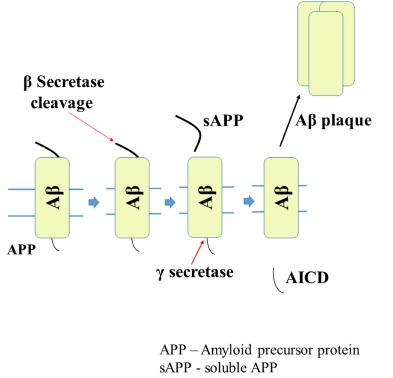
Alzheimer's disease (AD) is a complex neurodegenerative disease that leads to insidious deterioration of brain functions and is considered the sixth leading cause of death in the world. Alzheimer's patients suffer from memory loss, cognitive deficit and behavioral changes; thus, they eventually follow a low-quality life. AD is considered as a multifactorial disorder involving different neuropathological mechanisms. Recent research has identified more than 20 pathological factors that are promoting disease progression. Three significant hypotheses are said to be the root cause of disease pathology, which include acetylcholine deficit, the formation of amyloid-beta senile plaques and tau protein hyperphosphorylation. Apart from these crucial factors, pathological factors such as apolipoprotein E (APOE), glycogen synthase kinase 3β, notch signaling pathway, Wnt signaling pathway, etc., are considered to play a role in the advancement of AD and therefore could be used as targets for drug discovery and development. As of today, there is no complete cure or effective disease altering therapies for AD. The current therapy is assuring only symptomatic relief from the disease, and progressive loss of efficacy for these symptomatic treatments warrants the discovery of newer drugs by exploring these novel drug targets. A comprehensive understanding of these therapeutic targets and their neuropathological role in AD is necessary to identify novel molecules for the treatment of AD rationally.
阿尔茨海默病(AD)是一种复杂的神经退行性疾病,导致脑功能逐渐恶化,被认为是世界第六大致死原因。AD 患者会出现记忆力减退、认知功能障碍和行为改变等症状,最终生活质量严重下降。AD 被认为是一种涉及多种神经病理机制的多因素疾病。最近的研究已经确定了 20 多种促进疾病进展的病理因素。有三个重要假说被认为是疾病病理的根本原因,包括乙酰胆碱缺乏、淀粉样β老年斑形成和 tau 蛋白过度磷酸化。除了这些关键因素外,载脂蛋白 E(APOE)、糖原合酶激酶 3β、Notch 信号通路、Wnt 信号通路等病理因素也被认为在 AD 的进展中起作用,因此可以作为药物发现和开发的靶点。截至目前,AD 尚无完全治愈或有效的疾病修正疗法。目前的治疗方法只能缓解疾病的症状,而这些对症治疗的疗效逐渐下降,这就需要通过探索这些新的药物靶点来发现新的药物。全面了解这些治疗靶点及其在 AD 中的神经病理作用,对于合理地寻找治疗 AD 的新型分子是必要的。







 Zotero 插件