
利用人类的先验信息对家畜复杂性状的基因和基因相关变异进行优先级排序。
Using prior information from humans to prioritize genes and gene-associated variants for complex traits in livestock.
机构信息
Animal Breeding and Genomics, Wageningen University and Research, Wageningen, The Netherlands.
Biometris, Wageningen University and Research, Wageningen, The Netherlands.
出版信息
PLoS Genet. 2020 Sep 14;16(9):e1008780. doi: 10.1371/journal.pgen.1008780. eCollection 2020 Sep.
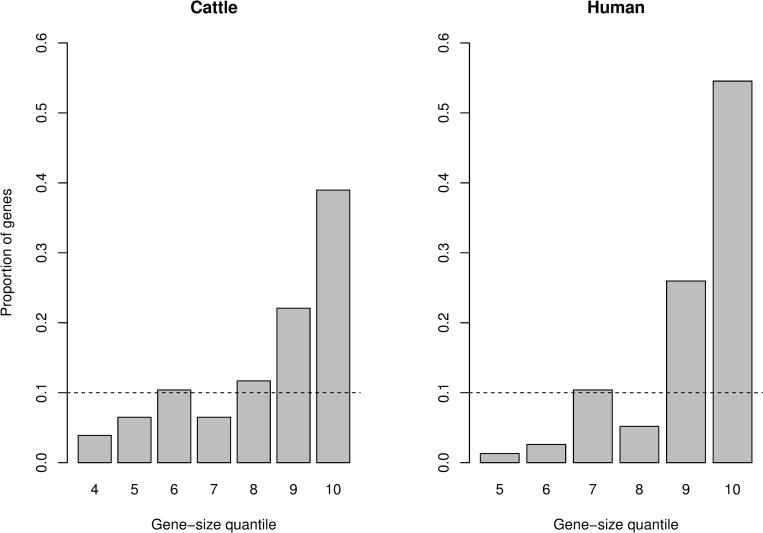
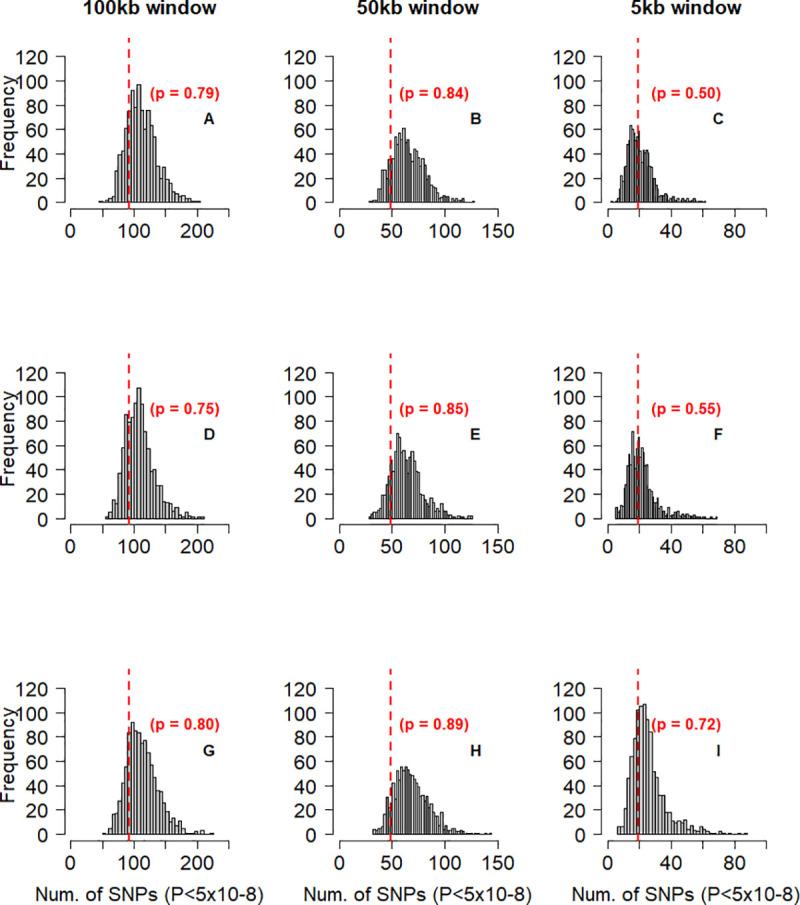
Genome-Wide Association Studies (GWAS) in large human cohorts have identified thousands of loci associated with complex traits and diseases. For identifying the genes and gene-associated variants that underlie complex traits in livestock, especially where sample sizes are limiting, it may help to integrate the results of GWAS for equivalent traits in humans as prior information. In this study, we sought to investigate the usefulness of results from a GWAS on human height as prior information for identifying the genes and gene-associated variants that affect stature in cattle, using GWAS summary data on samples sizes of 700,000 and 58,265 for humans and cattle, respectively. Using Fisher's exact test, we observed a significant proportion of cattle stature-associated genes (30/77) that are also associated with human height (odds ratio = 5.1, p = 3.1e-10). Result of randomized sampling tests showed that cattle orthologs of human height-associated genes, hereafter referred to as candidate genes (C-genes), were more enriched for cattle stature GWAS signals than random samples of genes in the cattle genome (p = 0.01). Randomly sampled SNPs within the C-genes also tend to explain more genetic variance for cattle stature (up to 13.2%) than randomly sampled SNPs within random cattle genes (p = 0.09). The most significant SNPs from a cattle GWAS for stature within the C-genes did not explain more genetic variance for cattle stature than the most significant SNPs within random cattle genes (p = 0.87). Altogether, our findings support previous studies that suggest a similarity in the genetic regulation of height across mammalian species. However, with the availability of a powerful GWAS for stature that combined data from 8 cattle breeds, prior information from human-height GWAS does not seem to provide any additional benefit with respect to the identification of genes and gene-associated variants that affect stature in cattle.
全基因组关联研究(GWAS)在大型人类队列中已经确定了数千个与复杂性状和疾病相关的位点。为了鉴定在牲畜中导致复杂性状的基因和基因相关变异,特别是在样本量有限的情况下,整合人类中具有同等性状的 GWAS 结果作为先验信息可能会有所帮助。在这项研究中,我们试图利用人类身高 GWAS 的结果作为先验信息,来鉴定影响牛身高的基因和基因相关变异,使用分别针对人类和牛的 70 万和 58265 个样本的 GWAS 汇总数据。通过 Fisher 精确检验,我们观察到相当一部分与牛身高相关的基因(30/77)也与人类身高相关(优势比=5.1,p=3.1e-10)。随机抽样测试的结果表明,与人类身高相关基因的牛直系同源物,以下称为候选基因(C 基因),比牛基因组中随机基因的样本更富集牛身高 GWAS 信号(p=0.01)。C 基因内的随机抽样 SNP 也倾向于解释更多的牛身高遗传变异(高达 13.2%),而随机抽样的牛基因内的 SNP 则没有(p=0.09)。C 基因内与牛身高 GWAS 最显著的 SNP 并不比随机牛基因内最显著的 SNP 更能解释牛身高的遗传变异(p=0.87)。总之,我们的研究结果支持了先前的研究,即哺乳动物物种之间身高的遗传调控具有相似性。然而,由于有一个强大的牛身高 GWAS 结合了 8 个牛品种的数据,人类身高 GWAS 的先验信息似乎没有提供任何额外的好处,无法鉴定影响牛身高的基因和基因相关变异。




 Zotero 插件