
糖尿病肾病与肾脏硫代谢相关酶的失调有关。
Diabetic nephropathy associates with deregulation of enzymes involved in kidney sulphur metabolism.
机构信息
Institute of Cellular Biology and Pathology "Nicolae Simionescu", Bucharest, Romania.
"Cantacuzino" National Institute of Research and Development for Microbiology and Immunology, Bucharest, Romania.
出版信息
J Cell Mol Med. 2020 Oct;24(20):12131-12140. doi: 10.1111/jcmm.15855. Epub 2020 Sep 16.
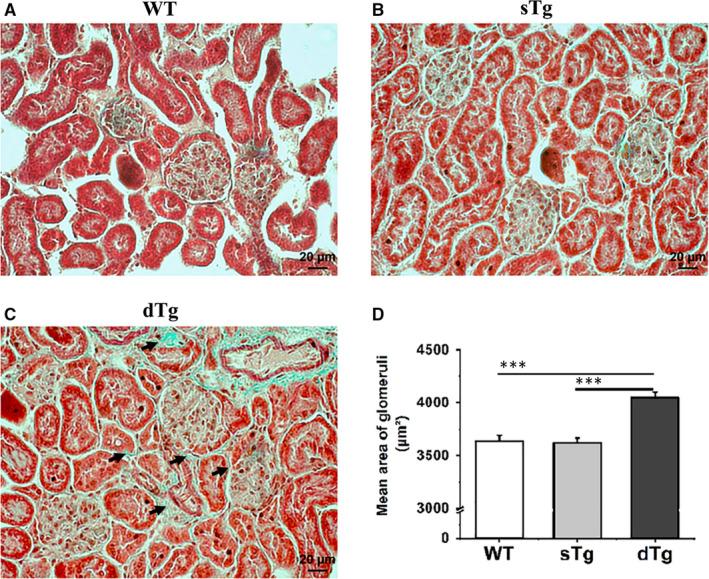
Nephropathy is a major chronic complication of diabetes. A crucial role in renal pathophysiology is played by hydrogen sulphide (H S) that is produced excessively by the kidney; however, the data regarding H S bioavailability are inconsistent. We hypothesize that early type 1 diabetes (T1D) increases H S production by a mechanism involving hyperglycaemia-induced alterations in sulphur metabolism. Plasma and kidney tissue collected from T1D double transgenic mice were subjected to mass spectrometry-based proteomic analysis, and the results were validated by immunological and gene expression assays.T1D mice exhibited a high concentration of H S in the plasma and kidney tissue and histological, showed signs of subtle kidney fibrosis, characteristic for early renal disease. The shotgun proteomic analyses disclosed that the level of enzymes implicated in sulphate activation modulators, H S-oxidation and H S-production were significantly affected (ie 6 up-regulated and 4 down-regulated). Gene expression results corroborated well with the proteomic data. Dysregulation of H S enzymes underly the changes occurring in H S production, which in turn could play a key role in the initiation of renal disease. The new findings lead to a novel target in the therapy of diabetic nephropathy. Mass spectrometry data are available via ProteomeXchange with identifier PXD018053.
肾病是糖尿病的一种主要慢性并发症。内源性硫化氢(H₂S)在肾脏病理生理学中起着关键作用,其由肾脏过度产生;然而,关于 H₂S 生物利用度的数据并不一致。我们假设早期 1 型糖尿病(T1D)通过涉及高血糖诱导的硫代谢改变的机制增加 H₂S 的产生。从 T1D 双转基因小鼠中采集血浆和肾脏组织进行基于质谱的蛋白质组学分析,并通过免疫和基因表达测定进行验证。T1D 小鼠的血浆和肾脏组织中 H₂S 浓度较高,组织学显示出早期肾脏疾病特征的细微肾脏纤维化迹象。鸟枪法蛋白质组学分析表明,硫酸根激活调节剂、H₂S 氧化和 H₂S 产生中涉及的酶的水平受到显著影响(即 6 个上调和 4 个下调)。基因表达结果与蛋白质组学数据很好地吻合。H₂S 酶的失调导致 H₂S 产生的变化,这反过来可能在肾脏疾病的发生中起关键作用。新发现为糖尿病肾病的治疗提供了一个新的靶点。质谱数据可通过 ProteomeXchange 以标识符 PXD018053 获得。




 Zotero 插件