
提取特定子任务指标以客观评估血液透析插管的进针技能
Extracting Subtask-specific Metrics Toward Objective Assessment of Needle Insertion Skill for Hemodialysis Cannulation.
作者信息
Zhang Ziyang, Liu Zhanhe, Singapogu Ravikiran
机构信息
Department of Bioengineering, Clemson University, 301 Rhodes Research Center, Clemson, SC 29634, USA.
出版信息
J Med Robot Res. 2019 Sep-Dec;4(3-4). doi: 10.1142/s2424905x19420066. Epub 2020 Apr 14.
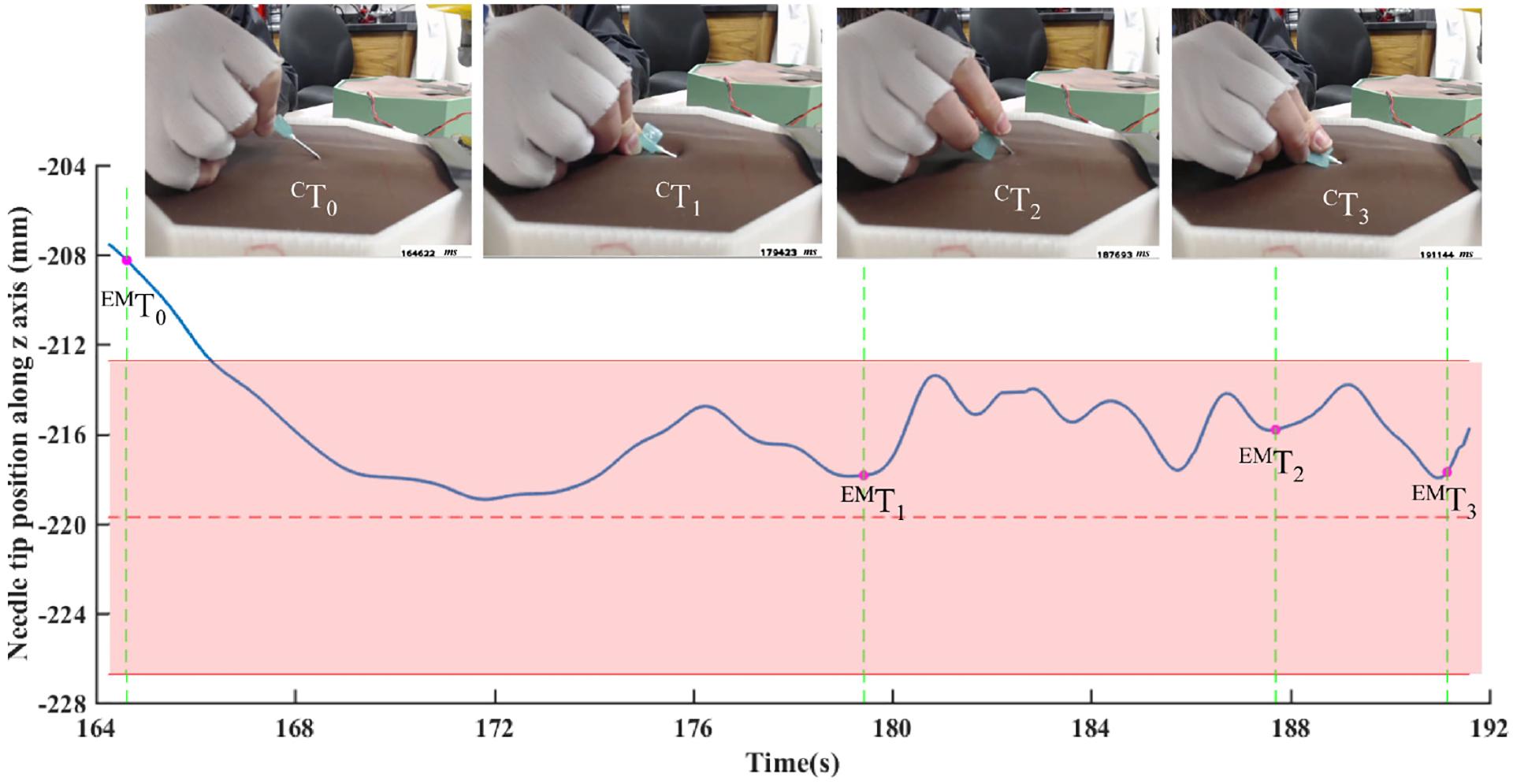
About 80% of all in-hospital patients require vascular access cannulation for treatments. However, there is a high rate of failure for vascular access cannulation, with several studies estimating up to a 50% failure rate for these procedures. Hemodialysis cannulation (HDC) is arguably one of the most difficult of these procedures with a steep learning curve and an extremely high failure rate. In light of this, there is a critical need that clinicians performing HDC have requisite skills. In this work, we present a method that combines the strengths of simulator-based objective skill quantification and task segmentation for needle insertion skill assessment at the subtask level. The results from our experimental study with seven novice nursing students on the cannulation simulator demonstrate that the simulator was able to segment needle insertion into subtask phases. In addition, most metrics were significantly different between the two phases, indicating that there may be value in evaluating participants' behavior at the subtask level. Further, the outcome metric (risk of infiltrating the simulated blood vessel) was successfully predicted by the process metrics in both phases. The implications of these results for skill assessment and training are discussed, which could potentially lead to improved patient outcomes if more extensive validation is pursued.
约80%的住院患者需要进行血管通路插管治疗。然而,血管通路插管的失败率很高,多项研究估计这些操作的失败率高达50%。血液透析插管(HDC)可以说是这些操作中最困难的之一,学习曲线陡峭且失败率极高。有鉴于此,进行HDC的临床医生急需具备必要的技能。在这项工作中,我们提出了一种方法,该方法结合了基于模拟器的客观技能量化和任务分割的优势,用于在子任务层面评估进针技能。我们对七名新手护生在插管模拟器上进行的实验研究结果表明,该模拟器能够将进针分割为子任务阶段。此外,两个阶段的大多数指标存在显著差异,这表明在子任务层面评估参与者的行为可能具有价值。此外,两个阶段的过程指标均成功预测了结果指标(模拟血管渗漏风险)。讨论了这些结果对技能评估和培训的意义,如果进行更广泛的验证,可能会改善患者的治疗结果。




 Zotero 插件