
氯喹和羟氯喹治疗新型冠状病毒肺炎的疗效与安全性:临床、动物及体外研究的综合证据汇总
Efficacy and safety of chloroquine and hydroxychloroquine for COVID-19: A comprehensive evidence synthesis of clinical, animal, and in vitro studies.
作者信息
Barzkar Farzaneh, Ranjbar Mitra, Sioofy-Khojine Amir-Babak, Khajehazad Mohammadamin, Vesal Azad Roya, Moradi Yousef, Baradaran Hamid Reza
机构信息
Endocrine Research Center, Institute of Endocrinology and Metabolism, Iran University of Medical Sciences, Tehran, Iran.
Department of Infectious Diseases, School of Medicine, Iran University of Medical Science, Tehran, Iran.
出版信息
Med J Islam Repub Iran. 2020 Dec 17;34:171. doi: 10.47176/mjiri.34.171. eCollection 2020.
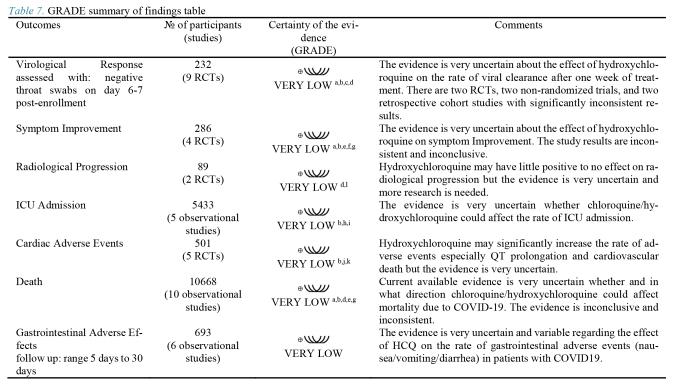
The world is facing a pandemic of COVID-19, a respiratory disease caused by a novel coronavirus which is now called SARS-CoV-2. Current treatment recommendations for the infection are mainly repurposed drugs based on experience with other clinically similar conditions and are not backed by direct evidence. Chloroquine (CQ) and its derivative Hydroxychloroquine (HCQ) are among the candidates. We aimed to synthesize current evidence systematically for in vitro, animal, and human studies on the efficacy and safety of chloroquine in patients with COVID-19. The Cochrane Library, Google Scholar, PubMed (via Medline), Embase, Scopus, and Web of Science, MedRxiv, clinical trial registries including clinicaltrials.gov, ChiCTR (Chinese Clinical Trial Registry), IRCT (Iranian Registry of Clinical Trials), and the EU Clinical Trials Register. We used the Cochrane tool for risk of bias assessment in randomized studies, the ROBINS tool for non-randomized studies, and the GRADE methodology to summarize the evidence and certainty in effect estimates. The initial database searching retrieved 24,752 studies. Of these, 15,435 abstracts were screened and 115 were selected for full-text review. Finally, 20 human studies, 3 animal studies, and 4 in vitro studies were included in this systematic review. The risk of bias within studies was unclear to high and the overall certainty in evidence-based on GRADES- was very low. HCQ may be effective in clinical improvement in a subset of patients with COVID-19. However, the frequency of adverse events was higher in patients taking HCQ compared to standard of care alone. In contrast, animal studies, did not report any adverse effects. Furthermore, clear benefit of the drug in the survival of the animals has been reported. Most in vitro studies indicated a high selectivity index for the drug and one study that used a human coronavirus reported blockage of virus replication. Current evidence background is limited to six poorly conducted clinical studies with inconsistent findings which fail to show significant efficacy for HCQ. Safety data is also limited but the drug may increase adverse outcomes. Routine use of the drug is not recommended based on limited efficacy and concerns about the drug safety especially in high-risk populations.
世界正面临新冠疫情,这是一种由新型冠状病毒引起的呼吸道疾病,该病毒现被称为严重急性呼吸综合征冠状病毒2(SARS-CoV-2)。目前针对该感染的治疗建议主要是基于其他临床相似病症经验的重新利用药物,且缺乏直接证据支持。氯喹(CQ)及其衍生物羟氯喹(HCQ)是候选药物之一。我们旨在系统地综合当前关于氯喹对新冠患者疗效和安全性的体外、动物及人体研究证据。检索了考克兰图书馆、谷歌学术、PubMed(通过Medline)、Embase、Scopus、科学网、MedRxiv、临床试验注册库,包括clinicaltrials.gov、中国临床试验注册中心(ChiCTR)、伊朗临床试验注册中心(IRCT)以及欧盟临床试验注册库。我们使用考克兰工具对随机研究进行偏倚风险评估,使用ROBINS工具对非随机研究进行评估,并采用GRADE方法总结证据及效应估计的确定性。初步数据库检索得到24,752项研究。其中,筛选了15,435篇摘要,115篇被选作全文审查。最终,本系统综述纳入了20项人体研究、3项动物研究和4项体外研究。研究中的偏倚风险不明确至高,基于GRADE的证据总体确定性非常低。羟氯喹可能对一部分新冠患者的临床改善有效。然而,与仅采用标准治疗的患者相比,服用羟氯喹的患者不良事件发生率更高。相比之下,动物研究未报告任何不良反应。此外,有报道称该药物对动物存活有明显益处。大多数体外研究表明该药物具有高选择性指数,一项使用人类冠状病毒的研究报告称其阻断了病毒复制。当前证据背景仅限于六项实施不佳且结果不一致的临床研究,这些研究未能显示羟氯喹有显著疗效。安全性数据也有限,但该药物可能增加不良结局。基于有限的疗效以及对药物安全性的担忧,特别是在高危人群中,不建议常规使用该药物。


 Zotero 插件