
尿素浓度对尿素-环氧氯丙烷改性过程中花生分离蛋白、花生球蛋白和伴花生球蛋白基胶粘剂性能的影响。
Effect of urea concentration on properties of peanut protein isolate, arachin and conarachin-based adhesives during urea-epichlorohydrin modification.
作者信息
Chen Chen, Du Yan, Chen Fusheng
机构信息
College of Food Science and Engineering, Henan University of Technology, 100, Lianhua Street, High-tech, Zhengzhou 450001, Henan, People's Republic of China.
College of Food Science and Nutritional Engineering, China Agricultural University, Beijing 100083, People's Republic of China.
出版信息
R Soc Open Sci. 2021 Mar 31;8(3):202227. doi: 10.1098/rsos.202227.
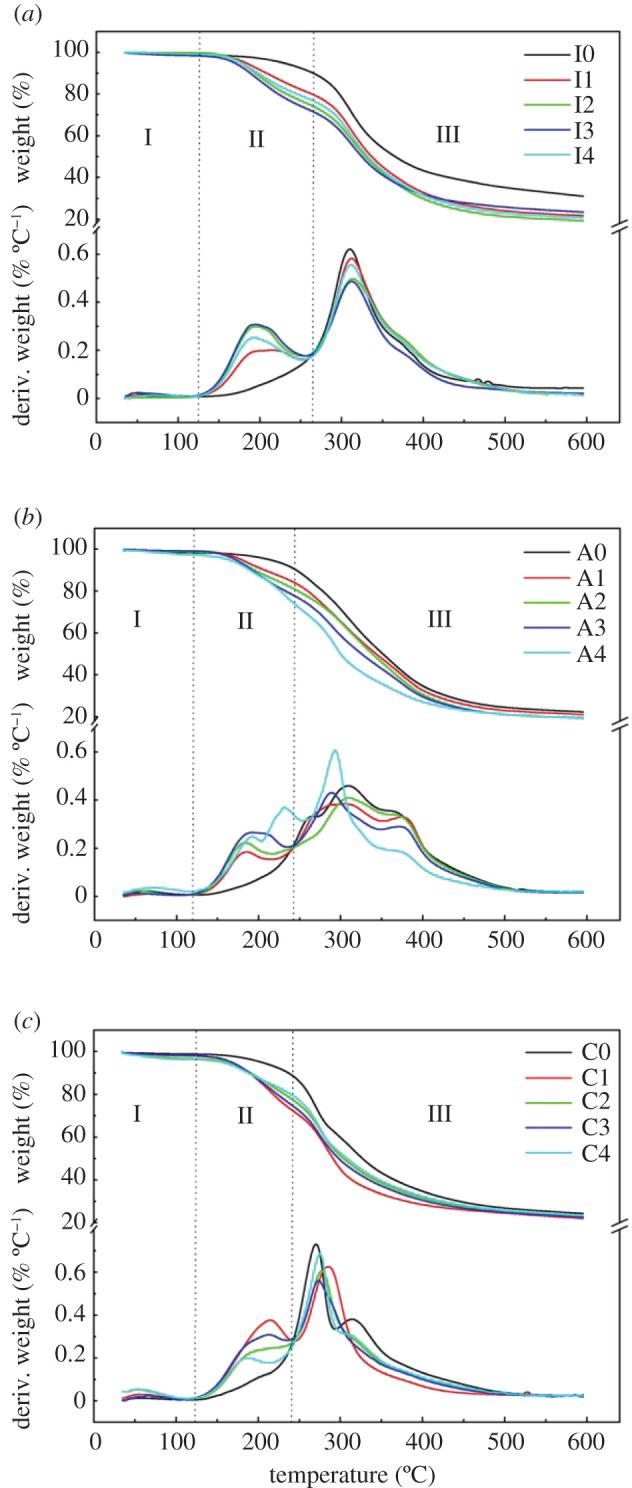
To lay a theoretical basis for the preparation of peanut protein-based adhesives and promote the sustainable development of the adhesive industry, properties of peanut protein isolate (PPI), arachin and conarachin-based adhesives modified by urea and epichlorohydrin (ECH) were investigated under different urea concentrations. When the urea concentration was 2 mol l, the wet shear strength of the PPI-based adhesive was 1.24 MPa with the best water resistance. With the increase of urea concentration from 0 to 4 mol l, the apparent viscosity of the PPI-based adhesive increased from 3.87 to 136.80 Pa s and the solid content increased from 18.11% to 31.11%. Compared with conarachin-based adhesive, the properties of arachin-based adhesive were improved more obviously during the combined modification. Scanning electron microscopy images illustrated that when the urea concentration was 2 mol l, the surface of the PPI-based adhesive was more compact and smoother, which was beneficial to the improvement of water resistance and related to the structure changes of arachin and conarachin components. Fourier-transform infrared spectroscopy results indicated that different urea concentrations caused the change of ester and ether bonds in the PPI-based adhesive, which was mainly related to arachin component. Thermogravimetry results suggested that when the urea concentration was 2 mol l, the decomposition temperature of protein skeleton in the PPI-based adhesive reached a maximum of 314°C exhibiting the highest thermal stability. The improvement of the thermal stability of conarachin was greater than that of arachin during the combined modification.
为花生蛋白基胶粘剂的制备奠定理论基础,促进胶粘剂行业的可持续发展,研究了在不同尿素浓度下,经尿素和环氧氯丙烷(ECH)改性的花生分离蛋白(PPI)、花生球蛋白和伴花生球蛋白基胶粘剂的性能。当尿素浓度为2 mol/L时,PPI基胶粘剂的湿剪切强度为1.24 MPa,耐水性最佳。随着尿素浓度从0增加到4 mol/L,PPI基胶粘剂的表观粘度从3.87 Pa·s增加到136.80 Pa·s,固含量从18.11%增加到31.11%。与伴花生球蛋白基胶粘剂相比,在复合改性过程中花生球蛋白基胶粘剂的性能改善更为明显。扫描电子显微镜图像表明,当尿素浓度为2 mol/L时,PPI基胶粘剂的表面更致密、更光滑,这有利于耐水性的提高,且与花生球蛋白和伴花生球蛋白组分的结构变化有关。傅里叶变换红外光谱结果表明,不同的尿素浓度导致PPI基胶粘剂中酯键和醚键的变化,这主要与花生球蛋白组分有关。热重分析结果表明,当尿素浓度为2 mol/L时,PPI基胶粘剂中蛋白质骨架的分解温度最高达到314℃,热稳定性最高。在复合改性过程中,伴花生球蛋白热稳定性的提高大于花生球蛋白。


 Zotero 插件