
中性粒细胞与淋巴细胞比值与急性细菌性脑膜炎脑血流速度增加有关。
Neutrophil-to-lymphocyte ratio is associated with increased cerebral blood flow velocity in acute bacterial meningitis.
机构信息
Department of Neurology, University Hospital Erlangen, University of Erlangen-Nuremberg, Schwabachanlage 6, 91054, Erlangen, Germany.
Department of Neuroradiology, University of Erlangen-Nuremberg, Erlangen, Germany.
出版信息
Sci Rep. 2021 May 31;11(1):11383. doi: 10.1038/s41598-021-90816-0.
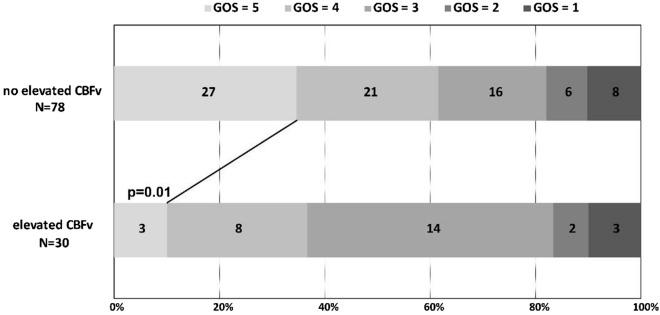
In community-acquired bacterial meningitis (CABM) intracranial vascular alterations are devastating complications which are triggered by neuroinflammation and result in worse clinical outcome. The Neutrophil-to-Lymphocyte ratio (NLR) represents a reliable parameter of the inflammatory response. In this study we analyzed the association between NLR and elevated cerebral blood flow velocity (CBFv) in CABM-patients. This study included all (CABM)-patients admitted to a German tertiary center between 2006 and 2016. Patients' demographics, in-hospital measures, neuroradiological data and clinical outcome were retrieved from institutional databases. CBFv was assessed by transcranial doppler (TCD). Patients', radiological and laboratory characteristics were compared between patients with/without elevated CBFv. Multivariate-analysis investigated parameters independently associated with elevated CBFv. Receiver operating characteristic(ROC-)curve analysis was undertaken to identify the best cut-off for NLR to discriminate between increased CBFv. 108 patients with CABM were identified. 27.8% (30/108) showed elevated CBFv. Patients with elevated CBFv and normal CBFv, respectively had a worse clinical status on admission (Glasgow Coma Scale: 12 [9-14] vs. 14 [11-15]; p = 0.005) and required more often intensive care (30/30 [100.0%] vs. 63/78 [80.8%]; p = 0.01).The causative pathogen was S. pneumoniae in 70%. Patients with elevated CBFv developed more often cerebrovascular complications with delayed cerebral ischemia (DCI) within hospital stay (p = 0.031). A significantly higher admission-NLR was observed in patients with elevated CBFv (median [IQR]: elevated CBFv:24.0 [20.4-30.2] vs. normal CBFv:13.5 [8.4-19.5]; p < 0.001). Multivariate analysis, revealed NLR to be significantly associated with increased CBFv (Odds ratio [95%CI] 1.042 [1.003-1.084]; p = 0.036). ROC-analysis identified a NLR of 20.9 as best cut-off value to discriminate between elevated CBFv (AUC = 0.713, p < 0.0001, Youden's Index = 0.441;elevated CBFv: NLR ≥ 20.9 19/30[63.5%] vs. normal CBFv: NLR > 20.9 15/78[19.2%]; p < 0.001). Intracranial vascular complications are common among CABM-patients and are a risk factor for unfavorable outcome at discharge. Elevated NLR is independently associated with high CBFv and may be useful in predicting patients' prognosis.
在社区获得性细菌性脑膜炎(CABM)中,颅内血管改变是由神经炎症引发的破坏性并发症,导致临床预后更差。中性粒细胞与淋巴细胞比值(NLR)是炎症反应的可靠参数。本研究分析了 NLR 与 CABM 患者颅内血流速度(CBFv)升高之间的关系。本研究纳入了 2006 年至 2016 年间在德国一家三级中心住院的所有(CABM)患者。从机构数据库中检索患者的人口统计学、住院期间的措施、神经放射学数据和临床结局。通过经颅多普勒(TCD)评估 CBFv。比较了 CBFv 升高和正常患者的患者、放射学和实验室特征。多变量分析调查了与 CBFv 升高独立相关的参数。进行了接受者操作特征(ROC-)曲线分析,以确定 NLR 的最佳截断值,以区分 CBFv 升高。共确定了 108 例 CABM 患者。27.8%(30/108)的患者出现 CBFv 升高。CBFv 升高和 CBFv 正常的患者入院时的临床状态较差(格拉斯哥昏迷量表:12[9-14]与 14[11-15];p=0.005),更常需要重症监护(30/30[100.0%]与 63/78[80.8%];p=0.01)。病原体是肺炎链球菌的占 70%。CBFv 升高的患者在住院期间更常发生脑血管并发症,包括迟发性脑缺血(DCI)(p=0.031)。入院时 NLR 明显升高的患者(中位数[IQR]:CBFv 升高:24.0[20.4-30.2]与 CBFv 正常:13.5[8.4-19.5];p<0.001)。多变量分析显示,NLR 与 CBFv 升高显著相关(优势比[95%CI]1.042[1.003-1.084];p=0.036)。ROC 分析确定 NLR 为 20.9 是区分 CBFv 升高的最佳截断值(AUC=0.713,p<0.0001,Youden 指数=0.441;CBFv 升高:NLR≥20.9:19/30[63.5%]与 CBFv 正常:NLR>20.9:15/78[19.2%];p<0.001)。颅内血管并发症在 CABM 患者中很常见,是出院时预后不良的危险因素。升高的 NLR 与高 CBFv 独立相关,可能有助于预测患者的预后。


 Zotero 插件