
现代可生物降解塑料——加工与性能 第二部分
Modern Biodegradable Plastics-Processing and Properties Part II.
作者信息
Sikora Janusz W, Majewski Łukasz, Puszka Andrzej
机构信息
Department of Technology and Polymer Processing, Faculty of Mechanical Engineering, Lublin University of Technology, Nadbystrzycka 36, 20-618 Lublin, Poland.
Department of Polymer Chemistry, Faculty of Chemistry, Institute of Chemical Sciences, Maria Curie-Skłodowska University in Lublin, ul. Gliniana 33, 20-614 Lublin, Poland.
出版信息
Materials (Basel). 2021 May 12;14(10):2523. doi: 10.3390/ma14102523.
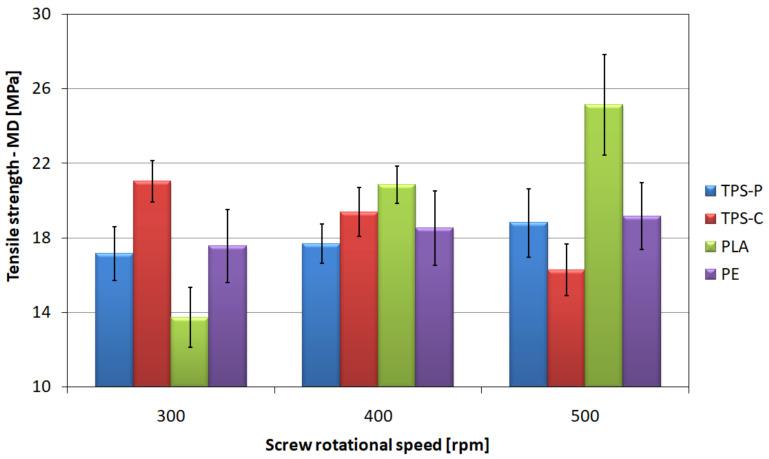
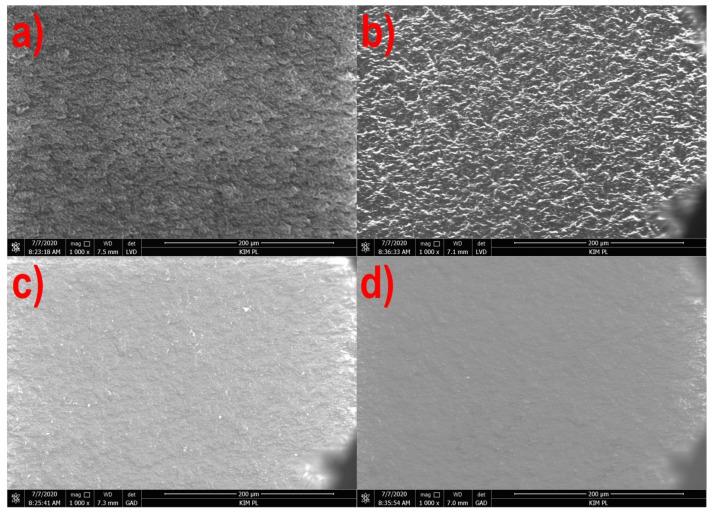
Four different plastics were tested: potato starch based plastic (TPS-P)-BIOPLAST GF 106/02; corn starch based plastic (TPS-C)-BioComp BF 01HP; polylactic acid (polylactide) plastic (PLA)-BioComp BF 7210 and low density polyethylene, trade name Malen E FABS 23-D022; as a petrochemical reference sample. Using the blown film extrusion method and various screw rotational speeds, films were obtained and tested, as a result of which the following were determined: breaking stress, strain at break, static and dynamic friction coefficient of film in longitudinal and transverse direction, puncture resistance and strain at break, color, brightness and gloss of film, surface roughness, barrier properties and microstructure. The biodegradable plastics tested are characterized by comparable or even better mechanical strength than petrochemical polyethylene for the range of film blowing processing parameters used here. The effect of the screw rotational speed on the mechanical characteristics of the films obtained was also demonstrated. With the increase in the screw rotational speed, the decrease of barrier properties was also observed. No correlation between roughness and permeability of gases and water vapor was shown. It was indicated that biodegradable plastics might be competitive for conventional petrochemical materials used in film blowing niche applications where cost, recyclability, optical and water vapor barrier properties are not critical.
测试了四种不同的塑料
基于马铃薯淀粉的塑料(TPS-P)-BIOPLAST GF 106/02;基于玉米淀粉的塑料(TPS-C)-BioComp BF 01HP;聚乳酸塑料(PLA)-BioComp BF 7210以及低密度聚乙烯,商品名为Malen E FABS 23-D022,作为石化参考样品。使用吹膜挤出法和不同的螺杆转速制备并测试了薄膜,结果测定了以下性能:断裂应力、断裂应变、薄膜纵向和横向的静摩擦系数和动摩擦系数、抗穿刺性和断裂应变、薄膜的颜色、亮度和光泽度、表面粗糙度、阻隔性能和微观结构。在所使用的吹膜加工参数范围内,测试的可生物降解塑料的机械强度与石化聚乙烯相当甚至更好。还证明了螺杆转速对所得薄膜机械性能的影响。随着螺杆转速的增加,阻隔性能也会下降。未显示粗糙度与气体和水蒸气渗透率之间的相关性。结果表明,在成本、可回收性、光学和水蒸气阻隔性能不关键的吹膜特殊应用中,可生物降解塑料可能会与传统石化材料形成竞争。




 Zotero 插件