
植物相关细菌胞外多糖对植物非生物胁迫耐受性的影响
The Effects of Plant-Associated Bacterial Exopolysaccharides on Plant Abiotic Stress Tolerance.
作者信息
Morcillo Rafael J L, Manzanera Maximino
机构信息
Institute for Water Research, Department of Microbiology, University of Granada, 18003 Granada, Spain.
出版信息
Metabolites. 2021 May 24;11(6):337. doi: 10.3390/metabo11060337.
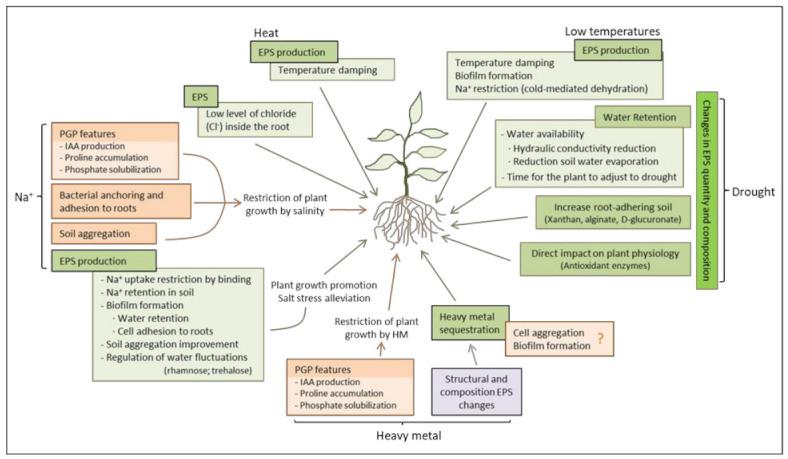
Plant growth-promoting rhizobacteria (PGPR) are beneficial soil microorganisms that can stimulate plant growth and increase tolerance to biotic and abiotic stresses. Some PGPR are capable of secreting exopolysaccharides (EPS) to protect themselves and, consequently, their plant hosts against environmental fluctuations and other abiotic stresses such as drought, salinity, or heavy metal pollution. This review focuses on the enhancement of plant abiotic stress tolerance by bacterial EPS. We provide a comprehensive summary of the mechanisms through EPS to alleviate plant abiotic stress tolerance, including salinity, drought, temperature, and heavy metal toxicity. Finally, we discuss how these abiotic stresses may affect bacterial EPS production and its role during plant-microbe interactions.
植物促生根际细菌(PGPR)是有益的土壤微生物,能够刺激植物生长并提高对生物和非生物胁迫的耐受性。一些PGPR能够分泌胞外多糖(EPS)来保护自身以及它们的植物宿主免受环境波动和其他非生物胁迫,如干旱、盐度或重金属污染。本综述聚焦于细菌EPS对植物非生物胁迫耐受性的增强作用。我们全面总结了EPS缓解植物非生物胁迫耐受性的机制,包括盐度、干旱、温度和重金属毒性。最后,我们讨论了这些非生物胁迫如何影响细菌EPS的产生及其在植物-微生物相互作用中的作用。
 Zotero 插件