
多酚与视觉健康:对退行性视网膜疾病的潜在影响。
Polyphenols and Visual Health: Potential Effects on Degenerative Retinal Diseases.
机构信息
Grup de Biotecnologia Molecular i Industrial, Centre de Biotecnologia Molecular, Departament d'Enginyeria Química, Universitat Politècnica de Catalunya, Edifici Gaia, 08222 Terrassa, Spain.
出版信息
Molecules. 2021 Jun 4;26(11):3407. doi: 10.3390/molecules26113407.
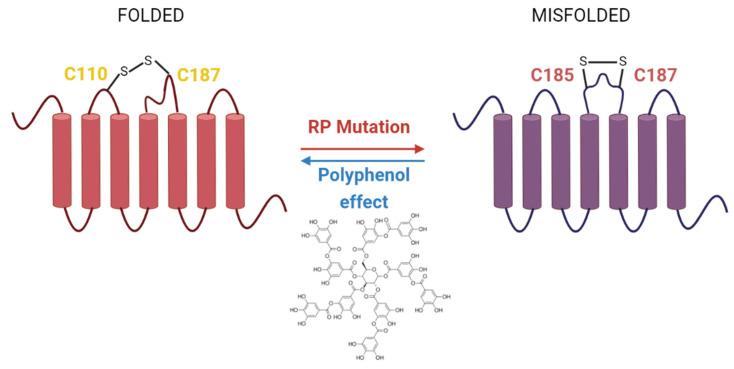
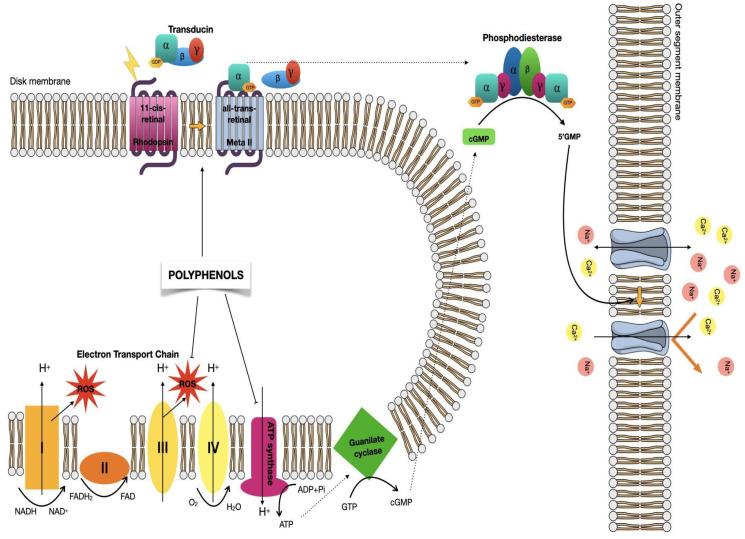
Dietary polyphenols are a group of natural compounds that have been proposed to have beneficial effects on human health. They were first known for their antioxidant properties, but several studies over the years have shown that these compounds can exert protective effects against chronic diseases. Nonetheless, the mechanisms underlying these potential benefits are still uncertain and contradictory effects have been reported. In this review, we analyze the potential effects of polyphenol compounds on some visual diseases, with a special focus on retinal degenerative diseases. Current effective therapies for the treatment of such retinal diseases are lacking and new strategies need to be developed. For this reason, there is currently a renewed interest in finding novel ligands (or known ligands with previously unexpected features) that could bind to retinal photoreceptors and modulate their molecular properties. Some polyphenols, especially flavonoids (e.g., quercetin and tannic acid), could attenuate light-induced receptor damage and promote visual health benefits. Recent evidence suggests that certain flavonoids could help stabilize the correctly folded conformation of the visual photoreceptor protein rhodopsin and offset the deleterious effect of retinitis pigmentosa mutations. In this regard, certain polyphenols, like the flavonoids mentioned before, have been shown to improve the stability, expression, regeneration and folding of rhodopsin mutants in experimental in vitro studies. Moreover, these compounds appear to improve the integration of the receptor into the cell membrane while acting against oxidative stress at the same time. We anticipate that polyphenol compounds can be used to target visual photoreceptor proteins, such as rhodopsin, in a way that has only been recently proposed and that these can be used in novel approaches for the treatment of retinal degenerative diseases like retinitis pigmentosa; however, studies in this field are limited and further research is needed in order to properly characterize the effects of these compounds on retinal degenerative diseases through the proposed mechanisms.
膳食多酚是一组天然化合物,据推测对人类健康有益。它们最初以其抗氧化特性而闻名,但多年来的多项研究表明,这些化合物可以对慢性疾病发挥保护作用。尽管如此,这些潜在益处的机制仍不确定,并且已经报道了相互矛盾的作用。在这篇综述中,我们分析了多酚化合物对一些视觉疾病的潜在影响,特别关注视网膜退行性疾病。目前缺乏治疗这些视网膜疾病的有效疗法,需要开发新的策略。出于这个原因,目前人们重新有兴趣寻找可能与视网膜光感受器结合并调节其分子特性的新型配体(或具有以前未预料到的特征的已知配体)。一些多酚,特别是类黄酮(例如槲皮素和鞣酸),可以减轻光诱导的受体损伤并促进视觉健康益处。最近的证据表明,某些类黄酮可以帮助稳定视觉光感受器蛋白视紫红质的正确折叠构象,并抵消色素性视网膜炎突变的有害影响。在这方面,某些多酚,如前面提到的类黄酮,已被证明可以在实验体外研究中提高视紫红质突变体的稳定性、表达、再生和折叠。此外,这些化合物似乎可以改善受体与细胞膜的整合,同时对抗氧化应激。我们预计多酚化合物可以用于针对视觉光感受器蛋白,如视紫红质,以最近才提出的方式,并且可以用于治疗色素性视网膜炎等视网膜退行性疾病的新方法中;然而,该领域的研究有限,需要进一步研究以通过拟议的机制正确表征这些化合物对视网膜退行性疾病的影响。

 Zotero 插件