
载脂蛋白 B 介导的紫杉醇和磁共振成像探针传递用于个体化医疗应用。
LDL mediated delivery of Paclitaxel and MRI imaging probes for personalized medicine applications.
机构信息
Department of Molecular Biotechnology and Health Sciences, University of Torino, via Nizza 52, Torino, Italy.
出版信息
J Nanobiotechnology. 2021 Jul 13;19(1):208. doi: 10.1186/s12951-021-00955-9.
BACKGROUND
The combination of imaging and therapeutic agents in the same smart nanoparticle is a promising option to perform a minimally invasive imaging guided therapy. In this study, Low density lipoproteins (LDL), one of the most attractive biodegradable and biocompatible nanoparticles, were used for the simultaneous delivery of Paclitaxel (PTX), a hydrophobic antitumour drug and an amphiphilic contrast agent, Gd-AAZTA-C17, in B16-F10 melanoma cell line. These cells overexpress LDL receptors, as assessed by flow cytometry analysis.
RESULTS
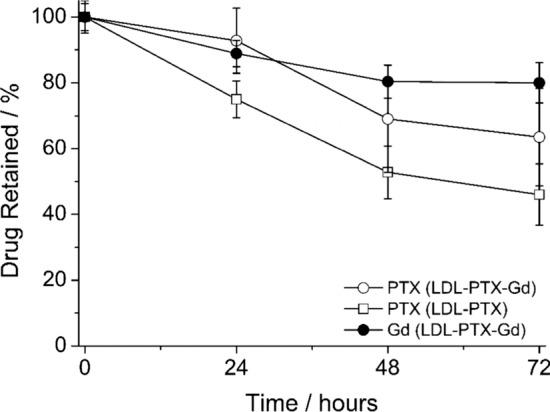
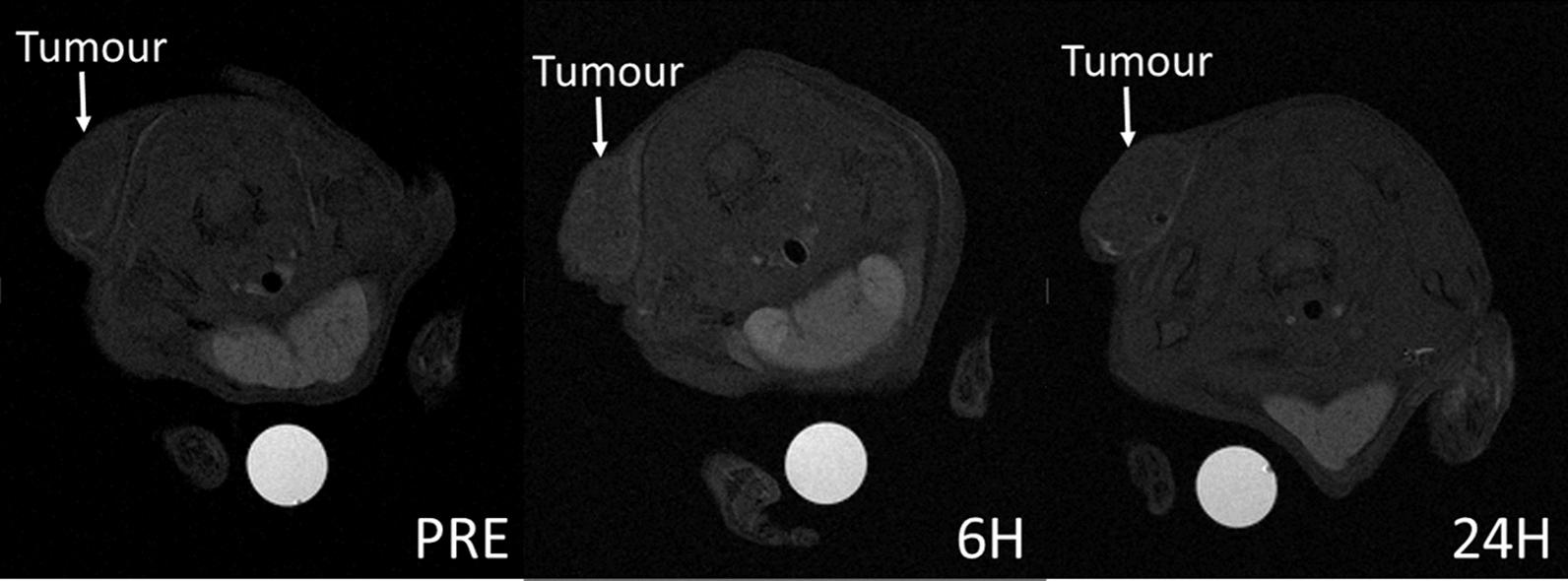
PTX and Gd-AAZTA-C17 loaded LDLs (LDL-PTX-Gd) have been prepared, characterized and their stability was assessed under 72 h incubation at 37 °C and compared to LDL loaded with Gd-AAZTA-C17 (LDL-Gd) and LDL-PTX. The cytotoxic effect of LDL-PTX-Gd was evaluated by MTT assay. The anti-tumour drug loaded into LDLs showed a significantly higher toxicity on B16-F10 cells with respect to the commercially available formulation Paclitaxel kabi (PTX Kabi) used in clinical applications. Tumour cells uptake was initially assessed by ICP-MS and MRI on B16-F10 cell line. By the analysis of the image signal intensity, it was possible to extrapolate the amount of internalized PTX indirectly by the decrease of relaxation times caused by Gd, proportional to its concentration. Finally, the treatment with PTX loaded LDL on B16-F10 tumour bearing mice resulted in a marked reduction of tumour growth compared to the administration of PTX Kabi alone.
CONCLUSIONS
LDLs are selectively taken-up by tumour cells and can be successfully exploited for the selective delivery of Paclitaxel and imaging agents. For the first time the anon invasive "in vivo" determination of the amount of PTX accumulated in the tumour was possible, thanks to the use of theranostic agents of natural origin.
背景
将成像和治疗剂结合在同一个智能纳米颗粒中是一种很有前途的选择,可以进行微创成像引导治疗。在这项研究中,低密度脂蛋白(LDL)作为最有吸引力的可生物降解和生物相容的纳米颗粒之一,被用于同时递送紫杉醇(PTX),一种疏水抗肿瘤药物和一种两亲性造影剂 Gd-AAZTA-C17,在 B16-F10 黑色素瘤细胞系中。通过流式细胞术分析评估,这些细胞过度表达 LDL 受体。
结果
已经制备、表征了负载 PTX 和 Gd-AAZTA-C17 的 LDL(LDL-PTX-Gd),并在 37°C 下孵育 72 小时后评估其稳定性,并与负载 Gd-AAZTA-C17 的 LDL(LDL-Gd)和 LDL-PTX 进行比较。通过 MTT 测定评估 LDL-PTX-Gd 的细胞毒性。与临床应用中使用的市售制剂紫杉醇卡比(PTX Kabi)相比,负载于 LDL 中的抗肿瘤药物对 B16-F10 细胞表现出显著更高的毒性。通过 ICP-MS 和 MRI 最初评估肿瘤细胞摄取。通过分析图像信号强度,可以通过 Gd 引起的弛豫时间的降低间接推断出内部化的 PTX 的量,这与 Gd 的浓度成正比。最后,与单独给予 PTX Kabi 相比,用负载 PTX 的 LDL 治疗 B16-F10 荷瘤小鼠导致肿瘤生长明显减少。
结论
LDL 被肿瘤细胞选择性摄取,可以成功地用于紫杉醇和成像剂的选择性递送。由于使用了天然来源的治疗和诊断试剂,首次可以无创地“体内”确定肿瘤中积累的 PTX 的量。





 Zotero 插件