
JWES:一个用于全基因组/外显子组序列数据处理、管理以及基因变异发现、注释、预测和基因分型的新管道。
JWES: a new pipeline for whole genome/exome sequence data processing, management, and gene-variant discovery, annotation, prediction, and genotyping.
机构信息
Institute for Health, Health Care Policy and Aging Research, Rutgers, The State University of New Jersey, New Brunswick, NJ, USA.
Department of Medicine, Rutgers Robert Wood Johnson Medical School, Rutgers Biomedical and Health Sciences, New Brunswick, NJ, USA.
出版信息
FEBS Open Bio. 2021 Sep;11(9):2441-2452. doi: 10.1002/2211-5463.13261. Epub 2021 Aug 11.
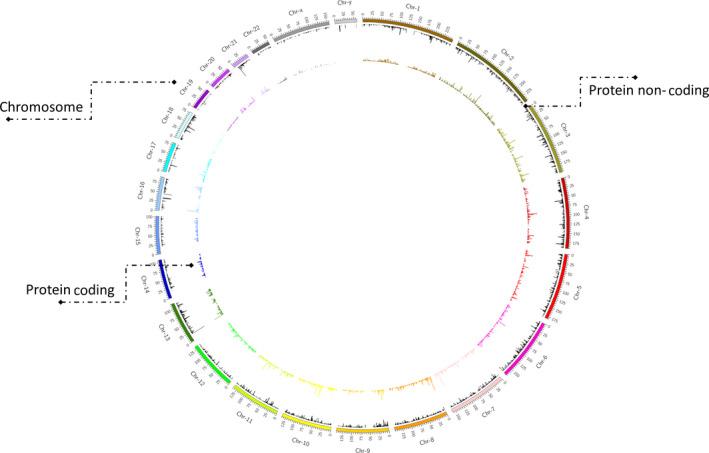
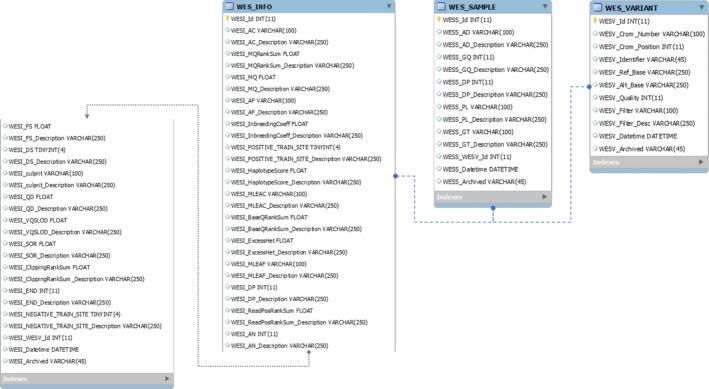
Whole genome and exome sequencing (WGS/WES) are the most popular next-generation sequencing (NGS) methodologies and are at present often used to detect rare and common genetic variants of clinical significance. We emphasize that automated sequence data processing, management, and visualization should be an indispensable component of modern WGS and WES data analysis for sequence assembly, variant detection (SNPs, SVs), imputation, and resolution of haplotypes. In this manuscript, we present a newly developed findable, accessible, interoperable, and reusable (FAIR) bioinformatics-genomics pipeline Java based Whole Genome/Exome Sequence Data Processing Pipeline (JWES) for efficient variant discovery and interpretation, and big data modeling and visualization. JWES is a cross-platform, user-friendly, product line application, that entails three modules: (a) data processing, (b) storage, and (c) visualization. The data processing module performs a series of different tasks for variant calling, the data storage module efficiently manages high-volume gene-variant data, and the data visualization module supports variant data interpretation with Circos graphs. The performance of JWES was tested and validated in-house with different experiments, using Microsoft Windows, macOS Big Sur, and UNIX operating systems. JWES is an open-source and freely available pipeline, allowing scientists to take full advantage of all the computing resources available, without requiring much computer science knowledge. We have successfully applied JWES for processing, management, and gene-variant discovery, annotation, prediction, and genotyping of WGS and WES data to analyze variable complex disorders. In summary, we report the performance of JWES with some reproducible case studies, using open access and in-house generated, high-quality datasets.
全基因组和外显子组测序(WGS/WES)是最流行的下一代测序(NGS)方法,目前常用于检测具有临床意义的罕见和常见遗传变异。我们强调,自动化的序列数据处理、管理和可视化应该是现代 WGS 和 WES 数据分析的一个不可或缺的组成部分,用于序列组装、变异检测(SNP、SV)、推断和单倍型分辨率。在本文中,我们提出了一个新开发的、可发现的、可访问的、可互操作的和可重复使用的(FAIR)生物信息学-基因组学管道 Java 全基因组/外显子组序列数据处理管道(JWES),用于高效的变异发现和解释,以及大数据建模和可视化。JWES 是一个跨平台、用户友好的产品线应用程序,包含三个模块:(a)数据处理、(b)存储和(c)可视化。数据处理模块执行一系列用于变异调用的不同任务,数据存储模块高效地管理大容量基因变异数据,数据可视化模块支持使用 Circos 图进行变异数据解释。JWES 的性能在内部使用不同的实验进行了测试和验证,使用 Microsoft Windows、macOS Big Sur 和 UNIX 操作系统。JWES 是一个开源的、免费的管道,允许科学家充分利用所有可用的计算资源,而不需要太多的计算机科学知识。我们已经成功地应用 JWES 来处理、管理和发现 WGS 和 WES 数据的基因变异,对可变复杂疾病进行注释、预测和基因分型。总之,我们使用一些可重复的案例研究报告了 JWES 的性能,使用了开放获取和内部生成的高质量数据集。


 Zotero 插件